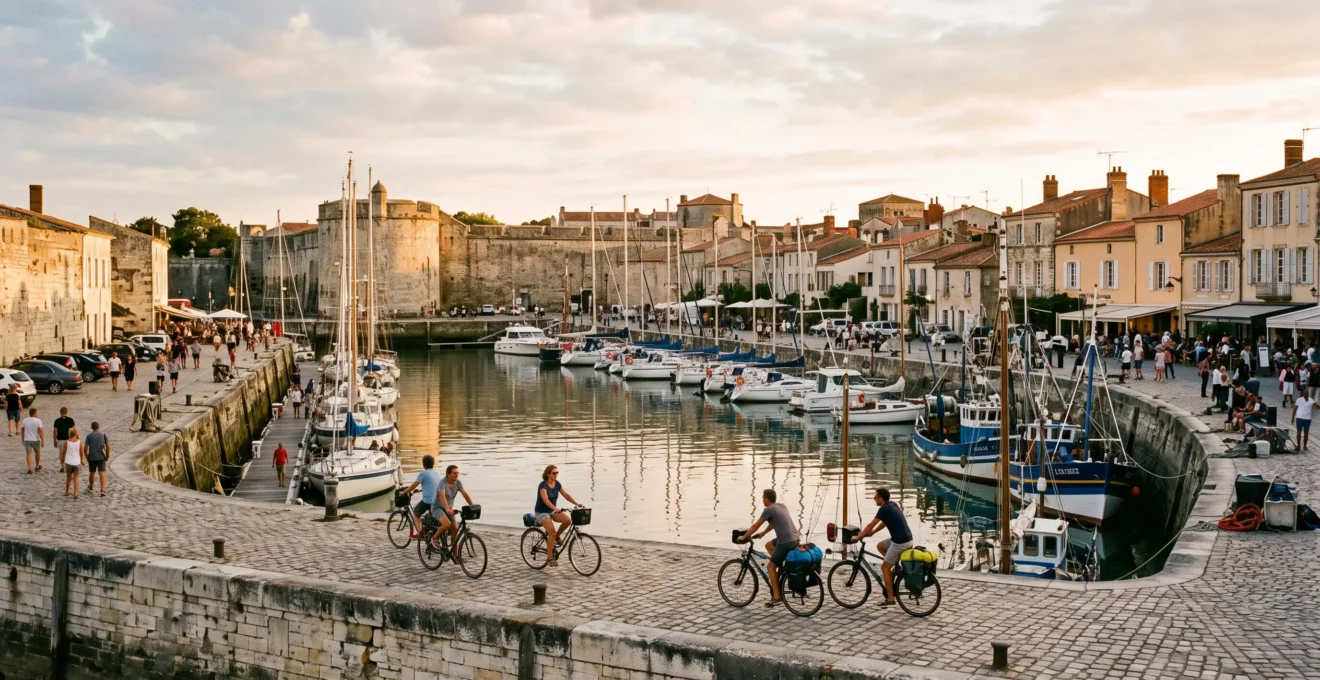
If you’re planning the Île de Ré and you want a simple base that keeps logistics easy, Saint-Martin-de-Ré is hard to beat: you can do a lot on foot, and you can cycle out to other villages without overthinking the route. The tricky part is choosing where to stay (inside the Vauban walls or just outside) and timing your bookings if you’re travelling in summer.
This Saint-Martin-de-Ré travel guide answers the two decisions you care about first: where to stay in Saint-Martin-de-Ré, and things to do in Saint-Martin-de-Ré once you’re there—especially around the port and ramparts.
Your fast plan for Saint-Martin-de-Ré
- For a short first trip: stay inside the Vauban walls for walkability (port, old town, ramparts).
- For more space/value: look just outside the walls and plan to cycle in.
- In July–August: expect the biggest pressure on availability and book early.
- To explore the island: make cycling your default transport for beaches and villages.
- Before you go: double-check UK passport validity rules for France.
Why Saint-Martin-de-Ré Is the Ideal Base for Exploring the Île de Ré
Direct answer: Base yourself in Saint-Martin-de-Ré if you want a practical hub: you’ve got the harbour and historic centre on your doorstep, plus straightforward access to the island’s cycling network for day trips.
Saint-Martin-de-Ré works well as an “anchor” town because it concentrates what you need day-to-day: accommodation, places to eat, and a centre that’s enjoyable even when you’re not “doing an activity”. It’s also a natural starting point for exploring other parts of the Île de Ré, especially if you’re happy to use a bike as your main transport.
The setting is part of the appeal too. The town is defined by its port, old streets and Vauban fortifications, so even a quick walk gives you that “I’m on the Atlantic coast” feel without having to drive anywhere.
41.5%
Of annual visitors are concentrated in July and August on the Île de Ré (Destination Île de Ré Tourist Office, 2026 page).
That seasonality matters for your decisions. The Destination Île de Ré Tourist Office reports that the island welcomes around 92% of its annual visitors between April and October, including 41.5% in July and August, when the population can exceed 150,000—useful context when you’re deciding how early to book and how “central” you need to be to save time on busy days.
If you’re travelling during the peak window, build your plan around simplicity: stay closer to the centre if you want to rely on walking, and plan your cycling loops early in the day for a calmer ride. You can check the original figures on Île de Ré visitor season statistics.
Cas pratique
Imagine you arrive for a 3-night stay in late July. You check in, then spend your first evening on the harbour quays (no transport needed). The next day, you cycle out for a village-and-beach loop, and keep your final morning for a ramparts walk and market stop—so you still enjoy Saint-Martin even if the island is busy.
Where to Stay in Saint-Martin-de-Ré?
Direct answer: If it’s your first visit and you’ve got limited time, book inside the Vauban walls for maximum walkability. If you want more space or better value, look just outside the walls and plan to cycle into the centre.
The most useful way to choose accommodation here is not by “star rating”, but by how you want to move (walk vs bike vs car), your tolerance for summer crowds, and whether you need space (families, longer stays, self-catering).
Which area should I book in Saint-Martin-de-Ré for a short stay?
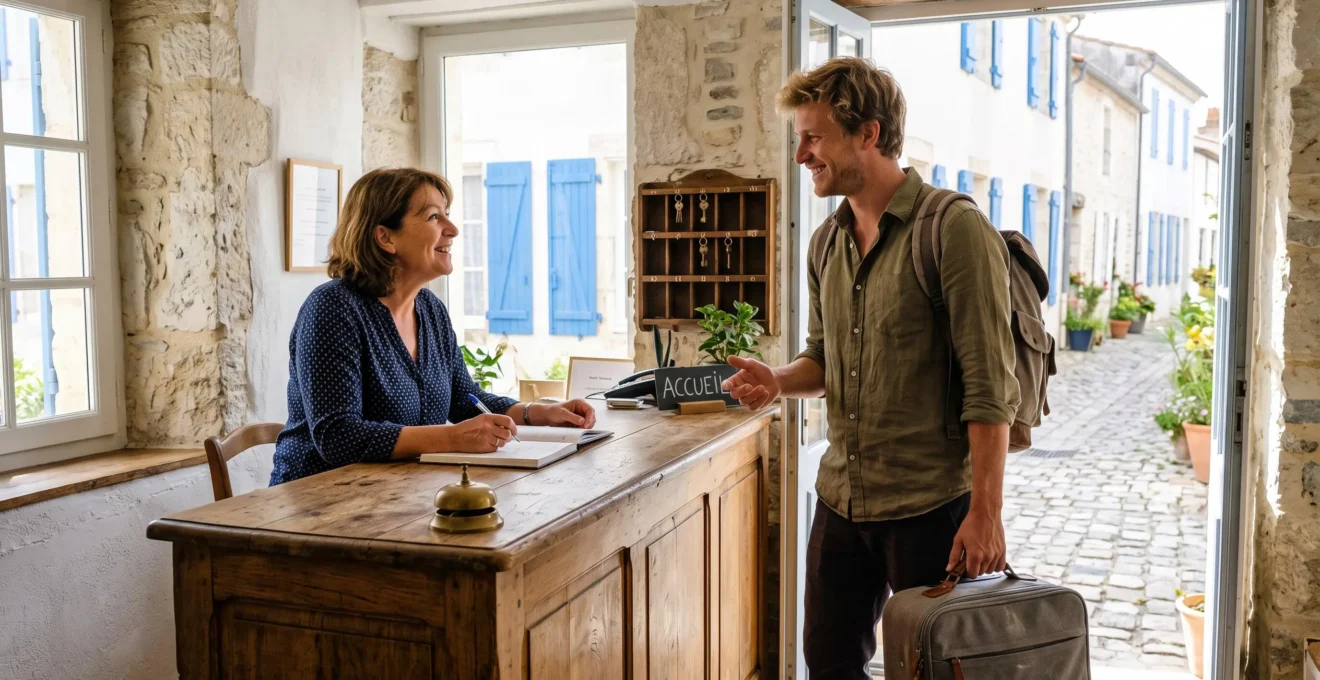
For a short stay, prioritise the area within the fortified old town, close enough that you can pop back to your room easily between a port stroll and an evening meal. You’ll save time on day one (no learning curve, no parking questions) and it’s easier to “do a lot” without planning.
The trade-off is usually cost and availability: central places tend to fill up quickly in the high season, and rooms can be smaller in older buildings. If that’s a deal-breaker, widen your search to the immediate outskirts and treat the bike as your shuttle.
A simple comparison: inside the walls vs just outside
Use this comparison to decide quickly. “Inside” is about convenience; “outside” is about flexibility (and often more space). Your best choice depends on season and how much you value being able to walk everywhere.
| Decision factor | Inside the Vauban walls | Just outside the walls |
|---|---|---|
| Best for | First-timers, short trips, couples who want evenings by the port | Families, longer stays, travellers who want more space and don’t mind cycling in |
| Daily rhythm | Mostly on foot (port, old town, ramparts) | Bike-first; you’ll “commute” into the centre |
| High-season pressure | Highest: limited stock, high demand | Still busy, but you may find more availability |
| Main trade-off | Convenience vs price/room size | Value/space vs extra planning |
How should I book ahead for the high season?
Book as early as you realistically can for July and August, especially if you want to stay inside the walls and keep everything walkable. The core reason is demand concentration: the Destination Île de Ré Tourist Office highlights that a large share of the island’s annual visitors arrives in July–August, so the “best-located” accommodation is under pressure.
Summer booking reality check: if you wait for last-minute deals in peak weeks, you may end up paying more for a worse location—or splitting your stay across two places.
If you’re travelling in spring or early autumn, you can usually be more flexible: focus on what matters most (quiet vs central vs self-catering) and choose the accommodation type that matches your pace.
What to Do Around the Port and Ramparts
Direct answer: Start with the harbour quays for atmosphere, then walk the Vauban ramparts for views and orientation, and finish by wandering the old town streets and market area—you can do the essentials in half a day.
If you’re short on time, keep your first day close to the centre. The port of Saint-Martin is the easiest “instant hit”: cafés, boats, and that classic harbour curve that makes the town feel lively from morning to evening.
Next, give yourself a ramparts walk. It’s the simplest way to understand the shape of the town and get a sense of distance—useful before you plan any cycling on the Île de Ré.
A realistic half-day itinerary (no rushing)
This is a practical route if you arrive in the morning or you’ve only got one full day based in Saint-Martin.
- Port stroll first
Walk the quays to pick a café spot and get your bearings; it’s also the easiest place to decide what you want to photograph.
- Ramparts loop
Head up for views and a calmer pace; it’s a good “reset” when the port feels busy.
- Old town lanes
Wander away from the quays for quieter streets and local shops; this is where you’ll feel the town beyond the waterfront.
- Market timing
If you’re keen on the market atmosphere, go earlier rather than later to avoid the biggest pinch points in peak season.
Can I visit the main sights on foot?
Yes for the core of Saint-Martin-de-Ré: the port, old town streets and ramparts are naturally walkable once you’re staying in or near the centre. That’s exactly why “inside the walls” is such a strong default for a first-time, short trip.
For beaches and other villages across the island, walking is less realistic—this is where a bike (or bus/car) becomes the time-saver, especially if you only have a few days.
Quick planning tip: if your priority is “must-sees with minimal logistics”, do Saint-Martin on foot first, then plan cycling day trips on the following days once you’ve got your bearings.
Getting Around: Cycling and Practical Logistics
Direct answer: Cycling is the simplest way to explore the Île de Ré from Saint-Martin-de-Ré, thanks to extensive car-free paths; book bike hire ahead if you’re travelling in peak summer weeks.
For most visitors, cycling on the Île de Ré is the difference between “seeing one town” and actually exploring the island at your own pace. The terrain is generally forgiving, and the island is set up for bikes in a way that makes day trips feel straightforward.
According to the official Charente-Maritime tourism guide, the Île de Ré offers over 140 kilometres of fully secured, car-free cycle paths—strong evidence that cycling isn’t a niche activity here, but a practical transport option. You can read the details on Île de Ré cycle path network.
Bike hire: what to plan (especially in summer)
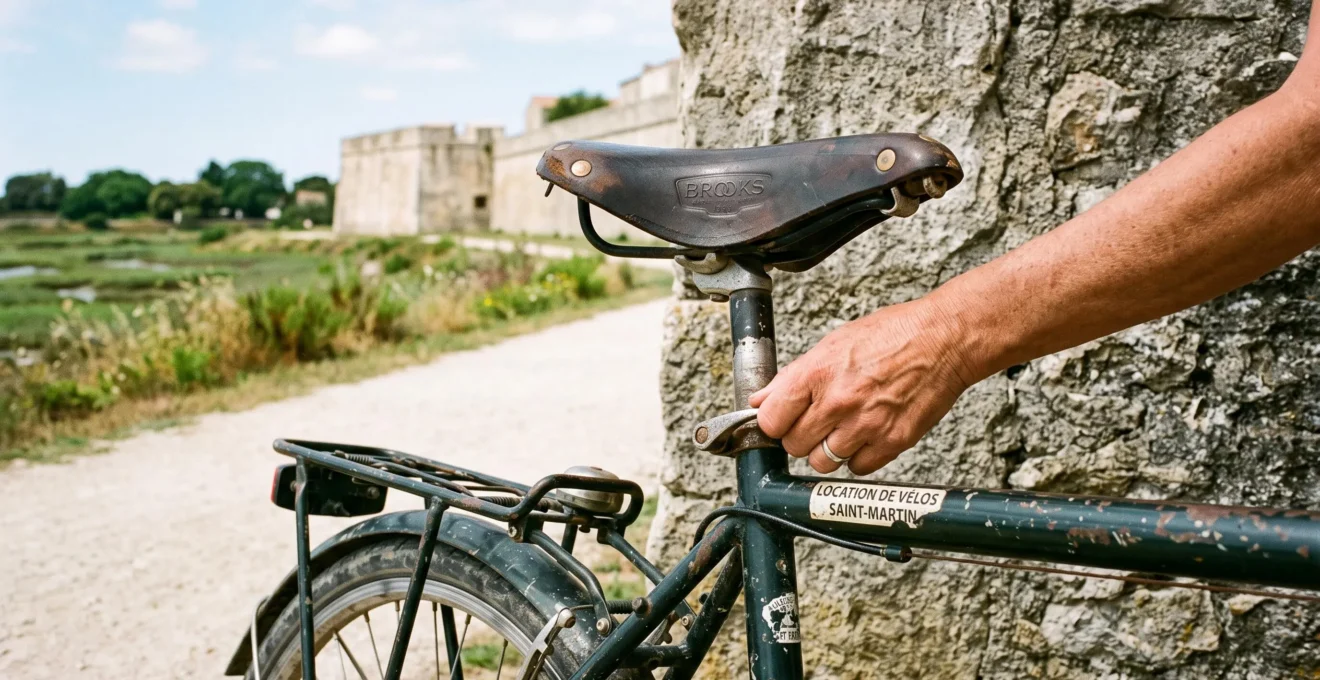
In practice, you’ll have two choices: hire a bike near where you’re staying, or pick one up as you head out of town. In high season, availability can be tighter, so it’s worth sorting bike hire early if cycling is central to your plan.
Think in terms of your daily route: if you’re staying outside the walls, you may want a bike for “everyday transport” into the centre, not just for a single day trip.
A typical day ride from Saint-Martin (simple and flexible)
A low-stress way to explore is to cycle from Saint-Martin to a neighbouring village for a long lunch, then return via a different route if you want variety. The point isn’t to “complete the island”—it’s to build a day that leaves you energy for an evening back at the port.
What documents do UK visitors need to travel to France?
For most holidays, UK citizens don’t need a visa for short stays in France, but passport validity rules matter. The UK Government travel advice states that British passport holders can visit for up to 90 days, and that passports must meet Schengen rules—including being issued less than 10 years before arrival and having at least 3 months’ validity after the date you plan to leave the Schengen area.
Check the latest wording (and any updates around border processes) on UK passport rules for France.
Planning Your Trip: A Simple Checklist
Use this checklist to finalise decisions quickly—especially if you’re booking for summer and you don’t want to lose time comparing scattered tips.
- Choose your base area
Short stay and first visit: aim for inside (or right next to) the Vauban walls. Longer stay or more space: expand the radius and plan to cycle in.
- Book early for peak weeks
If you’re travelling in July–August, treat accommodation as your first booking, not your last.
- Plan activities by season
In busy periods, prioritise early starts for cycling loops and keep one “centre-only” session for the port and ramparts.
- Decide your transport on the island
If you want flexibility without driving, make cycling your default and line up bike hire early.
- Verify your travel documents
Before departure, re-check passport validity against current UK Government guidance for France.
Is Saint-Martin-de-Ré walkable without a car for visiting the main attractions?
Yes for the main Saint-Martin sights: the harbour, old town and ramparts are easy to cover on foot if you stay in or near the centre. For beaches and other Île de Ré villages, plan on cycling (or another form of transport) to avoid spending your limited time on logistics.
How far in advance should I book accommodation in Saint-Martin-de-Ré for summer?
If you’re travelling in July or August, book as early as you can—central places inside the walls have limited stock, and the Île de Ré sees a large share of its annual visitors during those peak months (Destination Île de Ré Tourist Office). If you’re travelling outside peak weeks, you can usually be more flexible and focus on finding the right location-to-space balance.
Which area is best to stay in Saint-Martin-de-Ré for a first-time visitor on a short trip?
Inside the Vauban walls is the simplest choice: you can do the port, old town and ramparts without transport, and you can return to your accommodation easily between activities. If prices or availability don’t work, look just outside the walls and plan to cycle into the centre.
If you want the least stressful version of Saint-Martin-de-Ré, make one decision early: centre-first (inside the walls) for a short, walkable stay, or space-first (outside the walls) with cycling as your daily link. Then build your days around what the town does best—harbour atmosphere and historic ramparts—and use the bike network to “unlock” the rest of the Île de Ré.