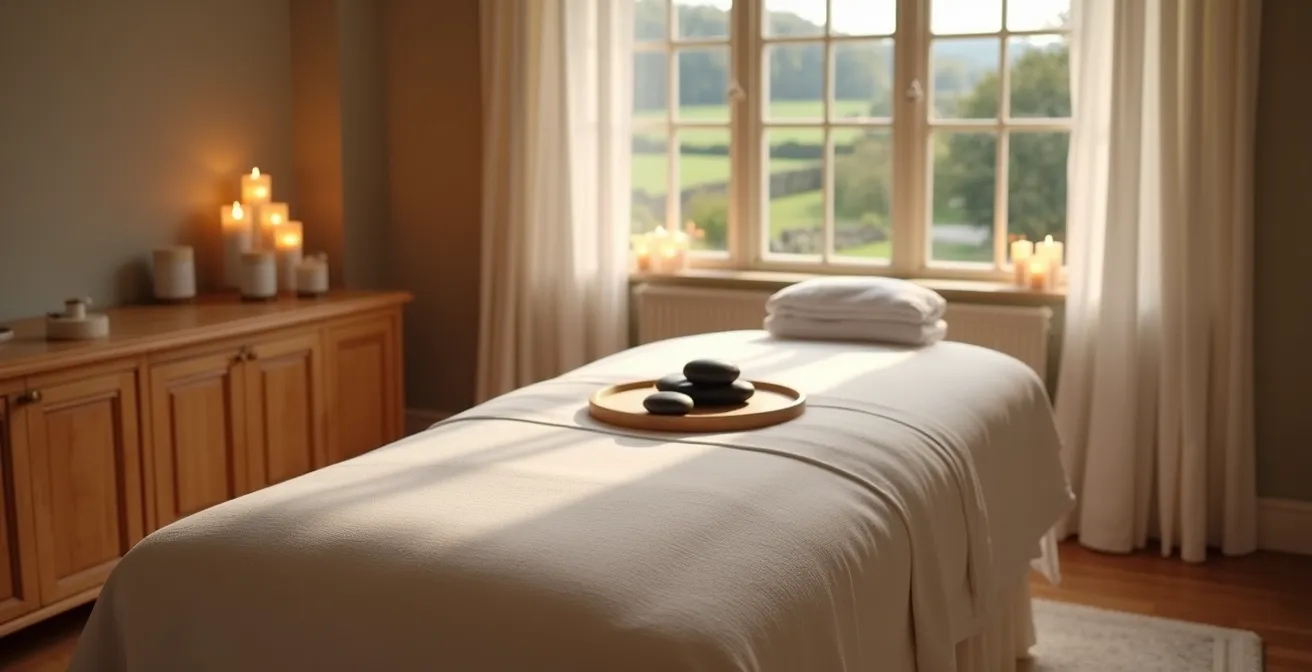
Navigating your first luxury spa day in the UK can feel daunting, fraught with unspoken rules about nudity, tipping, and behaviour. This guide moves beyond a simple checklist to reveal the underlying philosophy of care designed for your absolute comfort. By understanding the ‘why’ behind the etiquette, you can shed any anxiety and learn to communicate your needs confidently, ensuring a seamless and truly restorative experience.
The prospect of a luxury spa day should evoke feelings of blissful anticipation. Yet, for many first-time visitors, this is often clouded by a subtle anxiety. Questions swirl: What do I wear under the robe? Is it rude to speak during a treatment? How much should I tip, if at all? The fear of a social faux pas can detract from the very relaxation you seek. While many guides offer basic tips like ‘arrive early’ or ‘be quiet’, they rarely delve into the core of the matter.
The truth is, high-end UK spa etiquette is not a rigid set of rules designed to catch you out. It is a carefully crafted philosophy of care, an entire architecture of comfort built to protect your privacy and maximise your well-being. From the moment you arrive, every procedure and protocol is in place to create a seamless journey from the outside world to a state of deep tranquillity. The key to navigating it with grace is not memorising a list, but understanding this guest-centric design.
This guide will demystify the experience, not by just telling you the rules, but by explaining the purpose behind them. We will explore the nuances of communication with your therapist, the logic of thermal suite sequencing, the absolute standards on privacy and attire in the UK, and the discreet customs surrounding gratuities. By the end, you will feel less like a guest navigating a strange environment and more like a connoisseur of comfort, ready to fully embrace the restorative power of the spa.
To help you navigate every aspect of your visit with poise, this article breaks down the essential etiquette into clear, manageable sections. Discover the unspoken rules from the treatment room to the relaxation lounge.
Summary: A First-Timer’s Guide to UK Spa Etiquette
- Swedish vs Deep Tissue: Which massage actually fixes back pain?
- Why you must declare high blood pressure before a body wrap?
- Thermal suites sequence: Sauna or Ice room first for circulation?
- Single-sex vs mixed zones: What is standard in German vs UK spas?
- Day pass vs Treatment booking: Which offers better access?
- Service Compris: Why tipping 20% in France is unnecessary?
- Talking on phones: Why is it rude in Japan but normal in Italy?
- Ayurveda in Sri Lanka: What to expect from a Panchakarma cure
Swedish vs Deep Tissue: Which massage actually fixes back pain?
The effectiveness of any massage hinges less on the chosen technique and more on one crucial element: clear communication with your therapist. Whether you seek the relaxing strokes of a Swedish massage or the targeted pressure of a deep tissue treatment, the outcome is determined by how well you articulate your needs. UK therapists, particularly those with ITEC or VTCT qualifications, are trained to interpret specific descriptions to create a personalised protocol. Stating you have a ‘sore back’ is vague; explaining you have a ‘dull ache in your lower back from sitting at a desk’ gives them a precise roadmap for your treatment.
Many first-timers wonder if it is rude to speak during a massage. Rest assured, it is not. While you may choose to remain silent to fully relax, providing feedback is not only welcome but essential. A simple “the pressure is perfect” or “could you focus a little less on that area?” is part of the dialogue. The therapist’s primary goal is your comfort and the treatment’s efficacy. They would much rather you speak up than endure a moment of discomfort in silence. This is your time, and your feedback is the key to unlocking its full benefit.
To ensure your treatment is perfectly tailored, a thoughtful consultation is paramount. This is where you can discuss your lifestyle, pain points, and desired outcome, allowing the therapist to recommend the most suitable massage. Remember, deep tissue is not inherently ‘better’ than Swedish; they simply serve different purposes. One targets chronic muscle tension, while the other excels at promoting overall relaxation. Your honest input ensures you receive the treatment that your body truly needs.
Action Plan: Communicating Effectively with Your UK Spa Therapist
- Use specific language: Instead of ‘my back hurts’, try ‘I have a sharp pain between my shoulder blades, likely from exercise’. Be precise about the type and location of any discomfort.
- Share lifestyle context: Inform the therapist about your daily activities. Mentioning a sedentary office job, a new fitness routine, or frequent travel helps them understand the root cause of tension.
- Discuss pressure preference upfront: During the initial consultation, state whether you generally prefer light, medium, or firm pressure. This sets a baseline for the treatment.
- Provide real-time feedback: It is crucial to let the therapist know if the pressure is too firm or soft during the massage. They want you to be comfortable and can only adjust if you tell them.
- Clarify your goal before booking: Decide if you are seeking targeted pain relief (often deep tissue) or general stress reduction (often Swedish) and communicate this when you make your reservation.
Why you must declare high blood pressure before a body wrap?
Declaring pre-existing medical conditions on your spa health form is not a mere formality; it is a non-negotiable safety requirement. Treatments like body wraps, saunas, and steam rooms are designed to increase circulation and body temperature. For an individual with high blood pressure, this induced vasodilation can be dangerous, potentially leading to dizziness or a sudden drop in blood pressure. Reputable spas have a strict duty of care, and your honest disclosure allows them to protect your well-being.
In fact, the process is standard across the industry. It’s expected that all guests will be required to complete a health questionnaire prior to using any facilities. This isn’t about being intrusive; it is about creating a personalised, safe protocol for your visit. Conditions like high blood pressure, heart conditions, allergies, or pregnancy can significantly alter which treatments are safe for you. Failing to declare them puts you at risk and places the spa in an untenable position.
Should a treatment be contraindicated, the spa will not simply turn you away. Instead, they will use this information to guide you towards luxurious and equally beneficial alternatives. A guest with high blood pressure might be advised against a detoxifying thermal wrap but steered towards a prescriptive facial, a calming reflexology session, or a tension-relieving leg and foot treatment. The goal is always to provide a restorative experience, and that begins with ensuring it is a safe one. It is your duty to notify the spa of any health conditions before booking to allow them to prepare the perfect, and appropriate, experience for you.
Thermal suites sequence: Sauna or Ice room first for circulation?
The thermal suite, with its alluring array of saunas, steam rooms, and ice fountains, is a journey in itself. The classic and most effective sequence for boosting circulation is based on contrast therapy: heat, followed by cold, followed by rest. Begin your journey in a sauna or steam room for 10-15 minutes. The heat opens up your pores, relaxes your muscles, and increases blood flow to the skin. This prepares your body for the next crucial step.
After the heat, a brief but invigorating exposure to cold is essential. This could be a quick rinse under a cold shower, a brisk rub-down with ice from an ice fountain, or a plunge into a cold pool. The cold shock constricts the blood vessels, flushing toxins and reducing inflammation. This hot-cold cycle acts like a pump for your circulatory system. The final step is to allow your body to rest for a few minutes in a relaxation area, letting your heart rate return to normal before repeating the cycle if desired.
Many guests also wonder if they should shower before using these facilities. The answer is an emphatic yes. A quick rinse beforehand is not just good hygiene; it removes surface lotions and impurities, allowing your skin to benefit more fully from the heat. On a related note, a critical piece of spa wisdom is to use spa facilities before your booked treatment, not after. Any luxurious oils or serums applied during your massage or facial will simply be washed or sweated off in the pool or sauna, diminishing the benefits of your treatment.
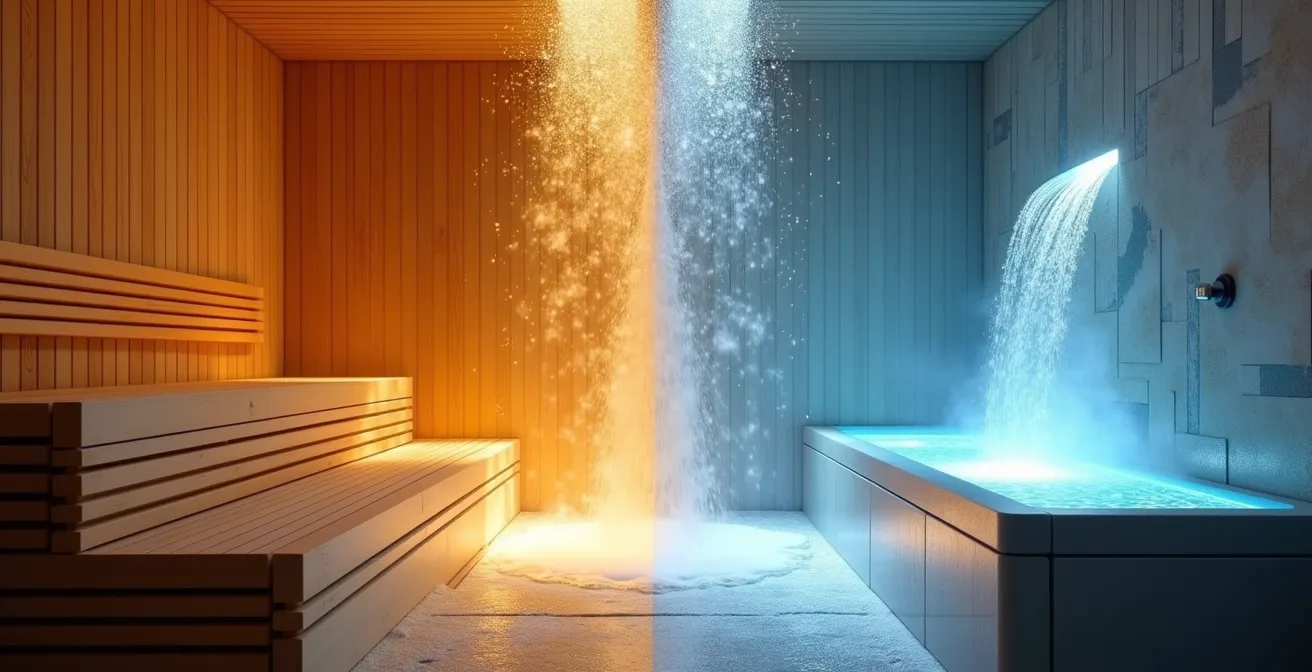
By following this simple ‘heat-cold-rest’ protocol and using the facilities prior to your main treatment, you are not just following rules; you are actively preparing your body and skin to receive the maximum benefit from the entire spa experience. This is the art of using the spa’s environment to its fullest potential.
Single-sex vs mixed zones: What is standard in German vs UK spas?
Perhaps the greatest source of anxiety for a first-time spa-goer is the question of nudity. It is here that UK spa etiquette differs profoundly from some of its European neighbours. In countries like Germany or Austria, ‘textile-free’ (i.e., mandatory nudity) is the standard in saunas and wellness areas. In the UK, the culture is the polar opposite, built around a philosophy of absolute discretion and personal comfort. You can relax: there is no expectation of nudity in mixed-sex areas.
The standard protocol is clear. An overwhelming majority— over 95% of UK spas—require you to wear at least swimwear or your robe in all public, mixed-sex spaces, including saunas and steam rooms. So, what should you wear under your robe? A swimming costume is customary. Most spas have single-sex changing rooms where you can change in privacy. Within these changing rooms, you will find lockers for your belongings, showers, and dedicated areas to transition into your robe and slippers. Nudity is perfectly acceptable within the confines of the single-sex changing room, but not beyond it.
During a treatment like a massage, you will be asked to undress to your level of comfort. For most, this means removing all clothing, but you can choose to keep your underwear on if you prefer. This is a perfect example of the spa’s “comfort architecture.” Therapists are impeccably trained in draping techniques, using towels and sheets to ensure only the part of your body being worked on is exposed. Your privacy is paramount. A particularly insightful tip for a full spa day is to bring two sets of swimwear; this allows you to change into a dry costume before lunch or another treatment, significantly enhancing your comfort.
Day pass vs Treatment booking: Which offers better access?
Gaining access to the serene world of a luxury spa can be approached in two primary ways: by purchasing a ‘spa day pass’ or by booking a specific treatment. For the discerning guest seeking the full, uncompromised experience, booking a significant treatment is unequivocally the superior option. A day pass may seem like a cost-effective way to sample the facilities, but it often comes with considerable restrictions, especially at high-end establishments.
Typically, a day pass will grant you access for a limited time—often just a few hours—and may restrict you to certain areas, such as just the swimming pool. At the most exclusive venues, day passes are simply not offered. For instance, access to the Aman Spa at The Connaught is exclusively for hotel guests, members, and those with treatment packages over 90 minutes. This strategy preserves an atmosphere of tranquillity and exclusivity, ensuring the facilities are never overcrowded.
Conversely, booking a treatment of a certain length (usually 60 or 90 minutes) often unlocks comprehensive access to all spa facilities for a much longer period, sometimes the entire day. This transforms your visit from a brief dip in the pool to a holistic day of wellness, allowing you to fully immerse yourself in the thermal suites, relaxation lounges, and other amenities at a leisurely pace. It reframes the treatment not as a standalone purchase, but as the key to a complete restorative journey.
The following table illustrates the typical differences in access, highlighting why a treatment booking offers far greater value for a truly immersive experience.
| Access Type | Facilities Included | Typical Duration | Cost Range |
|---|---|---|---|
| Day Pass | Pool, limited areas | 3 hours max | £50-100 |
| Treatment Booking (90+ mins) | Full facilities including pool, sauna and steam room for two hours as part of experience | Full day access | £120+ |
Service Compris: Why tipping 20% in France is unnecessary?
While a generous 20% tip might be standard in the US, and the concept of ‘service compris’ makes tipping largely redundant in France, UK spa tipping etiquette occupies a more nuanced middle ground. The culture is one of appreciation rather than obligation. Tipping is seen as a gratuity as dialogue—a way to acknowledge service that went above and beyond, rather than a mandatory supplement to a therapist’s wage.
Many establishments, particularly those within hotels, will automatically add a discretionary service charge of around 10-12.5% to your bill. If this is the case and you were satisfied with your experience, you are not expected to tip further. Simply paying the bill with a warm thank you is perfectly acceptable. However, it is worth noting that these service charges do not always go directly to your therapist. If you have received truly exceptional care and wish to thank the individual personally, a cash tip is the most direct and appreciated method.
If no service charge is included, a tip of around 10% of the treatment cost is a customary and gracious gesture. For an hour-long treatment, a cash tip of £10-£20, given discreetly to the therapist or left in an envelope at reception, is considered generous. This should never feel like a source of stress; tipping in the UK is always at your discretion. It is a quiet, personal acknowledgement of outstanding skill and care, not a requirement.
Ultimately, the most important thing is to express your gratitude in a way that feels comfortable to you. A sincere, personal ‘thank you’ to your therapist for their excellent work is often valued as much as any monetary gesture. The system is designed to remove pressure, allowing you to focus on your relaxation.
Talking on phones: Why is it rude in Japan but normal in Italy?
While mobile phone norms can vary wildly from the silent reverence of a Japanese onsen to the lively chatter of an Italian cafe, within a UK spa, the rule is absolute and universal: silence is golden. The spa environment is a sanctuary, a shared space dedicated to peace and digital detox. The use of mobile phones for calls, videos, or even texting directly contravenes this core principle. It is considered the most significant breach of spa etiquette.
The policy is not open to interpretation. As official UK spa guidelines state clearly, it is a key rule that mobile phone use is prohibited. The reasoning is simple: the sound of a notification, a quiet conversation, or the glow of a screen can instantly shatter the tranquillity for everyone around you. It pulls you, and others, out of the carefully cultivated atmosphere of calm that you are all there to enjoy. Some spas may permit phone use in the main reception area, but even then, it is expected that you do so respectfully and in a hushed voice to avoid disturbing arriving or departing guests.
To fully embrace the experience, consider your spa visit an opportunity for a true digital detox. Leave your phone secured in your locker. Disconnecting from the outside world allows your mind to quieten and your senses to fully engage with the present moment—the warmth of the sauna, the scent of essential oils, the feeling of complete relaxation. As the Better Spa Experience guidelines state directly:
Please do not use videos, cameras, mobile phones, tablets or personal stereos during your visit.
– Better Spa Experience, Official UK Spa Etiquette Guidelines
Respecting the no-phone policy is more than just following a rule; it is a gesture of respect to your fellow guests and a gift of true presence to yourself. It is a fundamental part of the collective agreement to maintain the spa as a haven of peace.
Key takeaways
- UK spa etiquette prioritises guest privacy; swimwear is required in all mixed-sex wet areas, unlike some European spas.
- Effective and specific communication with your therapist about pain and pressure is welcomed and essential for a beneficial treatment.
- Declaring all health conditions is a non-negotiable safety measure that allows the spa to provide a safe, personalised experience.
Ayurveda in Sri Lanka: What to expect from a Panchakarma cure
As your spa journey evolves, you may encounter treatments inspired by global traditions, such as Ayurveda. It is important to understand that what is offered in a UK spa is typically an adaptation, focused on relaxation, rather than a direct replication of a traditional practice. This is especially true when compared to something as intensive as a Panchakarma cure in its native Sri Lanka or India. The context and goals are fundamentally different.
A Panchakarma is a rigorous, multi-week medical detoxification process involving prescribed diets, purgatives, and intensive therapies, all overseen by an Ayurvedic doctor. In contrast, an Ayurvedic-inspired treatment in a UK luxury spa uses the principles of Ayurveda—such as balancing your ‘dosha’ or energy type—as a framework for a deeply relaxing and aromatic experience. It will likely involve a massage with warm, herb-infused oils tailored to you, but it is not a medical procedure.
Understanding this distinction is key to managing your expectations. You are booking a restorative wellness treatment, not a clinical detox. The focus is on calming the nervous system and nourishing the skin within the luxurious, time-constrained environment of a spa day. For those seeking authentic, practitioner-led Ayurvedic medicine in the UK, it is best to look for dedicated centres with practitioners accredited by bodies like the Ayurvedic Professionals Association (APA), rather than a hotel spa menu.
This does not diminish the value of a spa’s Ayurvedic treatment; it simply clarifies its purpose. It is an invitation to experience the beautiful sensory elements of an ancient tradition, adapted for modern relaxation. By appreciating it for what it is—a luxurious, calming therapy—you can fully enjoy its unique benefits without any misplaced expectations of a full-body medical overhaul.
Now that you are equipped with the knowledge to navigate your spa day with the poise of a seasoned regular, the final step is to put it into practice. A world of serene, sophisticated relaxation awaits, and you are now ready to step into it with complete confidence.
Frequently Asked Questions about Spa Etiquette in the UK
What’s the difference between authentic Panchakarma and UK Ayurvedic treatments?
UK spa Ayurvedic treatments focus on relaxation with dosha-tailored oils, while authentic Panchakarma in Sri Lanka involves intense medical detoxification over multiple weeks under a doctor’s supervision.
Should I speak during an Ayurvedic treatment in the UK?
While you can provide feedback on pressure or comfort, it is generally polite to refrain from general conversation in treatment rooms and relaxation areas, as other spa users might be resting or unwinding in nearby spaces.
Where can I find authentic Ayurvedic treatments in the UK?
For authentic, practitioner-led treatments, look for dedicated centres with practitioners holding credentials from the Ayurvedic Professionals Association (APA) rather than relying solely on hotel spa menus.