
A long queue is a poor proxy for food safety; the busiest stalls can still pose the highest risk of cross-contamination.
- True hygiene is revealed by a vendor’s process discipline, such as using separate hands or tools for handling money and food.
- Effective temperature control is non-negotiable: hot food must be visibly steaming (above 63°C), not just sitting in a lukewarm warmer.
- The integrity of water sources is paramount, impacting everything from ice cubes in drinks to the washing of raw salads.
Recommendation: Audit the vendor’s system, not their popularity, before you order. This guide shows you how.
The allure of street food is undeniable. It’s a direct, vibrant connection to a local culture, offering authentic flavours at a fraction of restaurant prices. In the UK alone, the scene is booming; the number of vendors has skyrocketed, with an estimated 7,000 street food vendors in 2023, up from 2,000 in 2018. For the cautious foodie, navigating this landscape can feel like a gamble. The most common piece of advice passed between travellers is simple: “look for the longest queue.” The logic seems sound—popularity must equal quality and safety.
However, from a public health inspector’s perspective, this is a dangerously flawed assumption. Popularity can indicate good flavour, but it reveals very little about the vendor’s adherence to critical food safety protocols. High turnover can lead to rushed practices, cutting corners, and an increased risk of foodborne illness. The real indicators of safety are often subtle, hidden within the vendor’s workflow and setup. They are the details that an untrained eye might miss but which make all the difference between a memorable meal and a trip-ruining illness.
This guide abandons the “queue rule” in favour of a more rigorous, systematic approach. We will dissect the street food environment through the lens of a health inspector, focusing on the critical control points that determine microbiological integrity. You will learn to audit a vendor’s process, from how they handle currency to the source of their ice, empowering you to make informed decisions and enjoy the world’s street food with confidence and peace of mind.
This article provides a systematic framework for assessing street food safety. The following sections break down the key inspection points you should master to eat safely and cheaply, whether at home in England or while travelling abroad.
Summary: A Systematic Guide to Street Food Hygiene
- Money and gloves: Does the cook touch cash and food with the same hand?
- Ice cubes in street drinks: Are they factory-made or tap water?
- The danger of the buffet warmer: Why heat lamps are not enough?
- Chopsticks in plastic wrappers: Are they actually sterile?
- Charcoal tablets vs Imodium: What to take when it goes wrong?
- When to trust local water sources: The bottle vs tap dilemma
- Raw salads and street juice: What to absolutely avoid during your training?
- Which travel vaccinations are available for free on the NHS?
Money and gloves: Does the cook touch cash and food with the same hand?
This is the first and most critical observation in your hygiene audit. Money is one of the dirtiest items in circulation, teeming with bacteria and pathogens. A vendor who handles cash and then touches food—even with gloves on—is creating a direct highway for cross-contamination. The purpose of gloves is to provide a barrier between hands and food, but if that gloved hand touches money, the barrier is compromised, and the gloves become a contamination vehicle.
An organised vendor demonstrates process discipline. Look for a system. Does one person handle money while another exclusively handles food? If the vendor works alone, do they remove their glove to take payment and then put on a new one to prepare the next order? Alternatively, they might use tongs or other utensils to handle money, keeping their food-handling hand pristine. A visible handwashing station or the frequent use of hand sanitiser between tasks is also a strong positive indicator.
Conversely, a vendor who takes your money with a gloved hand and immediately proceeds to assemble your wrap or grab a handful of ingredients is a major red flag. This single observation speaks volumes about their understanding of basic food safety principles. This is not about the visible cleanliness of the stall; it’s about the invisible transfer of microbes. A lack of separation between currency and food preparation is a clear sign that the risk of consuming something harmful is significantly elevated.
Ice cubes in street drinks: Are they factory-made or tap water?
In many parts of the world, tap water is not potable for visitors whose bodies are unaccustomed to the local microorganisms. This risk extends directly to ice. A refreshing drink can quickly become a source of gastrointestinal distress if the ice is made from contaminated tap water. Therefore, assessing the ice is a non-negotiable part of your street food audit. The key is to distinguish between commercially produced, purified ice and homemade ice.
Factory-made ice is typically uniform in shape and often has a characteristic hole through the centre. It’s usually clear, not cloudy, as it’s made with filtered water. In many countries, you will see large trucks delivering these bags or blocks of commercial ice to vendors in the morning. This is a very good sign. Vendors using this ice have made a conscious investment in safety. As a case in point, travellers in Southeast Asian markets often observe large, clear blocks of ice being delivered, indicating a centralised, and likely safer, supply chain.

In contrast, ice that is cloudy, irregular in shape, or solid all the way through is more likely to be frozen tap water. If you have any doubt about the water quality in the region, this is a clear signal to avoid iced drinks. The mantra “when in doubt, go without” is your best defence. Opt for bottled or canned drinks that you open yourself, and always ask for them without ice if you cannot verify its source. Your vigilance here is a crucial barrier against a host of waterborne pathogens.
The danger of the buffet warmer: Why heat lamps are not enough?
Pre-cooked food held for service in bain-maries or under heat lamps is a common sight at street food stalls and buffets. While this appears convenient, it represents a significant microbiological risk if not managed correctly. Bacteria multiply rapidly in what is known as the “Temperature Danger Zone”. For a cautious foodie, understanding this zone is critical to avoiding illness.
As food safety regulations in the UK and internationally stipulate, this danger zone lies between 5°C and 63°C. Food held within this range for an extended period can become a breeding ground for harmful bacteria like Salmonella and E. coli. A simple heat lamp or a weakly steaming bain-marie often fails to keep food above the safe threshold of 63°C. The food might feel warm to the touch, but it’s likely sitting squarely in the danger zone. The safest option is always food that is cooked to order, fresh, and served piping hot—visibly steaming.
This is reinforced by food safety experts. As noted by one professional body, “Poor hygiene and unsafe practices, such as not cooking or chilling high-risk food sufficiently, and cross-contamination, can cause food poisoning”. The table below, based on international food safety standards, clarifies these critical temperature thresholds.
| Temperature Zone | Risk Level | Food Safety Status |
|---|---|---|
| Above 63°C | Safe | Hot food properly held |
| 5°C – 63°C | Danger Zone | Rapid bacterial growth |
| Below 5°C | Safe | Cold food properly stored |
When you see food sitting out, ask yourself: Is it steaming vigorously, or does it look like it’s been sitting there for a while? If it’s the latter, the risk is not worth it. This principle is one of the most important in preventing food poisoning from pre-prepared meals.
Chopsticks in plastic wrappers: Are they actually sterile?
Individually wrapped cutlery seems like a guarantee of hygiene, but the wrapper is only as clean as the environment in which it’s stored. A plastic-wrapped pair of chopsticks or a fork pulled from a dusty, open-to-the-elements box on the side of a cart offers a false sense of security. The wrapper itself can be contaminated. From an inspector’s viewpoint, the storage and handling of these items are just as important as the wrapping itself.
Observe where the utensils are kept. Are they in a clean, closed container, protected from dust, splashes, and insects? Or are they in a grimy, open bin? Also, watch how other customers and the vendor handle them. The state of shared condiment bottles on the counter—sticky, crusty, or clean—is another excellent proxy for the vendor’s overall hygiene standards. In many Asian food establishments, a pot of hot water or tea is provided on the table. This is often intended for rinsing your chopsticks and bowls before eating, a local custom that serves as a practical, final-step sterilisation.
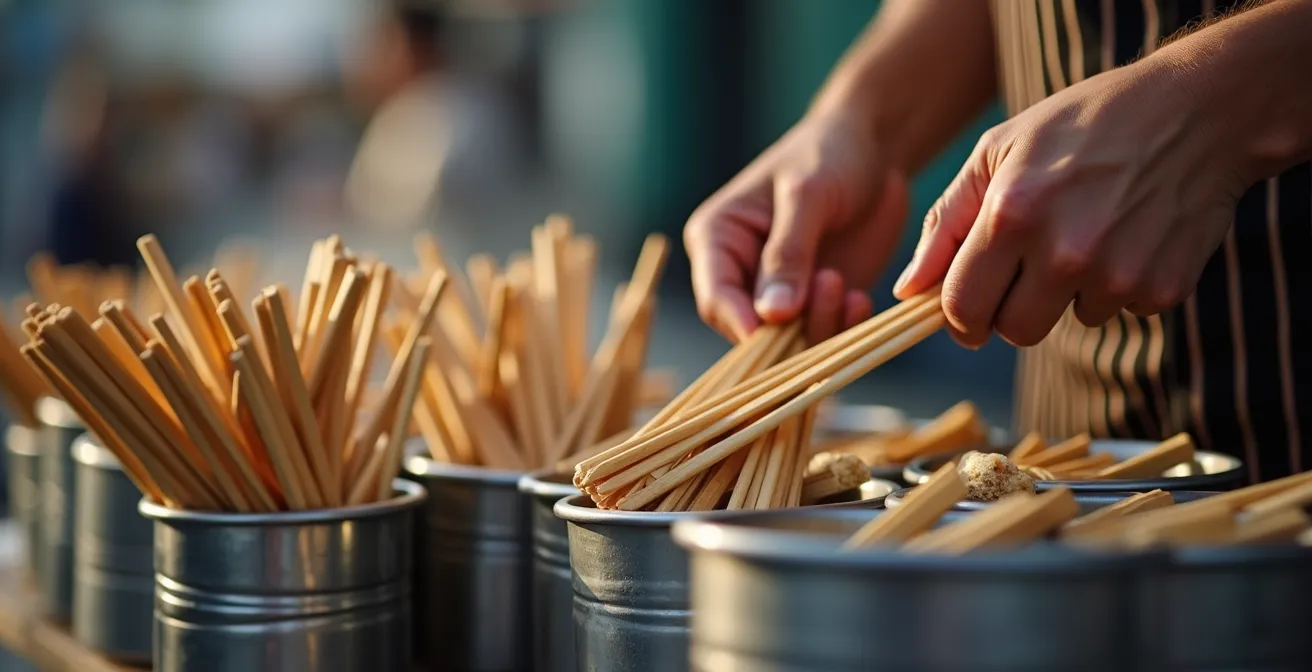
For the truly cautious, the best solution is to remove the variable entirely. Carrying your own reusable travel cutlery (like a spork or a compact set) is the ultimate safeguard. It ensures you always have a clean utensil, regardless of the vendor’s practices. A small packet of alcohol wipes can also be invaluable for sanitising stall-provided cutlery or even the rim of a glass if you have doubts.
Your Pre-emptive Cutlery Safety Protocol
- Observe utensil storage: Are wrapped utensils kept in a clean, covered container?
- Carry personal tools: Pack a reusable spork or travel cutlery set to eliminate risk.
- Pack sanitising wipes: Keep alcohol wipes on hand for cleaning shared utensils or glasses just in case.
- Assess condiment cleanliness: Check the condition of shared condiment bottles as an indicator of overall hygiene.
- Practise the local rinse: If hot tea or water is provided at the table, use it to rinse your utensils and bowl before use.
Charcoal tablets vs Imodium: What to take when it goes wrong?
Even with the most careful precautions, traveller’s diarrhoea can sometimes occur. When it does, knowing how to react is crucial. The market offers various remedies, but using them correctly depends on understanding the likely cause of your illness. It’s important to know that, according to CDC research, bacteria account for 80-90% of traveler’s diarrhea cases. This fact informs the best course of action.
Imodium (loperamide) works by slowing down your gut. This can be useful for practical reasons, like enduring a long bus journey, but it can also be counterproductive. Diarrhoea is your body’s natural mechanism for expelling the harmful bacteria or toxins. Stopping this process can trap the pathogen inside, potentially prolonging or worsening the infection. The NHS advises caution, especially for children. Activated charcoal is often touted as a remedy that ‘binds’ to toxins, but clinical evidence for its effectiveness in typical food poisoning is limited and it can interfere with the absorption of other medications.
The primary and most important treatment for any bout of gastroenteritis is hydration. You lose significant fluids and electrolytes, and replacing them is paramount to recovery. Oral rehydration salts, available from any pharmacy, are specifically designed for this purpose and are far more effective than water alone. You should rest and focus on fluid intake. According to NHS recommendations, if you’ve had diarrhoea or been vomiting, you should stay off work or school until you’ve not been sick or had diarrhoea for at least 2 days. This is to prevent spreading the illness, and the NHS recommendations state you should wait at least 48 hours minimum after symptoms pass before returning.
When to trust local water sources: The bottle vs tap dilemma
The question of water safety is a constant for any traveller. The golden rule, especially in developing countries or regions with different water treatment standards, is a simple, effective mantra: “Boil it, cook it, peel it or forget it.” This principle should guide all your consumption choices, extending beyond just drinking water. When it comes to hydration, bottled water is your most reliable ally.
However, not all bottled water is created equal. A common scam involves refilling old bottles with tap water and re-sealing them. Before you buy, perform a quick physical check. Squeeze the bottle—a factory-sealed bottle will be firm and might crackle, while a refilled one might be softer. Inspect the seal itself. Is it intact? Does it look like a standard, machine-applied ring, or does it appear to have been tampered with? Listening for the crisp ‘crack’ upon opening is another good confirmation of a genuine seal.
For the eco-conscious traveller looking to reduce plastic waste, other options exist but require diligence. Portable UV steriliser pens can neutralise microorganisms in clear water, and water purification tablets are a reliable backup for emergencies. Some destinations have a growing network of safe, filtered water refill stations, often found in guesthouses or cafes. Asking locals or fellow travellers about trusted refill points can be a great way to stay hydrated safely and sustainably. However, unless you can verify the source with absolute certainty, the default position should always be sealed, bottled water—even for tasks like brushing your teeth.
Raw salads and street juice: What to absolutely avoid during your training?
While a fresh salad or a vibrant fruit juice can seem like a healthy choice, they represent one of the highest risks in a street food environment. The danger lies in two main areas: the water used to wash the ingredients and the fact that they are not cooked. Cooking is a powerful sterilisation process that kills most harmful bacteria; raw foods offer no such safety net. Any pathogens present on the produce or in the wash water will be consumed directly.
The general rule for raw produce is simple and effective. As food writer Chris Kretzer of Nomadic Foodist advises:
Regarding fruit: if you can peel it, you can eat it. As for raw veggies, the general rule is to skip them. Raw veggies are cleaned with tap water, which can, of course, make you sick.
– Chris Kretzer, Nomadic Foodist – Street Food Safety Guide
This means fruits like bananas, oranges, and mangoes, which you peel yourself, are generally safe. Conversely, pre-cut fruit platters or items like apples and grapes, which are eaten with their skin on, carry a higher risk. Raw salads, lettuce, and uncooked herbs are particularly hazardous as they are almost certainly washed in local tap water, which may not be safe for consumption.
Freshly squeezed juices pose a similar threat. The exterior of the fruit can be contaminated, and that contamination can be transferred to the juice during preparation. Furthermore, the juicing equipment itself may not be adequately cleaned between uses. The risk of contamination is real and can have severe consequences. A stark reminder from the UK was the 2013 Street Spice festival food poisoning outbreak, where poor hygiene led to over 400 people reporting symptoms and 29 confirmed cases of salmonella. When it comes to uncooked items, exercising maximum caution is the only rational approach.
Key Takeaways
- Process over Popularity: Judge a vendor by their hygiene system (e.g., separating money and food handling), not the length of their queue.
- Temperature is a Vital Sign: Only consume food that is cooked to order and served steaming hot. Avoid anything lukewarm.
- Water is a Vector: Be vigilant about the source of all water, including ice in drinks and the water used to wash raw salads and fruits.
- Prepare for Prevention and Reaction: Utilise available preventative measures like NHS vaccines and know the correct protocol (hydration first) if you do get sick.
Which travel vaccinations are available for free on the NHS?
A proactive approach to health is the final layer of your street food safety strategy. While diligent observation can mitigate many risks, vaccination provides a crucial biological defence against some of the most common and serious food and waterborne diseases. For residents of England, the NHS provides several key travel vaccinations free of charge, as they protect against pathogens you might encounter through contaminated food and water.
The most relevant of these are the vaccines for Hepatitis A and Typhoid. Hepatitis A is a viral liver infection spread through food or water contaminated by even microscopic amounts of faecal matter from an infected person—a direct risk with any lapse in a food handler’s hygiene. Typhoid fever is a serious bacterial infection caused by Salmonella Typhi, also spread through contaminated food or water. Securing these vaccinations from your GP well in advance of your trip is a fundamental step in responsible travel health.
Other vaccines, like Cholera, are not routinely offered for free but may be recommended depending on your destination, particularly if you are travelling to areas with known outbreaks or poor sanitation. The table below, based on information from the UK’s Travel Health Pro service, outlines the key NHS-covered vaccines relevant to street food risks.
| Vaccine | NHS Coverage | Protection Against |
|---|---|---|
| Typhoid | Free on NHS | Salmonella Typhi from contaminated food/water |
| Hepatitis A | Free on NHS | Food handled by an infected person |
| Cholera | Not routine | Severe diarrhoea from contaminated water |
It’s essential to consult your GP or a travel clinic at least 4 to 6 weeks before your departure. They can provide the most up-to-date advice based on your specific itinerary and ensure your vaccinations are current, providing a vital safety net before you even take your first bite of street food.
By shifting your focus from following the crowd to conducting a quick, systematic hygiene audit, you transform from a hopeful tourist into an informed consumer. This inspector’s mindset empowers you to navigate the world’s diverse culinary landscape with confidence. To apply this framework effectively, start by scheduling a consultation with your GP to discuss the necessary travel vaccinations for your destination.
Frequently Asked Questions on Street Food Sickness
When should I use Imodium (loperamide)?
NHS advises against giving anti-diarrheal medicine to children under 12. For adults, use only if absolutely necessary, as stopping diarrhea can prevent your body from eliminating the infection.
What’s the most important treatment for food poisoning?
Stay hydrated with lots of fluids. The NHS emphasizes oral rehydration as the primary treatment, using special rehydration drinks from pharmacies if needed.
When should I seek medical help?
Contact your GP or call 111 if symptoms persist beyond 2 days, if there’s blood in stool, or if you show signs of severe dehydration.