
The fear of trying insects in Thailand isn’t about being brave; it’s about lacking a strategy. The key is to shift from a mindset of risk to one of informed assessment.
- Safety isn’t about a ‘clean look’ but about specific food safety cues like oil quality and customer turnover.
- The ‘yuck’ factor is primarily a texture problem, which can be overcome by starting with insects that resemble familiar crunchy snacks.
Recommendation: Begin your journey with bamboo worms, the ultimate ‘gateway bug’, and pair them with a cold local beer to enhance the salty, crunchy experience.
The thought of eating a fried scorpion in Thailand often triggers a visceral reaction, a blend of morbid curiosity and a powerful ‘yuck’ factor. For the adventurous eater, it represents a final frontier of culinary exploration, but one fraught with hesitation. The common advice to “just be brave” or “go for it” completely misses the point. The real barriers are a genuine fear of food poisoning and a deep-seated aversion to unfamiliar textures. Simply telling yourself it’s a good source of protein does little to quiet the voice in your head wondering if that bug has been sitting under a heat lamp for hours.
This guide isn’t about courage; it’s about strategy. We’ll dismantle the challenge of entomophagy (the practice of eating insects) into a series of logical, manageable steps. Forget the generic advice. Instead, we’ll equip you with a risk assessment mindset, teaching you how to read the subtle but crucial food safety cues of a street vendor, just as an experienced local would. This isn’t a dare; it’s a calculated exploration. Research shows that over 2 billion people in the world supplement their diets with bugs, a testament to their viability as a food source when prepared correctly.
The core of this approach lies in understanding that the primary psychological hurdle is not taste, but texture. We will introduce the concept of a “texture ladder,” a progressive way to approach edible insects, starting with those that are light, airy, and remarkably similar to a packet of crisps. By reframing the experience from a test of bravery to a sensory navigation, you can systematically and safely push your culinary boundaries. This guide will show you how to choose your first insect, what to drink with it, and, most importantly, the critical safety warnings you must not ignore.
This article provides a structured path to confidently and safely enjoy one of Thailand’s most unique culinary experiences. Below, you will find a detailed breakdown of how to assess vendors, choose the right insects, and understand the real safety considerations.
Contents: Your Guide to Eating Insects in Thailand
- Oil Turnover: How to Spot Fresh Frying Oil at a Bug Stall?
- Why Texture Is the Biggest Barrier for Western Palates?
- Bamboo Worms vs Scorpions: Which Is the ‘Gateway Bug’?
- Beer or Tea: What Washes Down Spicy Cricket Best?
- Shellfish Allergy Warning: Why Cricket Protein Triggers the Same Reaction?
- The Danger of the Buffet Warmer: Why Heat Lamps Are Not Enough?
- How to Handle Mild Fever from Typhoid Jabs Before Your Flight?
- The Queue Rule: Is a Long Line Always a Guarantee of Safe Street Food?
Oil Turnover: How to Spot Fresh Frying Oil at a Bug Stall?
The single most important visual cue for a safe insect vendor isn’t the tidiness of the cart, but the quality of the frying oil. Old, degraded oil not only imparts a rancid taste but is also a sign of poor hygiene practices. Your first assessment should be a quick ‘oil audit’. Fresh oil is clear and light-coloured, while old oil becomes dark, thick, and syrupy from repeated use and particle buildup. A vendor who prioritises quality understands that the frying medium is as important as the food itself.
Watch the vendor’s process. Professional vendors at popular spots like Talad Rot Fai in Bangkok know their reputation depends on quality. They often use separate woks for different insects to prevent flavour transfer and are known to change their oil daily, especially during high season. This commitment to quality is your best assurance of safety. Look for a vendor who is actively frying, not just serving from a pre-cooked pile. The sights and sounds of active cooking are a positive sign.
Pay attention to the surface of the oil. Constant, thick smoke rising from the wok before any food is added is a red flag, indicating the oil is past its smoke point and breaking down. Similarly, excessive foaming that doesn’t quickly dissipate suggests old oil contaminated with moisture and food debris. A key indicator of a diligent vendor is observing them regularly skimming floating particles from the oil with a mesh skimmer. This simple action prevents charring and maintains the oil’s integrity, ensuring each bug is fried to a clean, crisp finish. Ultimately, freshly fried bugs will be glistening and vibrant, not caked in dark, flaky sediment from a dirty fryer.
This initial visual check is the foundation of your risk assessment, allowing you to quickly filter out subpar vendors before you even consider the insects themselves.
Why Texture Is the Biggest Barrier for Western Palates?
For most Westerners, the primary obstacle to eating insects isn’t the taste, which is often surprisingly neutral and nutty, but the texture. Our palates are conditioned to expect certain textural experiences from our food, and the combination of a crunchy exoskeleton with a potentially soft or “juicy” interior can be psychologically challenging. This is the heart of the ‘yuck’ factor. Understanding and managing this textural expectation is the key to successfully trying your first bug. The goal is to start on the lowest rung of the “texture ladder.”
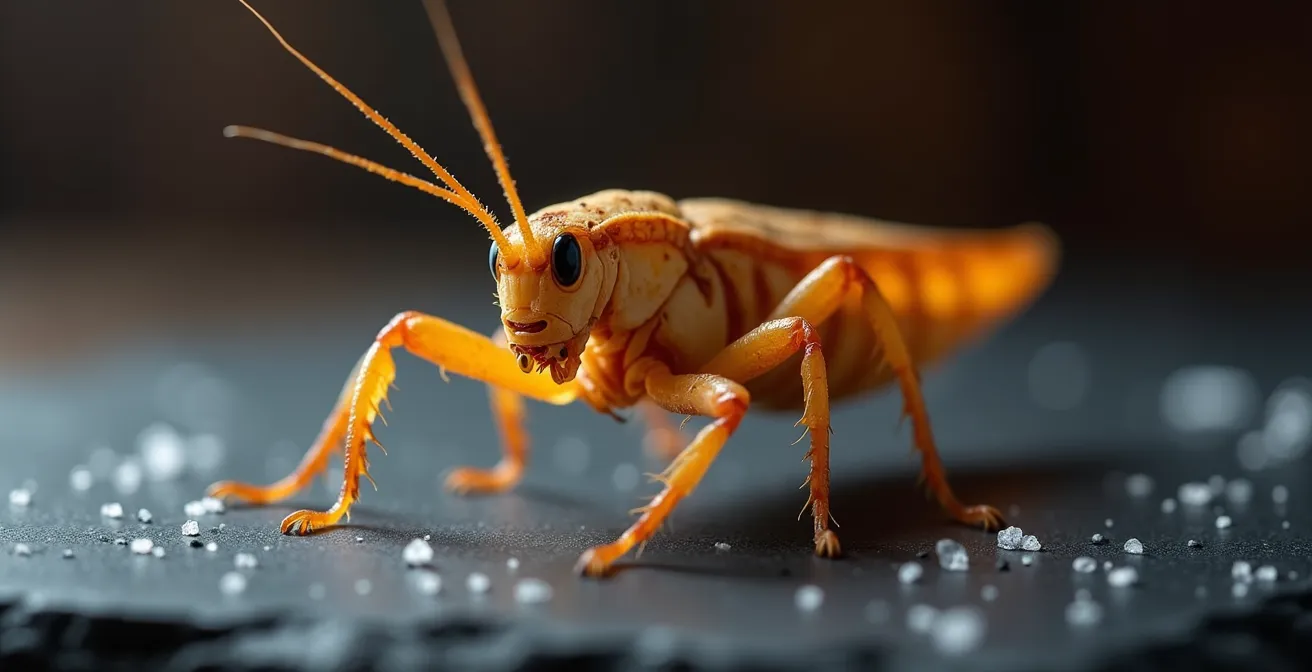
You need to begin with insects that offer a familiar, non-threatening texture. Think of something light, airy, and uniformly crunchy, similar to a savoury snack. This is why small grasshoppers, crickets, and especially bamboo worms are ideal starting points. Their texture is almost entirely “crisp,” without the surprising soft centre that can trigger a negative reaction. They are, in essence, savoury, multi-legged crisps. Approaching it this way reframes the experience from “I’m eating a bug” to “I’m trying a new type of crunchy snack.”
To help you navigate this, here is a guide comparing common Thai insects to more familiar foods from a UK perspective. This “texture map” will allow you to choose your first insect based on a predictable sensory experience, building your confidence to try more complex options later.
This comparative table helps demystify the textures you’ll encounter, providing a clear path from beginner-friendly crunch to more advanced combinations.
| Insect Type | Texture Profile | UK Food Comparison | Difficulty Level |
|---|---|---|---|
| Bamboo Worms | Very neutral tasting, like a cheese-less Cheeto | Wotsits or puffed rice cereal | Beginner |
| Silk Worms | Like fried little mashed potatoes or gnocchi pasta bites, texture of mashed potatoes or mushed mungbeans | Soft crisps interior | Intermediate |
| Grasshoppers | Extremely crunchy and airy | Very crispy pork scratchings | Beginner |
| Giant Water Bugs | Hard shell with soft interior meat | Lobster or crab texture | Advanced |
By strategically selecting your first insect based on texture, you take control of the experience and significantly increase your chances of enjoying it.
Bamboo Worms vs Scorpions: Which Is the ‘Gateway Bug’?
So, where do you start? While the dramatic-looking black scorpion might seem like the ultimate prize for an adventurous eater, it is a poor choice for a first-timer. Its texture is complex and can be challenging. The real star for beginners, the undisputed ‘gateway bug’, is the humble bamboo worm (Rod Don). They are small, unassuming, and offer the most beginner-friendly experience you can find on a Thai insect cart.
The appeal of the bamboo worm lies in its simplicity. As food expert Mark Wiens notes in his renowned street food guide, they are the perfect entry point. In the Migrationology Thailand Street Food Guide, he advises:
If you’re not excited about eating bugs, but still want to say you did it, I’d recommend having a sample of bamboo worms.
– Mark Wiens, Migrationology
Their flavour is incredibly neutral, often compared to puffed corn snacks or unsalted popcorn, and their texture is light, hollow, and crispy all the way through. There are no legs to get stuck in your teeth, no juicy interior to contend with, and no intimidating appearance. They are simply a salty, crunchy snack. This makes them the perfect vehicle for overcoming the initial mental barrier with minimal sensory shock.
Historically, snacking on insects originated in the northeastern Isaan region of Thailand. It was a practical food source that became a beloved snack when people from Isaan moved to major cities like Bangkok for work. Today, it’s not a sign of poverty but a popular craze enjoyed by all social classes. Starting with the bamboo worm connects you to this authentic food tradition in the most accessible way possible. Save the scorpion for your second or third attempt, once your palate is accustomed to the world of entomophagy.
By selecting the bamboo worm, you’re not just taking the easy route; you’re taking the smart route, setting yourself up for a successful and enjoyable culinary adventure.
Beer or Tea: What Washes Down Spicy Cricket Best?
Once you’ve selected your ‘gateway bug’, the experience isn’t complete without the right drink. In Thailand, insects are a snack food, almost like crisps or nuts at a pub in England. The pairing is part of the ritual and can significantly enhance or detract from the experience. The classic, and arguably best, pairing for almost any fried insect is a cold local lager, such as Chang, Leo, or Singha. The crisp, light carbonation cuts through the oiliness of the fry, and the subtle maltiness complements the salty, umami flavours of the insects perfectly. It’s a combination beloved by locals for a reason.

However, if your chosen insects are seasoned with a spicy chili powder, a beer might not be your best friend. Capsaicin, the compound that makes chilies hot, is oil-soluble, and a watery lager can sometimes feel like it’s just spreading the heat around your mouth. In this case, your best bet is a classic Thai Iced Tea (Cha Yen). The high fat content from the condensed milk is brilliant at dissolving the capsaicin and quenching the fire, while its intense sweetness provides a delicious contrast to the spice and salt.
For a non-alcoholic, less-sweet option with salty (but not spicy) insects like grasshoppers, fresh coconut water is an excellent choice. Its natural sweetness and electrolytes offer a refreshing balance to the high sodium content of the snack. The one drink to generally avoid, especially with spicy bugs, is plain water, as it does little to mitigate the heat. Choosing the right beverage transforms eating insects from a simple dare into a genuinely enjoyable and authentic Thai snacking experience.
The right pairing elevates the taste and turns a novelty into a legitimate culinary moment.
Shellfish Allergy Warning: Why Cricket Protein Triggers the Same Reaction?
While edible insects are a fantastic adventure, there is one non-negotiable safety warning: if you have a shellfish allergy, you must avoid eating insects. This is not a minor precaution; it’s a critical health advisory. Insects and crustaceans (like shrimp, crabs, and lobsters) are both arthropods. Their exoskeletons contain a protein called chitin and a related protein, tropomyosin, which is a known major allergen in shellfish. For someone with a shellfish allergy, the immune system cannot distinguish between the tropomyosin from a shrimp and the tropomyosin from a cricket, triggering the same potentially severe allergic reaction.
Even if you don’t have a shellfish allergy, there are other considerations. According to Thai health resources, people with diagnosed asthma may also be at risk, as components in insects could trigger a reaction. Furthermore, some sources advise that individuals with bone density issues (like osteoporosis) and pregnant women should exercise caution. The chitin in insect exoskeletons can bind with calcium in the digestive system, potentially hindering its absorption. While for most people this is not an issue, it could be a concern for those with specific health conditions or needs.
At a street food stall, cross-contamination is a certainty, not a risk. All insects are typically fried in the same wok, using the same oil, and handled with the same utensils. It is impossible to guarantee that an insect you order hasn’t come into contact with others. Therefore, if you have a known allergy, you cannot simply choose a “safe” bug from the cart. This is an all-or-nothing situation. While scientific research on edible insects confirms they are excellent sources of protein, healthy fats, and vitamins, this benefit is irrelevant if you are at risk of an allergic reaction. Your health must always come first.
No culinary experience is worth risking a severe allergic reaction, so if you have any doubts, it’s best to admire the bugs from a distance.
The Danger of the Buffet Warmer: Why Heat Lamps Are Not Enough?
One of the biggest food safety mistakes a tourist can make is choosing insects from a large, pre-cooked pile sitting under a heat lamp. While it might look appealing, that warming tray can be a breeding ground for bacteria. Heat lamps are designed to keep food warm, not to hold it at a bactericidal temperature (above 60°C). If the insects have been sitting in this ‘danger zone’ (between 5°C and 60°C) for an extended period, any bacteria present can multiply rapidly. Most bugs in Thailand are fried or dried, which makes them safe initially, but their safety diminishes the longer they sit out.
The golden rule of street food safety applies here: choose food that is cooked fresh in front of you. You want to see the vendor scoop the insects into a wok of sizzling oil and fry them to order. The intense heat of the deep-frying process will kill any harmful bacteria, ensuring the snack you receive is safe to eat. A vendor who pre-fries huge batches and lets them sit for hours is prioritising speed over safety. While it might be fine, the risk is significantly higher compared to a fresh fry.
To ensure you’re choosing the safest option, you need to become an active observer. Don’t just look at the food; look at the process. This checklist will help you quickly evaluate a vendor’s safety practices.
Your Action Plan: Safe Insect Vendor Selection
- Verify the Cooking Method: Choose stalls where insects are fried to order. You should see steam and hear the distinct sizzle of fresh frying. Avoid pre-cooked insects sitting in warming trays.
- Assess Customer Flow: Look for high customer turnover, especially locals. A busy cart that needs to constantly replenish its stock is a sign of freshness and quality.
- Check for Utensil Hygiene: Observe the vendor’s habits. Do they use separate utensils for handling money and food? This basic hygiene practice is a strong indicator of their overall standards.
- Observe the Vendor’s Actions: A good vendor is attentive to their product, perhaps adjusting the heat or skimming the oil. This shows a level of care that is often absent at lower-quality stalls.
- Trust Your Senses: Does the stall look and smell clean? While “looking clean” isn’t the only factor, you should still trust your gut. If something feels off, move on. There are plenty of other options.
This simple habit of choosing ‘cooked-to-order’ drastically reduces your risk and ensures a tastier, crispier, and safer snack.
How to Handle Mild Fever from Typhoid Jabs Before Your Flight?
Preparing for a trip to Thailand often involves pre-travel vaccinations, including the one for typhoid. A common and normal side effect of the typhoid jab is a mild, low-grade fever, along with potential aches or soreness at the injection site. If this occurs shortly before your flight from the UK, it’s usually not a cause for alarm, but it’s wise to know how to manage it. The primary goal is to remain comfortable and hydrated during your journey.
For a mild fever (below 38.5°C) and general aches, paracetamol is the recommended medication. It’s effective at reducing fever and pain. It is generally advised to avoid ibuprofen, as it can sometimes irritate the stomach, which is something you want to avoid when about to embark on a long-haul flight and expose your system to new foods. Ensure you drink plenty of water before and during the flight to stay well-hydrated, as fever can increase fluid loss.
A well-stocked traveller’s first-aid kit is essential. For a trip to Thailand from the UK, it should include paracetamol, rehydration salts like Dioralyte (in case of any travel-related stomach upset), antihistamines for minor allergic reactions or bites, and potentially some activated charcoal tablets. While your mild fever is almost certainly a reaction to the vaccine, you should be aware of when to seek medical help once in Thailand. Seek immediate medical attention for a fever over 39°C that lasts more than 48 hours, any signs of severe dehydration, or symptoms of a serious allergic reaction like swelling or difficulty breathing.
Managing these mild symptoms correctly ensures you start your Thai adventure feeling as well as possible, ready for all the experiences that await.
Key Takeaways
- Your primary tool for safety is observation: assess oil quality, cooking methods (fresh vs. pre-cooked), and customer turnover.
- Overcome the ‘yuck’ factor by starting with a ‘gateway bug’ like bamboo worms, whose texture is similar to a familiar crunchy snack.
- A shellfish allergy is an absolute contraindication for eating insects due to shared allergenic proteins. Cross-contamination is guaranteed at stalls.
The Queue Rule: Is a Long Line Always a Guarantee of Safe Street Food?
A long queue is one of the most cited pieces of advice for finding good, safe street food anywhere in the world. The logic is sound: a crowd of customers, especially locals, suggests high turnover, fresh food, and trusted quality. However, in the tourist-heavy areas of Thailand, not all queues are created equal. You need to learn to read the queue and understand who is in it. A long line of tourists might just indicate a mention in a popular guidebook, not necessarily superior quality. These vendors sometimes cater to the “drunken foreigner” dare-market with more exotic species like scorpions, which are more for show than for taste.
The gold-standard queue is one dominated by local Thais, especially office workers on their lunch break or families in the evening. These are repeat customers who would not tolerate poor quality or unhygienic practices. Their continued patronage is the most reliable endorsement a vendor can receive. A mixed queue of locals and tourists is also a good sign, suggesting a stall that is both authentic and accessible. It’s also important to note regional preferences; as a general rule, bugs are more popular in Northern Thailand than in the south, so local queues might be more common in places like Chiang Mai.
This table breaks down what different types of queues can tell you about an insect vendor.
| Queue Type | What to Look For | Safety Rating | Quality Indicator |
|---|---|---|---|
| Local Thai queue | Office workers at lunch (12-1:30pm) | Excellent | Daily customers won’t tolerate poor quality |
| Tourist queue | Sellers peddling more exotic species like scorpions and tarantulas to drunken foreigners | Moderate | May indicate guidebook mention, not quality |
| Mixed queue | Combination of locals and tourists | Good | Balance of authenticity and accessibility |
| No queue but high turnover | Constant frying, fresh batches | Very Good | Fresh preparation despite low waiting |
This final layer of assessment, combined with observing the vendor’s practices, completes your toolkit for navigating Thailand’s insect market like a seasoned explorer, not a nervous tourist.