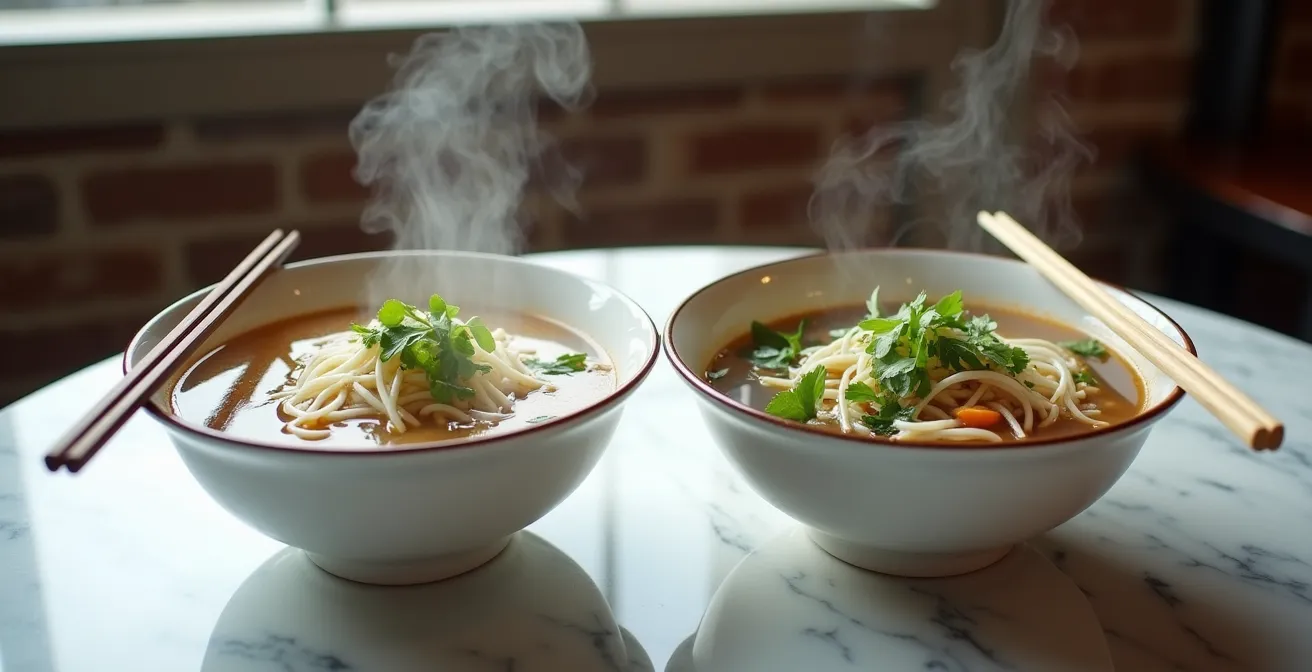
The “best” phở isn’t about North vs. South, but understanding the story in the bowl and how Vietnamese culinary history has been adapted for the English palate.
- Southern-style (bolder, sweeter, more herbs) dominates the UK market due to historical migration patterns, making its flavour profile more familiar to most Britons.
- True quality in England is found by looking past social media hype and queues, focusing instead on seasonality of ingredients and local community approval.
Recommendation: Always taste the broth on its own first before adding any condiments to honour the chef’s intricate work, and seek out restaurants where you see Vietnamese families eating.
For the English traveller stepping into the crisp air of a Hanoi morning, the first bowl of phở can be a delicious puzzle. It’s not quite the phở they know from London’s Kingsland Road. The broth is profoundly savoury but delicate, the noodles wider, and the expected mountain of fresh herbs is replaced by a simple scattering of green onions. This is phở from the North (phở bắc), the ancestral home of Vietnam’s national dish. The phở most common in England, with its sweeter, more robust broth and a jungle of Thai basil, bean sprouts, and coriander, is the exuberant Southern style (phở nam). The question isn’t which is better, but *why* they are so different. The answer is a story of history, geography, and culinary migration.
Southern Vietnamese cuisine is influenced by its proximity to Cambodia and Thailand and its more abundant agriculture, leading to bolder flavours and a greater use of sugar and fresh herbs. This style was carried across the globe by refugees who fled the South after 1975. As a result, an analysis of the UK market shows the overwhelming dominance of the Southern style. A study of restaurants in London, Birmingham, and Manchester confirms this, showing how restaurateurs have even created a hybrid, using high-quality British beef cuts like sirloin and flank while offering the customisable garnish tray beloved in the South. In fact, it’s estimated that over 75% of UK Vietnamese restaurants serve Southern-style phở, shaping the very definition of the dish for the British palate. Understanding this context is the first step to truly appreciating every bowl, whether you’re in Ho Chi Minh City or Hackney.
This guide will take you beyond the simple taste test, decoding the subtle rules and cultural nuances of the phở experience. From condiment etiquette to slurping techniques, you’ll learn to navigate the world of Vietnamese noodle soup like a seasoned connoisseur.
Summary: A Traveller’s Guide to the Nuances of Phở
- Hoisin sauce and lime: When is it an insult to the chef?
- The slurp technique: How to eat noodle soup without splashing your shirt?
- Rare beef vs Well-done: How to ask for ‘Tái’ safely?
- The 24-hour rule: Why morning Phở is better than evening Phở?
- Fuh vs Foe: How to say it so you don’t order a ‘street walker’?
- Why ordering Caprese salad in winter marks you as a tourist?
- Ice cubes in street drinks: Are they factory-made or tap water?
- The queue rule: Is a long line always a guarantee of safe street food?
Hoisin Sauce and Lime: When Is It an Insult to the Chef?
In the world of phở, the condiment tray is not a free-for-all; it’s a conversation. In Hanoi, a chef may have simmered their clear, nuanced broth for 12 hours. Dousing it immediately with hoisin and sriracha is akin to telling a winemaker their Bordeaux needs a splash of coke. It’s seen as masking the purity of the broth. In the South, however, customisation is part of the experience. The bolder broth is designed to stand up to additions, and a plentiful garnish tray is an invitation to play.
This cultural divide translates interestingly to England. Chefs at UK-based Vietnamese restaurants report being far more pragmatic. While an establishment proudly named ‘Hanoi Phở’ might subtly signal a preference for restraint, most understand the British diner’s love for personalising a meal. The presence of a large, varied garnish tray is an explicit green light from the chef. The unspoken rule, respected by connoisseurs everywhere, is universal: taste the broth first. Give the chef the respect of appreciating their work as intended before you make it your own. This simple act is the greatest compliment you can pay.
This “condiment contract” is the first key to unlocking a more authentic dining experience, showing respect for the culinary tradition you are participating in.
The Slurp Technique: How to Eat Noodle Soup Without Splashing Your Shirt?
In Vietnam, the sound of slurping is the sound of appreciation. It’s a compliment to the chef, an audible signal that the broth is so delicious you can’t get it into your mouth fast enough. It also serves a practical purpose: aerating the hot noodles and broth to cool them slightly and enhance their flavour. However, for a diner raised in Britain, where slurping is often considered impolite, this can create a moment of awkwardness. Do you embrace the local custom or stick to your own etiquette?
In the UK’s Vietnamese restaurants, you’ll find a spectrum of attitudes. Trendy Soho spots might have a quieter, more Western dining atmosphere, while a bustling, family-run establishment in Deptford will likely be filled with the happy sounds of slurping. The best advice is to read the room. A more elegant and splash-proof alternative, widely practiced and perfectly acceptable, is the ‘lift and dip’ method. Use your chopsticks to lift a small portion of noodles from the bowl, and rest them in the large soup spoon. Then, dip the spoon into the bowl to collect some broth, and eat the noodles and broth together from the spoon. This technique offers the perfect bite every time, with zero risk to your clothing.
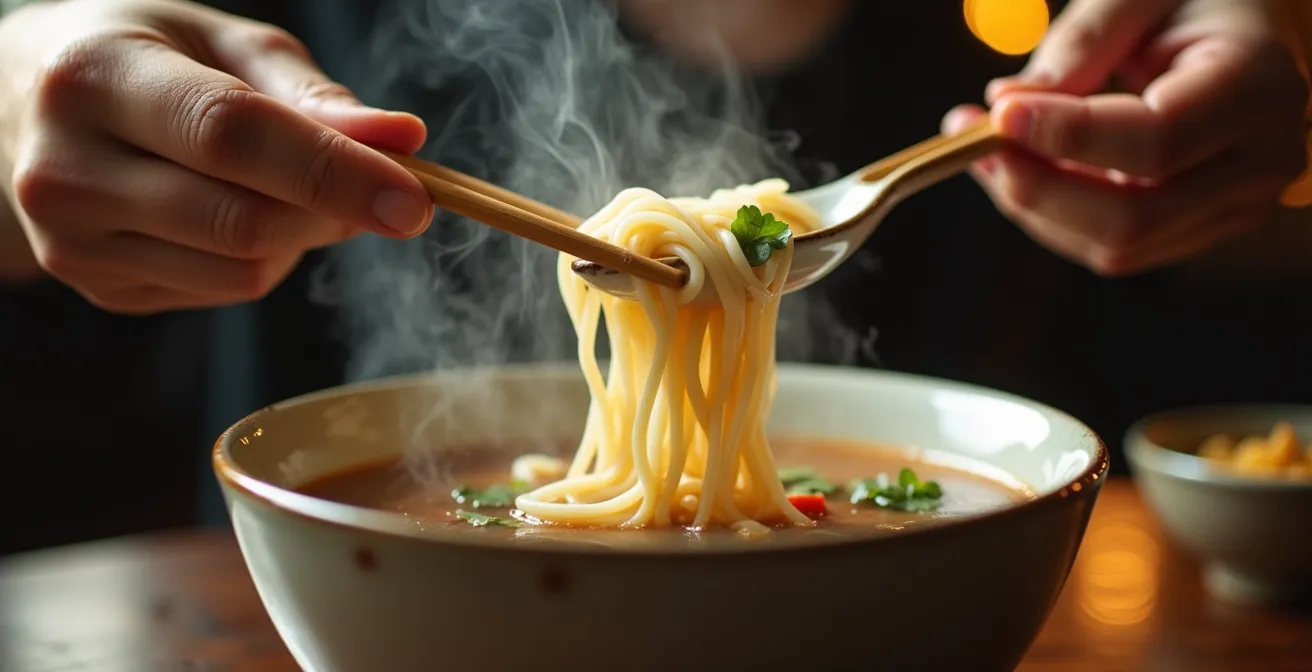
As the image demonstrates, this method is clean, controlled, and allows you to compose the perfect ratio of noodle, broth, and meat in each spoonful.
Ultimately, whether you slurp or dip, the goal is enjoyment. And if you’re truly worried, wearing a dark-coloured shirt is always a savvy move.
Rare Beef vs Well-Done: How to Ask for ‘Tái’ Safely?
One of phở’s greatest delights is phở tái, a bowl served with paper-thin slices of rare beef that cook instantly when the boiling broth is poured over them. For the uninitiated traveller, especially one mindful of food safety, the idea of ‘rare’ meat can be a point of concern. However, this fear is largely unfounded, particularly in the UK. The beef is not served raw; it’s flash-cooked at your table by broth that is well over 90°C, a temperature sufficient to ensure safety.
Furthermore, the context of eating in England provides an extra layer of security. All UK Vietnamese restaurants must adhere to strict Food Standards Agency regulations for meat sourcing, storage, and handling. The high-quality British or Irish sirloin and flank steak commonly used are subject to some of the most rigorous safety standards in the world. Ordering is simple: while ‘tái’ is the correct term, simply asking for ‘rare beef’ or ‘pink beef’ is perfectly understood. If you remain hesitant, asking for ‘chín’ (well-done) or a combination of rare and well-done (‘tái nạm’) are always options. But to miss out on the meltingly tender texture of phở tái is to miss one of the dish’s defining experiences.
Trusting in the process and the high standards of UK food safety allows you to enjoy this authentic delicacy without a second thought.
The 24-Hour Rule: Why Morning Phở Is Better than Evening Phở?
In Vietnam, phở is fundamentally a breakfast food. From dawn, street-side stalls and small restaurants are packed with workers, families, and students fortifying themselves for the day ahead. The Vietnamese believe a hot, protein-rich bowl of noodle soup is the perfect way to kick-start the metabolism and provide lasting energy. The broth, which has been simmering gently all night long, is considered to be at its peak flavour in the morning hours—pure, complex, and unadulterated.
This tradition stands in stark contrast to British dining habits. Here, phở is overwhelmingly consumed as a lunch or dinner meal. Full-service Vietnamese restaurants in the UK see their peak traffic during these times, adapting to a culture where noodle soup is a midday treat or an evening meal out, not a breakfast staple. While an evening bowl of phở is still a delicious thing, it misses some of the cultural resonance and the specific ‘fresh start’ energy associated with its morning consumption in its homeland. The ’24-hour rule’ is less a rule and more a piece of culinary wisdom: the longest-simmered, freshest-tasting broth is often the one served first thing in the morning.
So, while you may not find many UK establishments serving phở at 7 AM, if you ever find yourself in Hanoi, joining the locals for a breakfast bowl is an essential and enlightening cultural experience.
Fuh vs Foe: How to Say It So You Don’t Order a ‘Street Walker’?
The traveller’s tale is a classic: a tourist, attempting the local language, mispronounces ‘phở’ and accidentally propositions their server. This comes from the fact that Vietnamese is a tonal language, where the meaning of a word can change dramatically based on its inflection. The word for noodle soup, ‘phở’, has a falling-then-rising tone (like asking a question with a dip in the middle), while ‘phố’, meaning ‘street’, has a high, sharp tone. And yes, a slang term for a prostitute sounds similar.
Let this culinary historian put your mind at ease: the risk of this happening in an English restaurant is practically zero. Context is everything. When you are standing in a Vietnamese restaurant, pointing at a menu that says “PHỞ,” no one is going to misunderstand your intention. The pronunciation you should aim for is ‘fuh’, letting the end of the word rise slightly. But even a flat ‘foe’ will get you exactly what you want. Most UK menus feature English descriptions, and pointing is universally accepted and understood as a polite way to ensure accuracy. The anxiety over perfect pronunciation shouldn’t be a barrier to enjoyment.
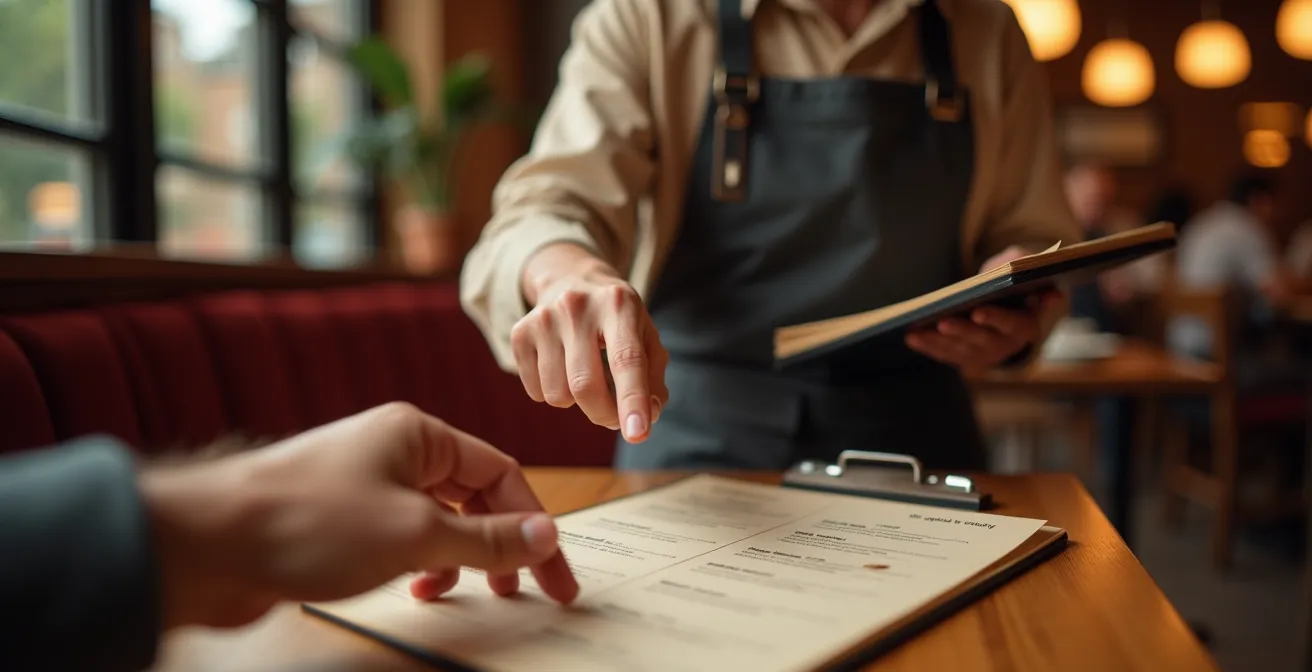
As this common restaurant scene shows, communication is a collaborative effort, and the bilingual nature of most menus makes ordering stress-free.
Embrace the attempt, smile, and point if you must. The delicious bowl of noodles that arrives at your table will be well worth the effort.
Why Ordering Caprese Salad in Winter Marks You as a Tourist?
Every savvy traveller knows the rule in Italy: ordering a Caprese salad in January is a culinary faux pas. It signals you don’t understand that the dish’s magic lies in the sun-ripened tomatoes and fresh basil of summer. Anything else is a pale imitation. This same principle of seasonality, though less obvious, applies to enjoying the best phở in England. The key ingredient in question? The fresh herbs.
While Southern-style phở is a delight, its soul is in the generous pile of fresh Thai basil, mint, and sawtooth coriander served alongside it. In the UK, the quality and potency of these herbs, often grown in greenhouses, drops significantly during the colder, darker winter months. A perceptive diner might notice the Thai basil lacks its signature anise punch from December to February. Therefore, a truly knowledgeable foodie in England might pivot their choice based on the calendar. During winter, a Northern-style phở, which relies on the deep flavour of its broth and simple green onions rather than a host of fresh herbs, will often deliver a more satisfying and authentic flavour experience. In summer, when English-grown herbs are at their peak, it’s the perfect time to indulge in the herbaceous symphony of Southern phở.
Your Action Plan: A Seasonal Phở Ordering Guide for UK Diners
- Winter (Dec-Feb): Prioritise Northern-style phở (phở bắc). Its complex broth shines when fresh herb quality is lower.
- Spring (Mar-May): Southern-style (phở nam) becomes an excellent choice as the first batches of fresh, potent herbs become available.
- Summer (Jun-Aug): This is the peak season for herb-heavy Southern phở. Indulge in the full aromatic experience.
- Autumn (Sep-Nov): Enjoy the last of the vibrant, locally available herbs before the quality dips in winter.
- Year-Round Tip: Politely ask your server, “Which herbs are best today?” This shows respect and ensures you get the best possible flavour.
Thinking like this transforms ordering from a simple choice into a strategic act, guaranteeing a better bowl every time.
Ice Cubes in Street Drinks: Are They Factory-Made or Tap Water?
For any seasoned traveller in Southeast Asia, the question of ice is a legitimate health concern. The fear that ice might be made from unsafe tap water is a valid part of a traveller’s risk assessment. This caution is often carried home and applied to all contexts, but it’s crucial to understand that this worry is entirely unnecessary when dining in England. The ‘street food’ risk associated with ice simply does not exist here.
The UK has some of the most stringent water safety regulations in the world. By UK law, all ice served in food establishments must be made from 100% potable water, the same quality as the tap water that is safe to drink nationwide. Whether it’s a Vietnamese iced coffee (cà phê sữa đá) or a refreshing iced tea (trà đá) to accompany your phở, the ice is as safe as the ice in a high-end cocktail bar or a major coffee chain. In fact, many British customers, particularly in winter, prefer their drinks without ice, a request that UK Vietnamese restaurants accommodate without a second thought. You can enjoy your iced Vietnamese drinks with complete peace of mind.
So, on a warm day, don’t hesitate to order that authentic iced coffee; it’s a perfectly safe and delicious part of the complete Vietnamese culinary experience in the UK.
Key Takeaways
- The phở most common in England is the sweeter, herb-heavy Southern style due to historical migration patterns.
- Respect the chef’s craft by tasting the broth before adding condiments, especially in restaurants specialising in Northern-style phở.
- In the UK, queues often indicate social media hype more than authentic quality; look for restaurants filled with local Vietnamese families instead.
The Queue Rule: Is a Long Line Always a Guarantee of Safe Street Food?
In the bustling street food markets of Hanoi or Ho Chi Minh City, the queue rule often holds true: a long line of locals is a reliable sign of quality and safety. But this wisdom needs recalibrating for the London restaurant scene. Here, a queue outside a phở restaurant can be misleading. An analysis of dining trends shows that queues are often a reflection of a recent glowing review in The Guardian, a viral TikTok video, or a feature in Time Out magazine, rather than a consistent, long-term measure of quality.
The true connoisseur knows to look for different signals. The most powerful indicator of authentic, high-quality phở is not a line of tourists, but a dining room filled with Vietnamese families. This is the ultimate seal of approval. The UK’s mandatory Food Hygiene Rating, displayed prominently in the window, is your guarantee of safety, making the ‘queue for safety’ logic redundant. The best phở in London is often found not in the trendy hotspots, but in unassuming, family-run establishments in neighbourhoods like Deptford, Dalston, or on the quieter ends of Kingsland Road, places that thrive on loyal local custom, not fleeting hype.
This is not to say a popular restaurant is a bad one, but a queue should be seen as a sign of popularity, not an absolute guarantee of superiority. Look beyond the line, check the hygiene rating, and peek inside to see who is eating. These are the clues that lead to the most memorable and authentic bowls of phở the UK has to offer, as noted in expert observations on the topic like those from Vietnamese news outlets analysing the diaspora’s food scene.
Now that you can navigate the world of phở like a seasoned traveller, the next step is to put this knowledge to the test. Find a local, family-run Vietnamese restaurant in your area and begin your own delicious culinary exploration.