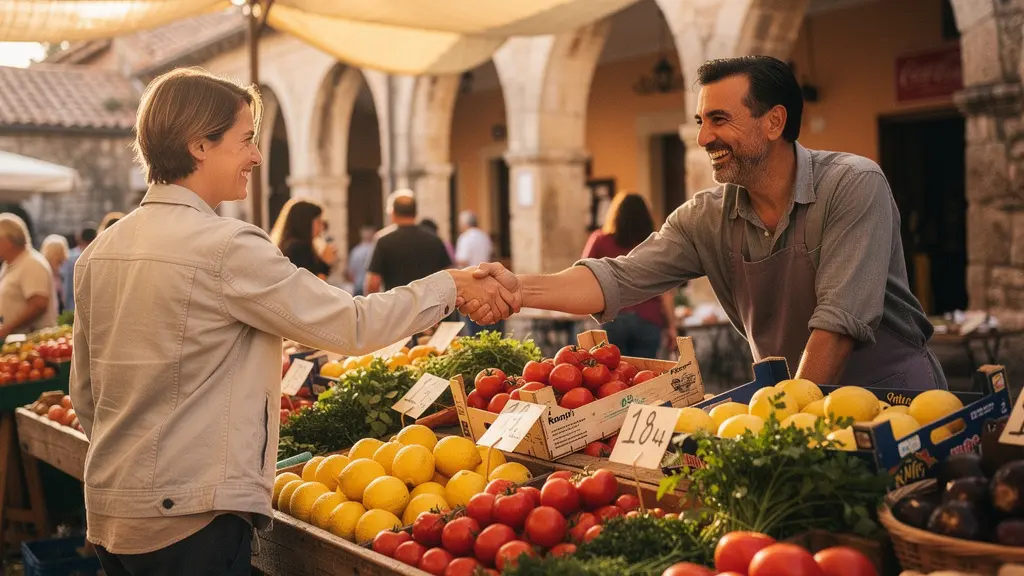
For the modern British traveller, genuine connection abroad is not about learning a few phrases, but about a deeper cultural self-awareness and gently setting aside our own ingrained habits.
- The post-Brexit landscape means small gestures of linguistic and cultural effort now carry significantly more diplomatic weight.
- Our internal clocks, reliance on cartographic certainty, and even our choice of gifts can create unintentional friction that keeps us in the tourist bubble.
Recommendation: The most profound shift is moving from asking “What should I do here?” to “How are my own cultural defaults being perceived here?”
There’s a familiar ache for the seasoned traveller. It’s the feeling of returning from a trip with a camera full of landmarks but a distinct lack of meaningful human connection. You’ve seen the sights, eaten the food, but you’ve remained firmly on the outside, a spectator behind a velvet rope. The standard advice often feels hollow: “learn the language,” “smile,” “get off the beaten path.” These platitudes rarely breach the invisible wall that separates the tourist from the local community. They treat connection as a simple transaction, a checklist to be completed, rather than the nuanced, delicate dance it truly is.
This challenge is particularly acute for the modern British traveller. In a post-Brexit Europe and a shifting world, our presence can be layered with new complexities and historical echoes. The key to unlocking genuine interaction doesn’t lie in a better phrasebook or a more adventurous itinerary. It lies in something more profound: cultural self-awareness. It’s the ability to recognise our own ingrained habits—our reliance on the precision of an Ordnance Survey map, our unshakeable belief in a 1pm lunch, our very body language—and understand how they are perceived by others. It requires turning the anthropological lens back on ourselves.
This guide moves beyond the superficial script. We will explore the subtle power of linguistic humility, the unspoken language of gestures, and the art of being a respectful observer. We will dissect the very rhythm of daily life that can leave a British traveller hungry and confused, and offer strategies to spot and support true local authenticity. The goal is not to perform a role, but to cultivate a mindset of respectful curiosity that fosters the very connections you travel to find.
This article provides a framework for developing that crucial self-awareness. Each section tackles a common point of cultural friction, offering practical insights to help you step out of the tourist bubble and into a more meaningful travel experience.
Summary: A guide to authentic travel beyond the surface
- Why learning 10 words of the local language changes how you are treated
- Hand gestures to avoid that are offensive in Mediterranean cultures
- Spectator or participant: Which role to take during religious processions?
- What to bring when invited to a local’s home for dinner?
- Authentic craft or mass-produced souvenir: How to spot the difference?
- Why a host’s map is better than Google Maps for local walks?
- The 2pm lunch rule: Why you will starve in Spain if you stick to UK hours?
- How to spot a ‘tourist trap’ restaurant within 30 seconds?
Why learning 10 words of the local language changes how you are treated
Learning a few words of the local language is the most common travel advice, yet its true power is often misunderstood. It’s not about achieving fluency or flawlessly ordering a coffee. It is a powerful act of linguistic humility. In the current climate, this gesture has taken on even greater significance for British travellers. With mandatory passport checks and new administrative friction at EU borders, we are now visibly marked as ‘third country’ visitors. This new reality can create a subtle distance, but a few well-chosen words can bridge that gap instantly.
The effort signals respect and acknowledges that you are a guest in someone else’s home. It communicates, “I know I am not in my own country, and I am making an effort to meet you on your terms.” This is particularly potent in a post-Brexit context, where a major Ipsos survey found that 16% of EU citizens are less likely to welcome British tourists. A simple “per favore” or “efcharistó” is a small act of personal diplomacy that can disarm preconceptions and change the entire tone of an interaction, moving it from a transactional exchange to a human one.
The key is to prioritise the right kind of words. Instead of focusing solely on transactional phrases like “where is the station?”, concentrate on ten culturally warm words. This should include greetings for different times of day, ‘please’, ‘thank you’, ‘sorry’, ‘delicious’, a compliment about the area, and crucially, a self-deprecating phrase like “excuse my terrible pronunciation.” This demonstrates vulnerability and a good-natured awareness of your own limitations, which is far more endearing than a perfectly recited phrasebook entry. It’s a signal that you are there to connect, not just to consume.
Hand gestures to avoid that are offensive in Mediterranean cultures
While linguistic effort opens doors, non-verbal communication can slam them shut just as quickly. As travellers from a relatively low-gesture culture, British people can be unaware of the rich and complex vocabulary of hand signals used across the Mediterranean. A gesture that is benign or even positive in the UK can be a grave insult elsewhere. This is a critical area of cultural self-awareness, as an innocent hand movement can inadvertently cause offence and create an immediate barrier to connection.
The difference is not trivial. Many gestures that have been popularised globally through American media or rock music carry deeply negative connotations in Italy, Greece, Spain, and other Mediterranean nations. The “rock on” horn sign can imply a man’s wife is unfaithful. The “OK” symbol can be a vulgar insult in Greece and Turkey. Understanding these differences isn’t just about avoiding a faux pas; it’s about demonstrating a deeper level of cultural respect and attentiveness.
The most dangerous gesture for a traveller is arguably the open palm pushed forward. In the UK, it might mean “stop” or be a dismissive “talk to the hand.” In Greece, however, this gesture, known as the ‘moutza’, is one of the most severe insults you can deliver. Being mindful of your hands, keeping them relaxed, and avoiding pointing or making large, emphatic gestures until you understand the local norms is a cornerstone of respectful travel. Before your trip, familiarising yourself with a few key forbidden gestures is as important as learning “please” and “thank you.”
This comparative table highlights some of the most common points of gestural friction for a British traveller in the Mediterranean.
| Gesture | Meaning in the UK | Meaning in Mediterranean cultures | Risk level |
|---|---|---|---|
| V-sign (palm inward) | Offensive insult with deep historical roots | Generally not understood or seen as a ‘peace’ sign | High (in UK photos shared abroad, creates colonial echoes) |
| OK sign (thumb and index circle) | Positive affirmation | Vulgar or means ‘zero/worthless’ in Greece, Turkey, Tunisia | High |
| Open palm pushed forward | Stop or ‘talk to the hand’ | Grave insult (‘moutza’) in Greece; rude in several Mediterranean countries | Very High |
| Horn sign (index and little finger raised) | Rock music gesture | Implies partner’s infidelity in Italy, Spain, Portugal, Greece | High in rural areas |
| Pointing with index finger | Common directional gesture | Considered aggressive or rude across Arab and Mediterranean regions | Medium |
| Fig gesture (thumb between fingers) | Rarely used | Ancient obscene insult across Mediterranean areas | High |
| Thumbs up | Positive approval | Offensive in parts of the Middle East and some Mediterranean areas | Medium |
Spectator or participant: Which role to take during religious processions?
Witnessing a local religious procession can be a deeply moving and memorable part of any trip. However, for the traveller, it presents a delicate challenge: where do you stand? How do you behave? The line between respectful observer and intrusive tourist is thin, and crossing it can spoil the sanctity of the event for locals. For a British traveller, whose cultural background often favours reserve and distance, navigating these highly expressive events requires a conscious shift in perspective. It’s not about what you feel comfortable with, but what the community deems respectful.
Scientific research validates this cultural gap. A 2024 study in *Frontiers in Communication* empirically confirmed that Mediterranean cultures are ‘high frequency gesture cultures’ compared to the ‘low frequency’ norms of Northern Europe. This means that a reserved, quiet British observer might be perceived not as respectful, but as cold, disengaged, or even dismissive during an event that is emotionally and physically expressive for participants. The first step is to resist the immediate reflex to document. Keep your camera away for the first ten minutes and simply watch. Observe the body language of the locals. Do they kneel? Do they remove hats? Mirroring these gestures, even if they are unfamiliar, signals solidarity and respect.
Your physical position is also a powerful non-verbal signal. Stay on the peripheries of the procession route, not in the centre of the crowd. This physically marks you as an observer who is yielding space to the participants. Dress conservatively, covering shoulders and knees, regardless of the heat or what other tourists are wearing. It’s a simple, universal sign of respect for a sacred event. If a local graciously invites you to join in—to take a flower or walk a stretch of the route—accept with humility. Your role is to follow, not lead; to engage with quiet gratitude rather than performative enthusiasm which can easily be misread as mockery.
What to bring when invited to a local’s home for dinner?
An invitation to a local’s home is the holy grail for a traveller seeking genuine connection. It’s a moment of immense generosity and trust. However, it’s also a delicate social test where cultural assumptions can create awkwardness. For a British traveller in the EU, this is particularly true. Research from Oban International on post-Brexit perceptions reveals a complex social landscape; for instance, 57% of German businesses expected relations with the UK to worsen. While this doesn’t translate to personal animosity, it means that conversations about politics, the NHS, or the state of the UK are almost inevitable. Your choice of gift and conversational tact are therefore acts of micro-diplomacy.
The cardinal rule is to avoid stereotypical ‘British’ gifts. A tin of tea with a Union Jack or a box of royal-branded biscuits can feel more like a tourist transaction than a thoughtful gesture. In former colonial or Commonwealth nations, these symbols can carry a complex and sometimes uncomfortable historical weight. Instead, think regional rather than national. A small-batch cheese from your home county, a craft beer from a specific microbrewery, or artisan marmalade shows personal thought and introduces them to a specific piece of your culture, not a national caricature.
Bringing alcohol should be calibrated carefully. In some cultures, arriving with a bottle of wine can play into the notorious “binge-drinking Brit” stereotype. When in doubt, a safer and often more appreciated gift is something you’ve purchased locally that day. Bringing a beautiful cake or a box of pastries from a neighbourhood bakery shows you’ve explored and valued their local economy. And when the inevitable Brexit question arises, have a brief, warm, and self-deprecating response ready (“We know, we’re still figuring it out ourselves!”). This acknowledges the topic without derailing the evening, allowing you to gracefully pivot the conversation back to a genuine curiosity about your host’s life and country.
Authentic craft or mass-produced souvenir: How to spot the difference?
Supporting local artisans is one of the most direct ways to connect with a culture and contribute positively to its economy. Yet, in a world of globalised supply chains, it’s increasingly difficult to distinguish a genuine, handcrafted item from a mass-produced “souvenir” designed in one country and manufactured in another. Developing an eye for authenticity is a skill that not only ensures your money goes to the right people but also deepens your appreciation for the local craft traditions you encounter.
The first signal of a handmade item is its perfect imperfection. Look for slight asymmetries, the faint trace of a tool mark, or minor variations in colour and texture that a machine cannot replicate. Turn the object over and examine its base. Authentic pottery often has unglazed rings or scars from the kiln; a wooden carving might be signed or show the natural grain of the material. Mass-produced items, by contrast, are often uniformly light, made from injection-moulded plastic or thin resin, with a flawless, sterile finish. Trust your hands—a handcrafted object usually has a satisfying heft and material density.
Engage the seller. A genuine artisan or a passionate vendor will be able to tell you the story behind the piece: the materials used, the technique involved, the meaning of the symbols. A vague or scripted answer is a red flag. Be wary of the “colonial aesthetic filter”—if an entire shop is filled with items in a muted, “tasteful” palette that seems designed for a Western living room, it’s likely the designs have been modified for the tourist market, sacrificing traditional vibrancy for commercial appeal. The ultimate goal is to buy directly from a workshop or a recognised artisan cooperative where you can see the process and know your purchase is sustaining a true local craft.
Your checklist for spotting authentic crafts
- Check for slight imperfections: Genuine handmade crafts will show minor asymmetries, tool marks, or colour variations that machines cannot replicate.
- Examine the base or underside: Authentic pieces often have maker’s marks, kiln scars, or raw unfinished areas where the piece sat during firing or drying.
- Assess the weight: Mass-produced items tend to be uniformly light, while handcrafted pieces have heft and material density.
- Ask about the maker and the process: Genuine artisans or their sellers can describe materials, techniques, and regional traditions. Vague answers signal mass production.
- Apply the ‘British antique fair’ patina test: Look for natural ageing of materials that cannot be artificially replicated convincingly.
Why a host’s map is better than Google Maps for local walks?
For the British walker, raised on the unparalleled precision of Ordnance Survey maps, the idea of navigating with anything less can feel like a step into chaos. This ‘OS withdrawal’—a frustration with the apparent vagueness of local directions abroad—is a classic point of habitual friction. We are conditioned to seek certainty in grid references, contour lines, and clearly marked public rights of way. Yet, surrendering this need for precision and embracing a hand-drawn map from a local host is an act of trust that unlocks a far richer experience of a place.
A digital map, like Google Maps, is algorithmic. It shows you the most efficient path from A to B, but it is devoid of story, context, or soul. It cannot tell you that a certain path is best avoided after rain, which field has a grumpy dog, or which viewpoint is most magical at sunset. It operates in a world of public data, unable to show the informal access rights and tolerated shortcuts that constitute how locals *actually* move through their own landscape. A host’s map, by contrast, is a piece of narrative cartography. It is a curated story, embedded with decades of personal experience and cultural knowledge.
The act of receiving the map is itself a moment of connection. As your host sketches the route, pointing out ‘the big olive tree’ or ‘the ruins where the children play,’ they are not just giving directions; they are sharing their personal geography with you. This map is battery-free, works without a signal, and contains the qualitative data that technology can never capture. To trust this hand-drawn guide over the reassuring blue dot on your phone is to trade sterile efficiency for genuine discovery. It is to walk not just through a landscape, but through a local’s story of that landscape.
This table illustrates the fundamental differences in what each type of map offers the culturally curious British walker abroad.
| Feature | Google Maps | Ordnance Survey (UK habit) | Host’s hand-drawn map |
|---|---|---|---|
| Topographical precision | Basic elevation data, limited contour detail | Exceptional — contour lines, spot heights, field boundaries | None — relies on landmarks and narrative description |
| Private access and permissible trespass | Cannot show informal access arrangements | Shows public rights of way in England/Wales only | Indicates where locals actually walk, including tolerated shortcuts across private land |
| Cultural knowledge embedded | None — purely algorithmic routing | Minimal — symbols for pub, church, viewpoint | High — includes ‘avoid after rain,’ ‘best at sunset,’ ‘dog in this field,’ local weather wisdom |
| Battery dependency | High — drains smartphone battery, useless without signal | Paper version is battery-free; digital app still needs charge | Zero — paper or verbal, always available |
| Social connection value | None — isolates walker in device | Minimal — shared OS map culture exists among UK ramblers | Very high — the act of drawing and explaining the route creates a personal bond and narrative |
| Accuracy in remote areas | Often poor — trails may be missing or misrouted | Excellent in the UK; irrelevant abroad | Excellent locally — reflects decades of personal experience walking these specific paths |
The 2pm lunch rule: Why you will starve in Spain if you stick to UK hours?
Nothing disrupts the rhythm of a British traveller more than the radical misalignment of mealtimes in Southern Europe. Our internal clocks, set to a 12:30pm lunch and a 7pm dinner, are deeply ingrained cultural habits. Arriving in Spain and searching for food at 1pm often leads to a frustrating discovery: shuttered restaurants and empty streets. This isn’t poor service; it’s a fundamental clash of cultural rhythms. To connect with a place, you must adapt not only your language but your very metabolism. Sticking to UK hours is a surefire way to experience a country through a lens of hunger and confusion.
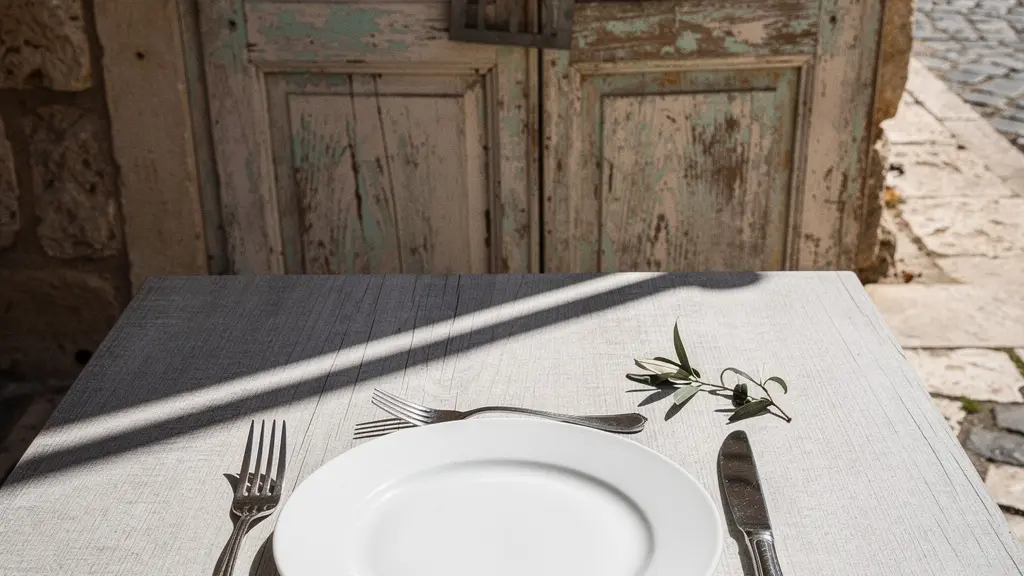
The main meal of the day, lunch, doesn’t typically begin in Spain until 2pm and can last until 3:30pm or later. Consequently, dinner is a much later affair, with kitchens often not even opening until 8:30pm and restaurants only getting busy after 9:30pm. For a Brit, arriving at a restaurant at 7pm means dining in an empty room, if it’s open at all. This temporal disconnect extends beyond meals. The cherished British institution of afternoon tea around 4pm has no direct equivalent; the Spanish ‘merienda’ is a lighter, later snack around 5pm or 6pm. Understanding and adapting to this new timetable is essential for your comfort and for participating in the social life of your destination.
The solution is to recalibrate your daily schedule. Embrace a lighter, later breakfast. Adopt the Spanish ‘almuerzo’ or mid-morning second breakfast around 11am to tide you over. Plan your daytime activities to conclude in time for a 2pm lunch, which will then become your main meal. This shift allows you to eat in vibrant, bustling restaurants alongside locals, experiencing the cuisine as it’s meant to be enjoyed—as a central social event of the day, not a quick refuelling stop. It is a classic case where you must adjust your body to fit the culture, not the other way around.
This comparison starkly shows the temporal gap a British traveller must bridge.
| Meal | Typical UK timing | Typical Spanish timing | British traveller risk |
|---|---|---|---|
| Breakfast | 7:00 – 8:30 AM | 8:00 – 10:00 AM (light: coffee + tostada) | Low — slight delay, manageable |
| Mid-morning tea/coffee | 10:30 – 11:00 AM (ingrained UK habit) | 11:00 AM (almuerzo — second breakfast, often substantial) | Medium — British ‘elevenses’ culture aligns loosely |
| Lunch | 12:00 – 1:00 PM | 2:00 – 3:30 PM | Very High — restaurants closed at UK lunch hour; British travellers arrive to shuttered doors |
| Afternoon tea | 3:30 – 4:30 PM (culturally embedded) | 5:00 – 6:00 PM (merienda — light snack) | High — no hot beverage culture to replace the British ‘cuppa’ rhythm |
| Dinner | 6:00 – 7:30 PM (working class) / 7:30 – 8:30 PM (middle class) | 9:00 – 11:00 PM | Very High — arriving at 7 PM means empty restaurants; Spanish kitchens may not open until 8:30 PM |
| Pub/bar closing | 11:00 PM (strict licensing historically) | 1:00 – 3:00 AM (or later) | Medium — British expectation of ‘last orders’ creates premature exits from Spanish nightlife |
Key takeaways
- Genuine connection stems from cultural self-awareness, not just observing others.
- Post-Brexit realities make small acts of linguistic and cultural humility more important than ever for British travellers.
- Your ingrained habits—from mealtimes to map-reading—can be the biggest unintentional barriers to authentic experiences.
How to spot a ‘tourist trap’ restaurant within 30 seconds?
Avoiding tourist traps is a traveller’s universal goal, but it’s an especially relevant skill for the British abroad. With as many as 59 million UK tourists visiting the EU annually, a significant industry has evolved specifically to cater to—and often exploit—our tastes and habits. A “tourist trap” restaurant isn’t just about overpriced food; it’s a bubble that insulates you from the authentic local culinary culture. Learning to identify the warning signs within seconds allows you to sidestep these experiences and find the places where locals genuinely eat.
The most glaring red flags are often on the pavement outside. A laminated menu with glossy photos of the food is a universal warning sign; locals do not need pictures of their own cuisine. A menu translated into more than four languages signals industrial-scale tourism. An even more definitive sign is the ‘tout’—an employee standing at the door actively trying to coax passers-by inside. A restaurant with confidence in its food does not need to beg for customers. Apply the “Full English test”: if a restaurant in a non-British country is prominently advertising all-day breakfasts or fish and chips, it has calibrated its entire offering for the British comfort-seeker, not the curious traveller.
Look past the entrance and through the window. Are there any locals inside? If the clientele consists entirely of other tourists, you’ve found a trap. A real local favourite will have regulars—people reading newspapers, chatting with staff, or simply enjoying a meal alone. Check the location. The closer a restaurant is to a major monument, the higher the prices and, generally, the lower the quality. Walk at least two streets away from the main square or landmark to find better options. Finally, look for signs of a fresh, dynamic kitchen. A printed, static menu suggests a reliance on a frozen supply chain, whereas a simple chalkboard with handwritten daily specials (even if you can’t read them) signals a chef who is cooking with what’s fresh from the market that day.
Ultimately, connecting with locals is not a formula to be followed but a mindset to be cultivated. It begins with the humility to accept that our own way is not the only way, and the curiosity to understand the logic and beauty in another’s. By practising this cultural self-awareness, you transform travel from a passive act of observation into an active, enriching dialogue.