
The safest family holiday isn’t just a low-crime country; it’s a destination where budget, convenience, and desires align to minimise stress and maximise enjoyment.
- Strong purchasing power for the Pound Sterling in countries like Turkey creates a financial safety net and more flexibility.
- Real-world accessibility (for pushchairs or wheelchairs) and visa-free travel for UK citizens are crucial, yet often overlooked, safety factors.
Recommendation: Shift your focus from finding a single “safest” place to mastering the art of the travel trade-off, balancing each factor to suit your family’s unique needs.
As a parent, the moment you start planning a family holiday, a dozen questions flood your mind. You picture sandy beaches and happy children, but then the worries creep in: Is it safe? Can we afford it? What about the long flight? The world outside the familiar Eurozone feels vast and full of incredible possibilities, but also riddled with uncertainty. Many guides will give you a simple list of low-crime countries, suggesting that safety is a one-dimensional checklist. They’ll tell you to check the FCDO website and book an all-inclusive resort.
While that’s a starting point, this approach misses the bigger picture. True travel safety for a family, especially one with young children, is a complex equation. It’s about more than just crime statistics. It involves financial security, logistical ease, health precautions, and even the emotional well-being that comes from a stress-free trip. The constant search for a single “perfect” destination can be exhausting and often leads to disappointment.
But what if the key wasn’t finding a flawless destination, but mastering the art of the travel trade-off? What if you could learn to weigh the pros and cons like a seasoned travel consultant, turning constraints into smart choices? This guide is built on that very principle. We’ll move beyond generic advice to give you a framework for making informed decisions. We’ll explore how to leverage the power of your Pound, evaluate real-world risks, navigate logistical hurdles, and find a destination that works for everyone in the family, without compromising on safety or breaking the bank.
This article will walk you through the critical trade-offs you’ll face when planning your next great family adventure. From understanding the real value of your money to decoding beach safety flags, you’ll gain the confidence to choose a destination that is not just safe on paper, but perfectly suited to your family.
Summary: A Strategic Guide to Non-Eurozone Family Travel
- Why Turkey or Vietnam offers 40% more purchasing power for GBP?
- Caribbean in September: Is the hurricane risk worth the discount?
- Venice or Amsterdam: Which canal city is actually wheelchair friendly?
- The hassle of visas: Which long-haul destinations are visa-free for Brits?
- Relaxation vs Adventure: How to agree on a destination as a couple?
- Bath vs Bristol: Is the UNESCO city worth the crowding?
- What do the red and yellow flags actually mean in Spain?
- Budgeting for a once-in-a-lifetime bucket list trip to the Maldives
Why Turkey or Vietnam Offers 40% More Purchasing Power for GBP?
When you’re travelling with a family, your budget is your first line of defence. It’s not about being cheap; it’s about reducing financial stress, which directly impacts your family’s enjoyment and security. A destination where your Pound Sterling goes further means you can afford safer transport, better accommodation, or simply more ice creams without constantly worrying. This is what we call value-driven safety. It’s the peace of mind that comes from knowing you have a financial cushion.
Destinations like Turkey and Vietnam are prime examples. Due to favorable exchange rates and local economic factors, the purchasing power of the GBP can be significantly higher. This isn’t just a number on a currency converter; it has real-world implications. For instance, Turkey’s economic structure means that while it’s a modernising country, its cost of living remains low for tourists. An analysis shows that Turkey’s GDP per capita on a purchasing power parity basis was $35,294 in 2024, which, when compared to the UK’s much higher figure, illustrates the value gap. A family meal that costs £80 in a London pub might only be £30 in a lovely restaurant in Antalya. This saving isn’t just a bonus; it’s a strategic asset.
To maximise this advantage, smart money management is key. It’s not just about getting a good exchange rate before you leave. It’s about making savvy decisions on the ground. Avoiding dynamic currency conversion, where you’re offered to pay in GBP, is a classic trap that costs you money. Similarly, using modern fintech cards can lock in better rates and reduce transaction fees, making your budget stretch even further.
Action Plan: Smart Money Management in High-Value Destinations
- Get the Right Card: Use fintech cards like Revolut or Wise to lock in favorable exchange rates before you travel and get lower fees than traditional UK banks.
- Pay Local: Always choose to pay in the local currency (e.g., Turkish Lira or Vietnamese Dong) when using your card to avoid poor exchange rates from dynamic currency conversion.
- Minimise ATM Fees: Withdraw larger amounts of cash less frequently to reduce the impact of fixed international ATM fees charged by your UK bank.
- Book Flexibly: Choose accommodation with free cancellation. This allows you to re-book if currency fluctuations make another option significantly cheaper closer to your travel date.
- Compare Essentials: Research the cost of family essentials like sunscreen, nappies, and snacks. Sometimes it’s cheaper to pack them from home, freeing up more of your holiday budget for experiences.
Caribbean in September: Is the Hurricane Risk Worth the Discount?
One of the most common travel trade-offs is weighing a significant discount against a potential risk. The Caribbean in September is a classic example. Prices for flights and resorts plummet, but it’s the peak of the Atlantic hurricane season. For a family on a budget, the savings are tempting, but the thought of a storm is terrifying. This is where you need to move from emotional reaction to rational risk calibration. Is the risk as high as you fear, and is the discount truly worth it?
The first step is understanding that “the Caribbean” is not a single entity. The region is vast, and hurricane risk varies dramatically by location. Islands in the southern Caribbean are historically far less likely to be hit by a major storm. This geographical knowledge is your most powerful tool for mitigating risk. Instead of writing off the entire region, you can make a geographically smart choice.
As the map illustrates, not all islands share the same level of exposure. By focusing your search on the southern reaches, you can find that sweet spot of lower prices and significantly lower risk.
Case Study: The ABC Islands as a Hurricane-Safe Alternative
A perfect example of this strategy is focusing on the “ABC Islands”: Aruba, Bonaire, and Curaçao. These Dutch Caribbean islands sit just off the coast of South America, well outside the primary Atlantic hurricane belt. While other parts of the Caribbean are on high alert, the ABCs typically experience sunny weather. This allows British families to take advantage of September’s low-season prices with a dramatically reduced risk of their holiday being ruined by a major storm. They get the Caribbean beauty and the discount, but with far greater peace of mind.
This approach transforms a gamble into a calculated decision. You aren’t ignoring the risk; you’re actively managing it through informed geographical selection. Always supplement this with comprehensive travel insurance that specifically covers trip cancellation due to weather events, giving you a final layer of financial protection.
Venice or Amsterdam: Which Canal City is Actually Wheelchair Friendly?
Physical safety is paramount, but logistical safety is what often makes or breaks a family trip. A destination can have zero crime and perfect weather, but if you can’t navigate it with a pushchair or a wheelchair, it becomes a stressful and unsafe ordeal. This is the concept of logistical friction. It’s the gap between a destination’s picture-perfect image and its real-world practicality for a family with mobility needs.
Canal cities like Venice and Amsterdam are a perfect test case. Both are beautiful, historic, and centered around waterways. On the surface, they seem similar. But for a family with a toddler in a pushchair or a member with limited mobility, their accessibility profiles are worlds apart. Venice, with its hundreds of stepped bridges and reliance on crowded water taxis (Vaporetto) with limited space, can be a logistical nightmare. Amsterdam, by contrast, is largely flat, with an excellent network of accessible trams and a more modern infrastructure built alongside its historic core.
Before committing to a destination, a systematic comparison is essential. Don’t just look at hotel reviews; dig into the specifics of transport, terrain, and local regulations. For UK families, this also includes practicalities like whether a Blue Badge is recognised.
This comparative analysis from WorldTrips highlights the stark differences in accessibility between two seemingly similar cities.
| Accessibility Factor | Venice | Amsterdam |
|---|---|---|
| Airport transfers | Water taxi challenges, limited accessible options | Excellent train connections, fully accessible |
| Public transport | Vaporetto boats have limited wheelchair spaces | Trams and buses with ramps, dedicated spaces |
| Hotel accessibility | Few truly accessible hotels due to historic buildings | Many modern accessible accommodations |
| Street navigation | 400+ bridges, most with steps only | Flat terrain, dropped curbs, smooth surfaces |
| UK Blue Badge recognition | Not directly recognized | Recognized through EU parking card system |
This data-driven approach removes the guesswork. It shows that while Venice is a dream for many, Amsterdam is a far safer and more practical choice for a family with wheels. Applying this level of scrutiny to any potential destination is key to avoiding logistical disasters.
The Hassle of Visas: Which Long-Haul Destinations are Visa-Free for Brits?
In the post-Brexit era, the power of a British passport has changed. While it remains one of the world’s best, the rules for entry, even for short holidays, have become more complex. The “safety” of a trip also includes administrative peace of mind. Arriving at an airport only to be denied entry because of an overlooked visa requirement or an invalid passport is a family holiday nightmare. Minimising this administrative friction is a non-negotiable part of planning.
Fortunately, many incredible long-haul destinations remain completely visa-free for UK citizens, allowing for spontaneous and stress-free travel. Countries like Japan, Mexico, and South Africa allow British passport holders to simply turn up and receive an entry stamp for a generous period. Others, like the USA, Canada, and Australia, have streamlined the process with simple online pre-authorisation systems (ESTA, eTA, eVisitor) that take minutes to complete.

Understanding these different categories is vital. A trip to Japan requires zero pre-planning, while a trip to the USA requires a small but mandatory online step. Confusing the two can lead to disaster. It’s also crucial to be aware of the two most common passport pitfalls for Brits: the passport must have at least six months of validity remaining from your date of entry, AND it must have been issued less than 10 years ago. An old passport with a long validity can still be invalid for entry to many countries.
Your 5-Step Visa & Passport Pre-Flight Check
- Categorise Your Destination: Is it truly visa-free (e.g., Mexico, Japan), requires online pre-authorisation (e.g., USA’s ESTA), or needs a full e-visa before travel (e.g., India, Turkey)? Check the FCDO website for the definitive rule.
- Check Both Passport Dates: Look at the issue date AND the expiry date. For many countries, your passport must be less than 10 years old on the day you enter and have at least 6 months’ validity left.
- Apply for e-Visas/Authorisations Early: Don’t leave it to the last minute. Apply for your US ESTA, Canadian eTA, or Turkish e-visa at least 72 hours before your flight, ideally a week or two in advance.
- Scan and Save All Documents: Take digital copies of everyone’s passport, any visas, and your travel insurance. Save them to a cloud service (like Google Drive or Dropbox) and email them to yourself.
- Understand Local Rules: Be aware of increasingly strict rules in some regions. For example, many Southeast Asian countries are cracking down on “visa runs” (crossing a border and immediately re-entering) for long stays.
Relaxation vs Adventure: How to Agree on a Destination as a Couple?
One of the biggest hurdles in family travel happens before you even book: one partner craves a fly-and-flop beach holiday, while the other wants a zip-lining, mountain-hiking adventure. This clash of desires can feel like an impossible deadlock. However, building a compromise framework can turn this conflict into a constructive conversation. The key is to find a destination that doesn’t force a choice between relaxation and adventure, but elegantly offers both.
Many destinations are uniquely positioned to satisfy both needs. These “dual-purpose” locations allow for a holiday itinerary where mornings can be spent on an exciting excursion, and afternoons can be dedicated to poolside relaxation, keeping everyone happy. It’s about finding a place with the right infrastructure and geography to support both types of activity in close proximity.
Furthermore, a strong budget, facilitated by choosing a high-value destination, can be a powerful tool for compromise. As one travel economics expert notes in an analysis of dual-activity vacation planning, “The enhanced purchasing power of GBP in certain countries makes it financially viable for couples to pursue separate activities.” This means one parent could afford a guided hike while the other enjoys a spa treatment, without straining the family budget.
Case Study: Costa Rica’s ‘Pura Vida’ Balance
Costa Rica is a masterclass in balancing adventure and relaxation. The country’s “Pura Vida” ethos is reflected in its travel offerings. A family can base themselves near the Arenal Volcano for world-class zip-lining, canopy walks, and wildlife spotting in the rainforest. Then, just a few hours’ drive away, the Pacific coast offers stunning beaches and luxurious resorts perfect for unwinding. Destinations like Manuel Antonio National Park even combine the two, offering incredible wildlife trails that lead directly to pristine, calm beaches, satisfying the adventurer and the sun-seeker in a single day.
The solution isn’t to find a trip that is 50% adventure and 50% relaxation. It’s to find a destination that is 100% capable of delivering both, allowing your family to dynamically choose their pace day by day.
Bath vs Bristol: Is the UNESCO City Worth the Crowding?
Sometimes, the best way to understand how to make a complex international travel decision is to apply the logic to a more familiar, domestic choice. The process of weighing pros and cons, costs, and practicalities is universal. Let’s take the classic UK weekend break dilemma: Bath or Bristol? This exercise reveals the power of a systematic decision framework.
On the surface, Bath is the obvious choice for a historic getaway. It’s a UNESCO World Heritage site, visually stunning, and steeped in Roman and Georgian history. Bristol, its neighbour, is often seen as grittier, more modern, and less of a “tourist” city. However, when you break it down for a family, the picture becomes more nuanced. Bath’s historic charm comes with a price: crowds, higher hotel costs, and narrow, cobbled streets that are challenging for pushchairs. Bristol, meanwhile, offers more space, more modern and family-focused attractions like ‘We The Curious’, and is generally more budget-friendly and accessible.
By creating a simple comparison table, you can move past the glossy travel magazine image and make a decision based on hard data that matters to your family’s budget and comfort. This is the exact same logic you should apply when choosing between, say, two beach resorts in Thailand.
| Factor | Bath | Bristol |
|---|---|---|
| Train from London Paddington | 1h 30min, £35-80 return | 1h 45min, £30-70 return |
| Family hotel (weekend) | £180-250/night city center | £120-180/night city center |
| Main family attraction cost | Roman Baths: £22 adult, £14 child | We The Curious: £16 adult, £10 child |
| Sunday roast (family of 4) | £80-100 central pub | £60-80 central pub |
| Park & Ride | 3 sites, £3.50 all day | 4 sites, £3 all day |
| Pushchair friendly | Historic streets challenging | More modern, accessible |
This framework makes the choice clear. If your priority is pure historical immersion and budget is no object, Bath is wonderful. But for a family looking for better value, more interactive activities for kids, and easier navigation, Bristol emerges as the smarter, safer, and less stressful option. This methodical trade-off analysis is your most reliable tool for any travel decision.
What Do the Red and Yellow Flags Actually Mean in Spain?
Once you’ve navigated the complexities of choosing and booking your trip, on-the-ground safety becomes the priority. This is especially true at the beach, where conditions can change rapidly. One of the most critical and universally misunderstood safety systems is the beach flag warning system. Knowing how to interpret these flags is not trivial; it’s a vital piece of knowledge that can prevent a fun day from turning into a tragedy.
While the system is international, there can be local variations. The core flags, however, are consistent. A red flag means do not swim, period. The conditions are dangerous for everyone, including strong swimmers. A yellow flag signals caution; the surf may be moderate or there could be currents, so it’s best to stay close to shore and keep a very close eye on children. The most important combination for families is the red and yellow striped flag. This marks the area supervised by lifeguards. You should only ever swim between these two flags.
Understanding these flags is particularly crucial for guarding against rip currents, which are the leading cause of beach rescues. According to data from the Royal National Lifeboat Institution (RNLI), a staggering 71% of their beach rescues involve people caught in rip currents. These powerful channels of water can pull even the strongest swimmer out to sea. Swimming in a lifeguarded area dramatically reduces this risk.
It’s also important to be aware of less common flags that you might encounter outside of Europe:
- Purple Flag: Often used in the USA and the Caribbean, this indicates the presence of dangerous marine life, such as jellyfish or stingrays.
- Black Flag: In some regions, this is used to indicate that the water is dangerously polluted or that conditions are extremely hazardous, and the beach is closed to swimming.
- Double Red Flags: This universally means the water is closed to the public. Do not enter under any circumstances.
Before you even lay down your towel, your first action should be to locate the lifeguard station and check the flag. It’s a two-second check that provides the most important safety information for your family’s day at the beach.
Key takeaways
- True family travel safety is a balance of financial, logistical, and physical security, not just low crime rates.
- Mastering the “travel trade-off”—weighing factors like budget vs. risk or beauty vs. accessibility—is the most critical planning skill.
- Your GBP’s purchasing power, visa-free access, and on-the-ground practicalities like pushchair-friendliness are vital, often overlooked, safety factors for UK families.
Budgeting for a Once-in-a-Lifetime Bucket List Trip to the Maldives
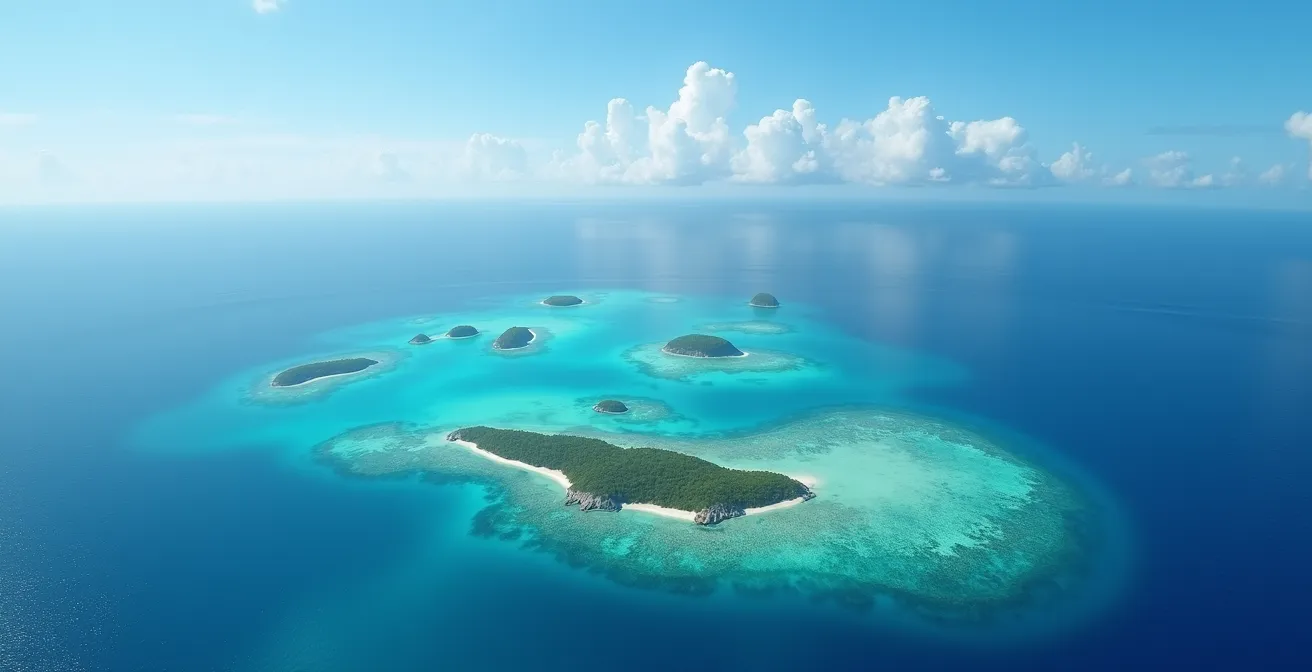
Now, let’s apply this entire framework to a “bucket list” destination: the Maldives. For many families, this paradise of overwater bungalows seems like an unattainable dream, reserved for honeymoons and lottery winners. However, by applying the principles of the travel trade-off, value-driven safety, and smart logistics, even a trip like this can become a realistic possibility for a British family.
The biggest barrier is cost. The perception is dominated by ultra-luxury private island resorts. But the Maldives has undergone a transformation in recent years with the growth of tourism on its “local islands.” This creates a classic trade-off: the glamour of a private resort versus the value and cultural immersion of a local island. This is where you can make a strategic choice to make the trip affordable.
Case Study: Maafushi Local Island vs. a Private Resort
A family can save 60-70% on their trip by staying on a local island like Maafushi. Guesthouses are clean, comfortable, and can cost as little as £50-£80 per night, compared to the £500+ nightly rates at private resorts. The trade-offs are clear: alcohol is not served on local islands, and more conservative dress is expected outside of designated “bikini beaches.” For a family, these trade-offs are often minor. The savings, however, are monumental, turning an impossible trip into an affordable one.
The other key is leveraging value from home. For UK travellers, this means mastering loyalty points. British Airways and Virgin Atlantic both fly to Malé, and their loyalty schemes (Avios and Virgin Points) are a powerful tool. By collecting points through credit card sign-up bonuses and daily spending, you can significantly reduce the cost of flights, which is often the largest single expense.
This is the travel trade-off framework in its ultimate form: you trade the exclusivity of a private resort for the affordability of a local island, and you trade cash for loyalty points you’ve strategically collected. The dream remains the same—crystal clear water, white sand beaches, incredible snorkelling—but the path to getting there is a smart, calculated, and achievable one.
Now that you’re equipped with this framework, the next step is to start applying it. Begin by listing your family’s priorities—budget, activities, relaxation, and ease of travel—and use this guide’s principles to find a destination that doesn’t just tick a box, but truly fits.