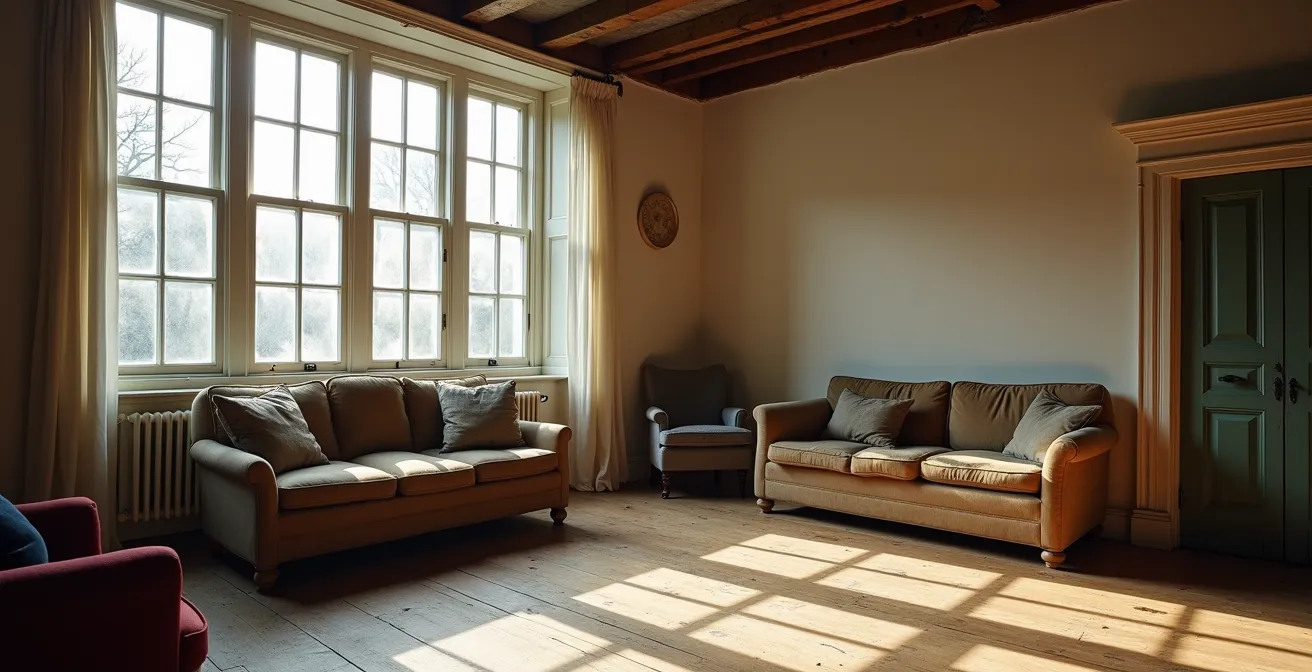
The true magic of a heritage stay isn’t found by ignoring the discomforts, but by understanding their origin.
- Draughts and low water pressure are not flaws, but often deliberate conservation compromises to protect the building’s historic fabric.
- Stairs and limited accessibility are due to structural constraints that prevent modern interventions like lifts.
- Restrictions on moving furniture or touching walls are legal mandates to preserve irreplaceable materials like lime plaster.
Recommendation: Approach your stay as an informed custodian, not just a guest. Inquiring about specifics before booking and packing accordingly transforms potential frustration into a deeper appreciation of living history.
The allure is undeniable. A weekend in a timber-framed cottage in the Cotswolds or a Georgian townhouse in Bath promises an escape into a storybook version of England. For the heritage lover, it’s a chance to live, for a moment, within the pages of history. Yet, a nagging question often accompanies the fantasy: what is the reality? The romance of a four-poster bed is quickly diminished by a sleepless, chilly night, and the charm of a winding staircase fades after the third trip carrying heavy bags. The fear is that ‘character’ is simply a polite euphemism for ‘uncomfortable’.
Many guides will offer vague advice about embracing the ‘quirks’. But as a heritage architect, I believe this misses the point entirely. The key to a truly rewarding stay in a listed property is not to tolerate its eccentricities, but to understand them. These are not random flaws; they are the tangible signatures of history, the direct result of the building’s age, its original construction, and the strict legal protections designed to preserve its soul. A draughty window isn’t just cold; it’s a story about glass-making technology and the legal imperative to maintain original features.
This article moves beyond the postcards. We will dissect the common discomforts of staying in a listed property by exploring the ‘why’ behind the ‘what’. By understanding the architectural and conservation reasons for single-glazed windows, the absence of lifts, and even the trickling shower, you can transform these potential frustrations into points of informed appreciation. It is an invitation to read the building itself, to see its limitations not as failures, but as evidence of its authentic, protected past. This is how you find the real magic: not in ignoring the draughts, but in understanding the history that blows through them.
To help you navigate this unique experience, this guide breaks down the common realities you might encounter, from the practicalities of winter chills to the reasons you can’t touch the walls, and what it means for your stay.
Summary: The realities of staying in a protected heritage property
- Why single-glazed sash windows make winter stays chilly?
- Why ‘historic’ often means ‘no lift’ and many stairs?
- Four-poster beds: Are they actually comfortable to sleep in?
- Low water pressure: Why the shower might be a trickle in a mansion?
- Why you cannot stick things on walls or move furniture?
- Lascaris War Rooms: Are they suitable for claustrophobic visitors?
- Why period conversions in Kensington might keep your baby awake?
- Why you can no longer touch Stonehenge and how to get closer access?
Why single-glazed sash windows make winter stays chilly?
The first and most immediate reality of a winter stay in many listed properties is the cold. You might be tucked under a thick duvet, but a persistent chill seems to radiate from the elegant, large sash windows. This isn’t a sign of neglect; it’s a direct consequence of preservation. In England, a huge number of protected properties are Grade II listed. In fact, Grade II buildings represent over 91.7% of all listed buildings, and for many of them, their windows are a key ‘character-defining’ feature.
Original timber sash windows, with their delicate astragal bars and slightly warped, mouth-blown glass, are considered vital to the building’s historic fabric. Replacing them with modern, hermetically sealed double-glazing is almost always forbidden under listed building consent. The result is that you are left with single panes of glass and frames that, despite careful maintenance, will never be airtight. This is the conservation compromise in action: visual and historical authenticity is prioritised over modern thermal efficiency. The draughts you feel are a direct connection to the way the building was originally designed to ‘breathe’.
Understanding this doesn’t make the room warmer, but it does shift the perspective. The solution is not to curse the cold, but to prepare for it, just as inhabitants would have for centuries. Thinking ahead is key to staying comfortable.
- Pack merino wool base layers for superior insulation without bulk.
- Bring thermal socks and a good pair of slippers for cold stone or timber floors.
- A quality hot water bottle is a time-tested and effective companion.
- Consider bringing an extra blanket or a small, travel-sized electric blanket if you’re particularly sensitive to cold.
- Fingerless gloves can make reading in bed or in a chilly sitting room much more pleasant.
By anticipating the reality of the building’s material honesty, you can pack strategically and ensure the pervading chill becomes a minor point rather than the defining feature of your stay.
Why ‘historic’ often means ‘no lift’ and many stairs?
The romantic image of a stone spiral staircase leading to a turret bedroom is potent, but the reality involves navigating narrow, uneven, and often steep steps. For anyone with mobility concerns, or even just heavy luggage, the absence of a lift in a multi-storey historic property can be a significant challenge. This is another area where the building’s structural integrity dictates the limits of modern convenience.
Installing a lift shaft is a profoundly invasive act. It requires cutting through historic floor joists, disrupting the original layout, and fundamentally altering the structure and character of the building. For most listed buildings, especially those with compact or complex layouts like castles or fortified manor houses, gaining listed building consent for such an alteration is virtually impossible. The staircase is not just a way to get from A to B; it is an integral part of the historic fabric, and its preservation is paramount.
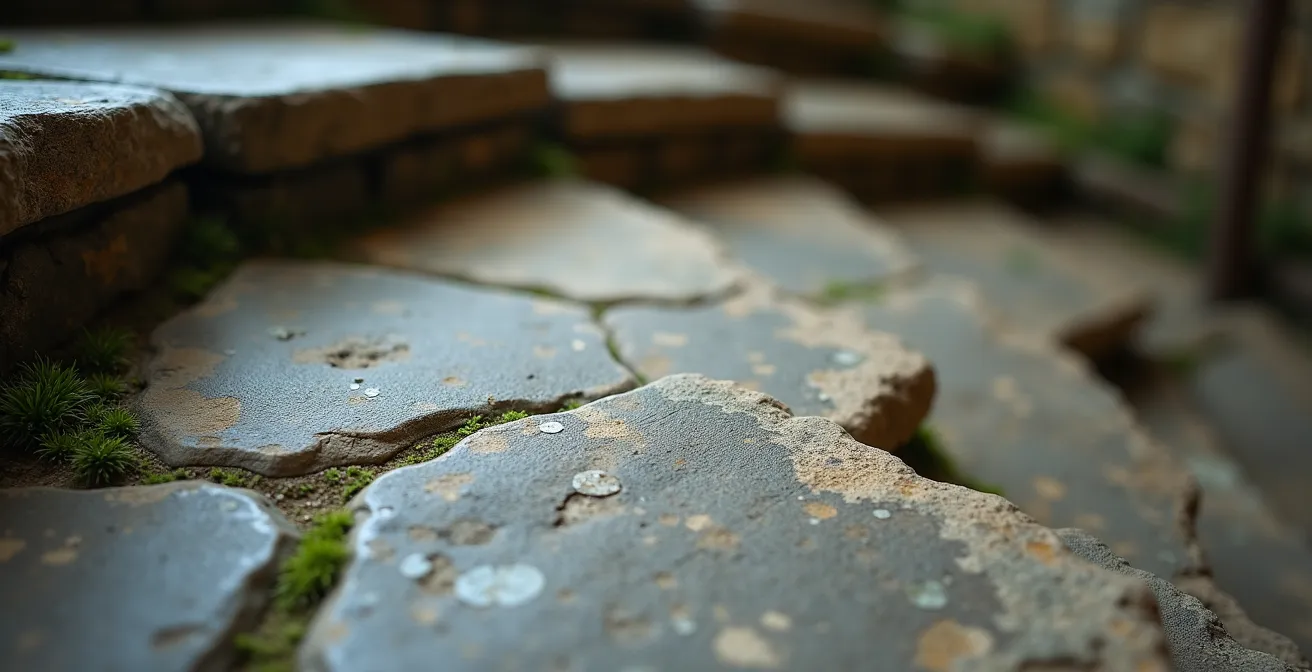
The worn stone or creaking timber underfoot tells a story of centuries of use. As this image of a spiral staircase shows, the steps are often narrow and the turn tight, designed for defence or to fit into a small space, not for comfort. This is ‘living history’ in its most physical form. It demands a level of physical engagement that a modern hotel does not. For guests, this means a proactive approach to booking is essential.
Your pre-booking accessibility action plan
- Ask for detailed photos or a video walkthrough of all staircases you will need to use.
- Inquire about specifics like tread depth, riser height, and the presence and condition of handrails.
- Confirm the availability and location of ground-floor bedrooms and bathrooms if mobility is a concern.
- Check if the property offers luggage assistance; many boutique heritage accommodations do.
- Identify any landings or resting points between floors if the climb is long.
By treating accessibility as a primary research point, you can ensure that the historic charm of the property remains a delight, not an obstacle.
Four-poster beds: Are they actually comfortable to sleep in?
The four-poster bed is the centrepiece of the heritage fantasy. Draped in fabric, it evokes a sense of romance, grandeur, and history. But as you lie down, a practical question arises: is this antique frame, possibly centuries old, actually comfortable? The fear of a lumpy, sagging mattress or creaking frame is a valid concern for anyone prioritising a good night’s sleep.
Here, the news is generally very good. While the bed frame itself may be a genuine antique, property owners are acutely aware that sleep quality is non-negotiable for modern guests. The principle of a ‘sympathetic conversion’ often applies here. The historic shell (the frame) is preserved, but its functional core (the mattress) is almost always a high-quality, modern one. This is a common practice in historic properties, ensuring that the aesthetic of the past is paired with the comfort of the present. This is particularly true for buildings of significant age; after all, according to the Listed Property Owners’ Club, it’s a general principle that all buildings built before 1700 that survive in anything like their original condition are listed.
Case Study: Modern Comfort in Historic Frames
Specialist accommodation providers like One Off Places, who feature numerous historic properties, highlight this balance. While they celebrate the “magical atmosphere” and unique feel of properties from windmills to manor houses, they make it clear that guest comfort is paramount. The four-poster beds in their listings may have historic frames, but they are consistently outfitted with modern, high-standard mattresses and bedding to ensure a comfortable and restful stay, demonstrating a successful marriage of history and hospitality.
The original purpose of the curtains on a four-poster bed was to provide privacy and, more importantly, to keep out cold draughts in rooms that were impossible to heat evenly. So, if you do find your room a little chilly, drawing the drapes can make a noticeable difference, connecting you directly with the bed’s original function. It’s a small act that turns a decorative feature into a practical piece of living history.
Ultimately, you can expect the best of both worlds: the romance of sleeping in a piece of history, with all the support and comfort of a contemporary mattress.
Low water pressure: Why the shower might be a trickle in a mansion?
After a day exploring, the prospect of a hot, powerful shower is appealing. However, in a grand manor house or a sprawling historic property, you might turn the tap only to be met with a disappointing trickle. This common issue of low water pressure is another classic conflict between a historic building’s original systems and modern expectations.
The problem is often rooted in plumbing physics. Many large, older houses rely on gravity-fed water systems. A large cold-water tank is typically housed in the loft, and water pressure on the floors below is determined by the height difference (the ‘head of water’) between the tank and the showerhead. In a rambling mansion with bathrooms located on the upper floors, this height difference can be minimal, resulting in weak flow. Upgrading to a modern, high-pressure system with pumps is possible, but it can be complex, noisy, and disruptive to the historic fabric of the building.
Furthermore, the pipework itself can be a factor. Original narrow-bore lead or copper pipes, which are often protected as part of the listing, may not be able to handle the flow rates of a modern pressurised system. Again, it is a conservation compromise: preserving the original plumbing infrastructure can mean sacrificing the power-shower experience. The good news is that many owners who invest in their properties for hospitality do find ways to upgrade, and there are clues to look for when booking.
To avoid a drizzly disappointment, it pays to become a plumbing detective before you book. Here are some key things to look for and ask about:
- Look for keywords like “pressurised system,” “power shower,” or “booster pump” in the property description.
- Check if recent renovation dates are mentioned, as this can indicate plumbing upgrades.
- Don’t be afraid to ask the owner or agent directly about the type of water system and the shower pressure on your floor.
- If booking remotely, a video showing the water flow in your specific bathroom is a reasonable request.
- See if the bathroom features a deep soaking tub, which can be a luxurious alternative if the shower pressure is low.
A little research can help you find a property where the owners have made a sympathetic and effective upgrade, ensuring your stay is refreshing in every sense.
Why you cannot stick things on walls or move furniture?
Upon arriving, you might be tempted to rearrange the furniture for a better view or stick a child’s drawing on the wall with a piece of tape. In a listed property, these seemingly innocent actions are strictly forbidden, and for very good reason. This rule isn’t about being overly precious; it’s about a legal and physical duty of care to an irreplaceable heritage asset.
The legal framework is unambiguous. As a guide for owners from Savills UK, a leading property agent, starkly puts it: “It is a criminal offence to carry out works to a listed building without consent when it is needed”. While you are a temporary guest, not an owner, the principle of preventing unauthorised alteration extends to your behaviour. Moving heavy antique furniture can gouge original floorboards, while attaching anything to the walls can cause irreversible damage to the very surface that makes the building special.
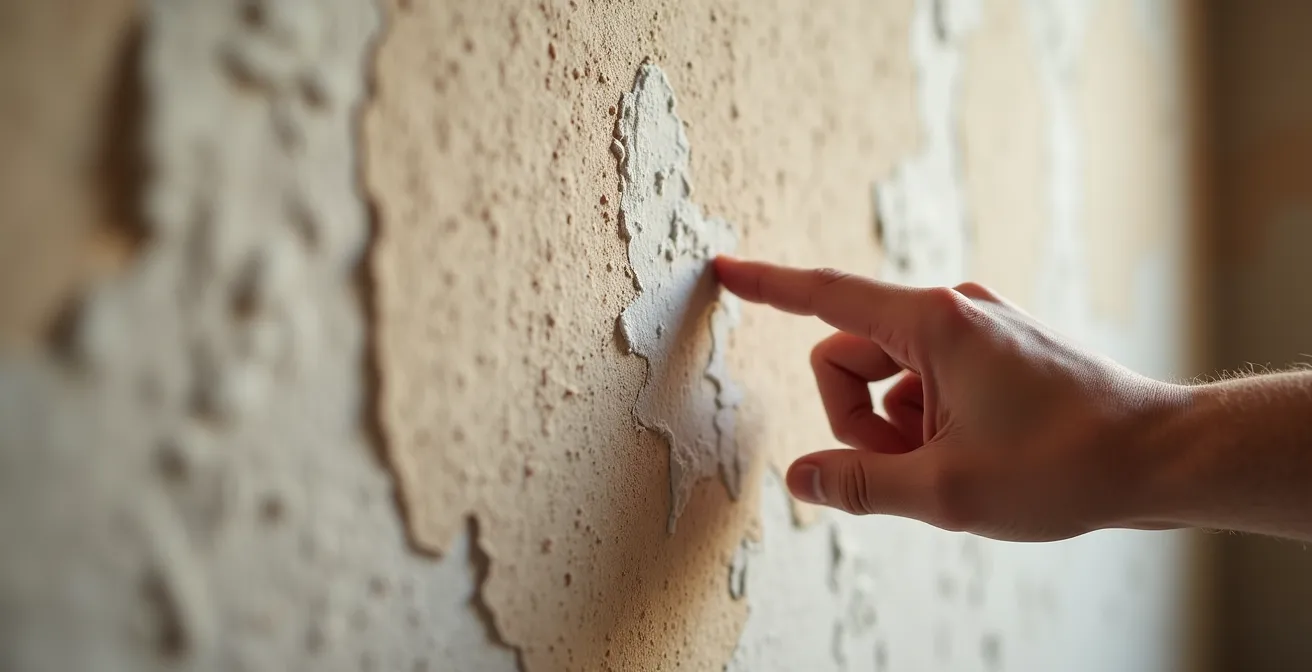
Many historic properties feature walls made not of modern plasterboard and paint, but of traditional lime plaster and distemper. As the image shows, these surfaces are not uniform or inert. They are soft, breathable, and have a delicate patina built up over centuries. The ‘lumps and bumps’ are part of their character. A piece of adhesive tape can easily pull off a flake of this historic surface, creating a scar that is difficult and expensive to repair sympathetically. This is the essence of material honesty; the wall’s fragility is part of its authentic nature.
It is a criminal offence to carry out works to a listed building without consent when it is needed
– Savills UK, Living in a listed building guide
Think of your stay as a temporary custodianship. You are not in a generic, replaceable hotel room; you are in a living museum, and the primary rule is to leave no trace.
Lascaris War Rooms: Are they suitable for claustrophobic visitors?
The concept of ‘comfort’ in a heritage setting isn’t limited to physical warmth or amenities. Psychological comfort is just as important, especially in sites with a specific, intense history. Take, for example, a site like the Lascaris War Rooms in Malta – a vast underground complex of tunnels and chambers that served as Britain’s war headquarters in the Mediterranean. While not a place you would stay overnight, it serves as an excellent case study for the sensory experience of visiting confined heritage sites, a feeling that can be challenging for those with claustrophobia.
These spaces were not designed for public comfort; they were designed for function and survival under extreme duress. The long tunnels, low ceilings in certain areas, and lack of natural light are not ‘features’ but the direct result of their purpose as a bomb-proof bunker. For a visitor prone to claustrophobia, understanding this ‘why’ behind the ‘what’ is crucial. The environment is intentionally enclosed and secure. Modern visitor management in such sites often includes excellent ventilation, clear signage, and multiple exit points to mitigate these feelings, but the fundamental character of the space remains.
If you are considering visiting a similar underground or confined heritage site—be it wartime tunnels, a crypt, or a mine—it’s wise to prepare. First, check the property’s website for an access statement or FAQ that specifically addresses claustrophobia or confined spaces. Many do. Secondly, consider the timing of your visit. Arriving at the start of the day or during a quieter period can reduce the feeling of being crowded by other visitors, which can often exacerbate feelings of being closed-in. Finally, familiarise yourself with the layout beforehand using an online map, so you feel more in control of your journey through the space.
By preparing mentally and practically, you can engage with these powerful sites of history on your own terms, ensuring the profound story they tell is what you remember, not a feeling of discomfort.
Why period conversions in Kensington might keep your baby awake?
Moving from a subterranean fortress to an elegant city apartment, the challenge of ‘discomfort’ can take another form: noise. Staying with a baby or young children in a stylish period conversion, for example in a desirable area like Kensington, presents a unique set of acoustic challenges that are directly linked to the building’s original construction.
Victorian and Georgian townhouses were built for a different way of life. They were not designed with modern sound insulation in mind. The original, beautiful sash windows that make the apartment so bright are often poor barriers to street noise. A seemingly quiet residential street can become a thoroughfare for late-night taxis and early-morning deliveries. Furthermore, sound transmission between apartments—both horizontally and vertically—can be a significant issue. Original floorboards, while beautiful, offer little insulation from footsteps or noise from the flat below, and internal walls were not built to the acoustic standards of today.
This isn’t a fault of the conversion, but a reality of the historic fabric the conversion must work within. While a developer can add some soundproofing, completely isolating an apartment without stripping out all historic character (like original cornicing and plasterwork) is very difficult. For parents trying to get a baby to sleep, this can be a major source of stress. The solution lies in diligent, parent-focused research before booking.
- Specifically request a rear-facing apartment, away from the noise of the main street.
- Ask about the age and type of the window glazing; some listed buildings get consent for secondary glazing, which helps significantly.
- Use Google Street View to scout the immediate vicinity for potential noise sources like pubs, restaurants, or busy bus stops.
- Inquire about sound insulation between floors and walls, asking frankly about noise from neighbours.
- Check the proximity to Underground lines, as low-frequency rumbles can travel through the ground and into buildings.
A few targeted questions can be the difference between a dream city break and a series of sleepless nights for the whole family.
Key takeaways
- The ‘quirks’ of a listed property (draughts, creaks, low water pressure) are often direct results of legally mandated conservation, not neglect.
- Modern comforts like lifts and double-glazing are frequently impossible to install without irreversibly damaging the building’s protected historic fabric.
- A proactive approach is crucial: research accessibility, inquire about specific amenities like plumbing, and pack for potential cold to manage expectations and ensure comfort.
Why you can no longer touch Stonehenge and how to get closer access?
Perhaps the ultimate expression of the “look, don’t touch” policy in heritage is Stonehenge. For many visitors, the discovery that you cannot wander among the megaliths and touch them can be a profound disappointment. This restriction, however, is the most critical conservation compromise of all, born from the site’s immense popularity and fragility. It’s a powerful lesson in how our collective love for a place can become a threat to its existence.
The reasons for the barrier are twofold. First, the sheer volume of visitors causes soil erosion and compaction around the base of the stones, which could destabilise them over the long term. Second, and more directly, decades of visitors touching the stones led to the gradual wearing away of the surfaces and the fragile lichens that grow on them, which are a valuable source of archaeological information. The decision to restrict access was a painful but necessary one to preserve the monument for future generations. The site is one of over 400 historic places managed by English Heritage, and its protection is a top priority.
But the story doesn’t end with a rope barrier. Understanding the ‘why’ behind the restriction opens the door to a better, more informed experience. While general admission keeps you at a distance, English Heritage offers special ‘Stone Circle Experience’ tours outside of normal opening hours. These allow very small, pre-booked groups to walk among the stones, offering a far more intimate and powerful encounter than one would have in the middle of a crowd. This is the trade-off: forgoing casual touch for the privilege of managed, respectful, close access.
Furthermore, England is rich with other incredible Neolithic sites where a more tactile experience is actively encouraged. If touching the ancient stones is central to your desired experience, you have wonderful options:
- Avebury, Wiltshire: A vast stone circle so large it contains a village, where you can freely walk among and touch the stones.
- Castlerigg Stone Circle, Cumbria: Offering stunning panoramic views and intimate access to its 38 stones.
- The Rollright Stones, Oxfordshire: A quieter and deeply atmospheric complex of three sites.
- Long Meg and Her Daughters, Cumbria: Another spectacular and easily accessible stone circle in the north of England.
This approach transforms a limitation into an opportunity, guiding you towards experiences that are not only permitted but are often more personal and profound.