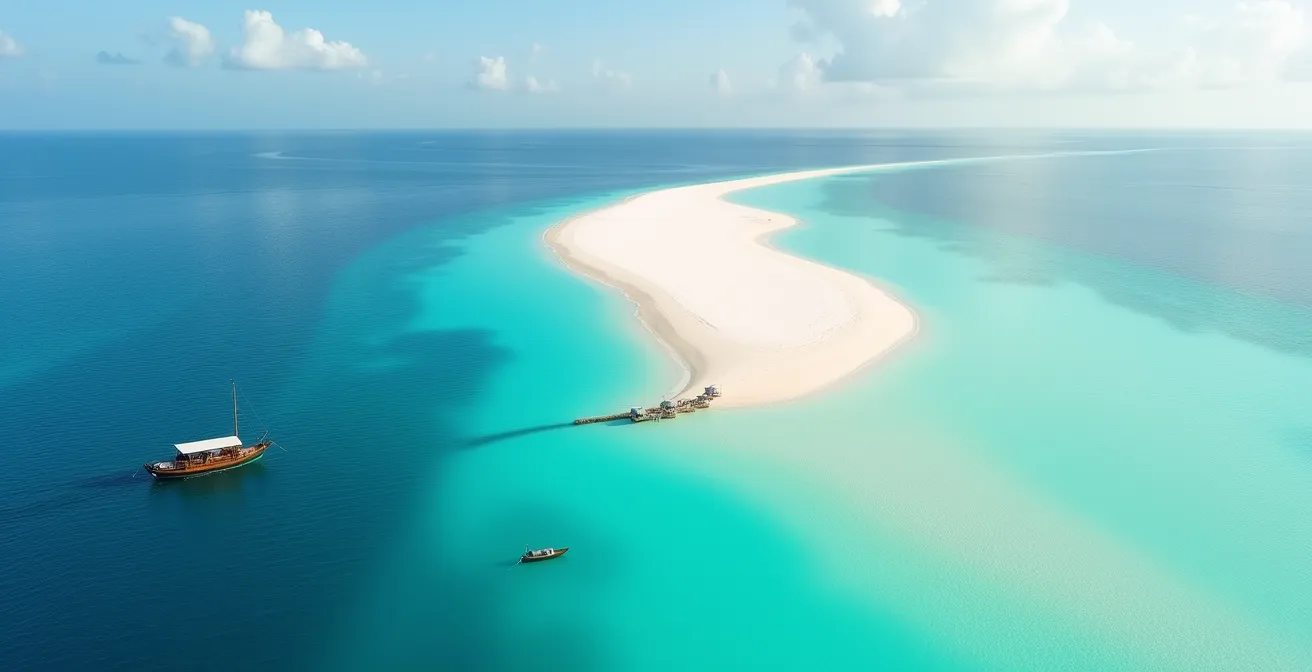
The secret to affording a bucket-list trip like the Maldives isn’t about finding the cheapest deals; it’s about strategically allocating your budget to what truly delivers a “wow” experience.
- Analyse whether expensive upgrades, like an overwater villa, offer more value than alternative experiences you could buy for the same price.
- Mastering travel timing and logistics—from booking windows to adding ‘free’ stopovers—unlocks hidden value and stretches your budget further.
Recommendation: Instead of focusing on what to cut, decide on your non-negotiable experiences first, and then build a smart, flexible budget around them.
That image of an overwater bungalow in the Maldives is probably saved on your phone. It represents the ultimate escape: a milestone birthday, a dream honeymoon, a once-in-a-lifetime reward. But for most of us in the UK, that dream is quickly followed by a reality check—the perceived astronomical cost. The common advice is predictable: travel during the monsoon season, hunt for all-inclusive deals, or simply save for years on end. This approach frames the dream as a compromise, forcing you to sacrifice either the experience or your financial sanity.
But what if that’s the wrong way to think about it? What if the key to affording your bucket-list trip isn’t about relentlessly cutting costs, but about intelligent value allocation? This guide reframes the conversation. We’ll use the Maldives as our prime example but explore principles that apply whether you’re chasing cherry blossoms in Japan or seeking sun-drenched solitude in Europe. It’s about understanding the difference between an expense and an investment in an unforgettable memory.
We will deconstruct the true value of popular upgrades, explore strategic timing to your advantage, and even challenge the destination itself to ensure every pound you spend delivers the maximum “experience-per-pound.” It’s time to move from simply dreaming to strategically planning.
This article will guide you through the critical decisions that make a luxury trip possible. From analysing flight routes to managing on-the-ground expectations, you’ll gain a new framework for planning any major trip.
Summary: A Strategic Guide to Bucket-List Travel
- How to add a free stopover in Dubai when flying to Asia?
- Cherry blossoms or Autumn leaves: When is Japan most visually stunning?
- The reality of the Pyramids: How to manage expectations vs Instagram?
- Balcony or Beachfront: Is the £200/night upgrade really worth it?
- How to support local communities while staying in 5-star resorts?
- Why choose Albania over the Maldives for turquoise waters on a budget?
- The 12-week rule: When is the absolute cheapest time to book Eurostar?
- Where to find crowds-free landscapes in Europe during August?
How to add a free stopover in Dubai when flying to Asia?
The flight is often the first major expense that feels non-negotiable when planning a trip to the Maldives. With typical round-trip economy fares from the UK ranging from £700 to £1,500, it’s a significant chunk of any budget. However, this is also your first opportunity for strategic value allocation. Instead of seeing the flight as a simple A-to-B cost, consider it a gateway to a bonus destination. Many airlines flying to the Maldives, particularly those based in the Middle East like Emirates, offer free or low-cost stopover programmes.
This is what we call destination hacking. By choosing your airline strategically, you can add a 24- or 48-hour experience in a city like Dubai for little more than the cost of your original flight. The airline often facilitates the stop, and some even offer discounted hotel packages. Suddenly, your travel day isn’t a 10-hour slog but an exciting mini-break. You’re effectively getting two destinations for the price of one flight, dramatically increasing the overall value of your travel budget.
The key is to compare flights not just on price, but on the route and the airline’s stopover policy. A flight that’s £50 more expensive but includes a free stopover in a vibrant city offers a far greater “experience-per-pound” than the absolute cheapest direct option. This mindset shift is the first step towards building a smarter, high-impact travel plan.
Cherry blossoms or Autumn leaves: When is Japan most visually stunning?
Timing is everything, not just for cost but for the very essence of the experience you’re paying for. Japan is a perfect case study. Both cherry blossom season (Sakura) and autumn leaf season (Koyo) offer breathtaking, world-renowned beauty. But choosing between them involves a crucial trade-off of cost, crowds, and availability, especially when navigating UK school holiday schedules.

As the visual suggests, both seasons are stunning, but their impact on your budget is vastly different. Cherry blossom season often clashes with the UK’s Easter holidays, creating a perfect storm of international and domestic demand. In contrast, while the October half-term can cause a spike during autumn, the pressure is generally less intense. This directly translates to your wallet and the quality of your experience.
This table, based on UK travel trends, breaks down the real-world implications of your choice. A trip during cherry blossom season can be significantly more expensive and require booking almost a year in advance to secure desirable accommodation.
| Season | UK School Holiday Impact | Flight Cost Premium | Accommodation Availability |
|---|---|---|---|
| Cherry Blossom (March-April) | Easter holidays clash | +40-60% above baseline | Extremely limited |
| Autumn Leaves (October-November) | October half-term clash | +25-35% above baseline | Moderate availability |
| Alternative periods | No school holiday conflict | Standard pricing | Good availability |
This isn’t about which season is “better,” but which offers the best value for you. Are the iconic pink petals worth the premium and the crowds? Or does the crisp air and fiery red of autumn, with a slightly smaller price tag and more breathing room, represent a smarter investment for your bucket-list trip?
The reality of the Pyramids: How to manage expectations vs Instagram?
The Giza Pyramids, much like the Maldives, suffer from the “Instagram vs. Reality” gap. Your feed shows a lone explorer gazing at ancient wonders from camelback against a desert sunset. The reality can be bustling crowds, persistent touts, and the sounds of Cairo’s traffic just a stone’s throw away. Managing this gap is crucial to ensuring your bucket-list moment isn’t a disappointment. It’s about planning for the reality, not the filtered fantasy.
Interestingly, data from the Office for National Statistics shows a growing trend among British travellers to seek out more authentic experiences. In fact, a recent analysis highlighted that of the 94.6 million trips UK residents made overseas, those to cultural sites in the Middle East are increasingly planned around avoiding crowds and finding private, guide-led tours. This shows a shift from passive sightseeing to active experience management.
The key isn’t to be cynical, but to be strategic. The magic of the Pyramids is absolutely real, but you have to work a little harder to find it. This means planning your visit with military precision—arriving right at opening time before the tour buses, or staying until closing for the softer late-afternoon light when crowds begin to thin. It means investing in a certified guide who can navigate you to quieter vantage points, not just the main tourist-clogged areas. By doing so, you’re not just seeing the Pyramids; you’re curating your experience of them.
Your Action Plan: Crowd-Avoidance at Giza
- Time Your Arrival: Arrive at the Giza complex at 7:30 AM, well before tour buses from Red Sea resorts which typically arrive from 9:30 AM onwards.
- Pre-Book Everything: Book your entrance tickets online in advance to bypass the often lengthy morning ticket queues and walk straight in.
- Choose Your Day Wisely: Plan your visit for a Sunday, Monday, or Tuesday. These days see significantly lower tourist numbers compared to the weekend.
- Hire Smart: Arrange a certified local guide through your hotel concierge for a typical fee of £30-£40. This is often cheaper and more reliable than hiring a guide at the gate for £60 or more.
- Control Your Transport: Use a ride-sharing app like Uber for the journey from Cairo (around £8-£10 each way) instead of an expensive, inflexibly-timed hotel transfer (£40-£60).
Balcony or Beachfront: Is the £200/night upgrade really worth it?
This is the ultimate question of value allocation. You’ve made it to the Maldives, and the resort presents you with the iconic choice: a beautiful Beach Villa or, for a significant premium, the legendary Overwater Villa. The dream sold on Instagram is almost always the latter. But as a strategic traveller, you must ask: is that £200+ per night upgrade delivering £200+ worth of additional, unique experience?

The allure is undeniable. Waking up suspended over turquoise water is a powerful image. However, the strategic offset here is to consider what else that upgrade cost could buy. An extra £1,400 over a week is not a small sum. It could fund a whole other holiday, or, more importantly, it could transform your existing one from a passive stay into an active adventure.
This table puts the decision into sharp focus. The money saved by choosing a perfectly lovely Beach Villa—which is often just steps from the same water—can be redirected into experiences that might create even more powerful memories than the room you sleep in.
| Accommodation Type | Nightly Rate | Weekly Cost (7 nights) | Alternative Experiences Same Budget Could Buy |
|---|---|---|---|
| Beach Villa | £400-600 | £2,800-£4,200 | Baseline experience |
| Water Villa | £600-800 | £4,200-£5,600 | Upgrade cost: £1,400 |
| Alternative uses of £1,400 | 10 private diving sessions (£140 each) OR Seaplane photo tour + 5 spa treatments OR Daily sunset cruise for entire stay | ||
This choice defines your travel philosophy. Are you paying for a room with a specific view, or are you paying for a week of unforgettable moments? There’s no right answer, but asking the question is what separates a smart luxury traveller from a regular tourist.
How to support local communities while staying in 5-star resorts?
The luxury of a Maldivian resort can often feel like a beautiful, isolated bubble. But one of the most rewarding aspects of travel is connecting with the place you’re visiting. Supporting the local community isn’t just an ethical choice; it enriches your own experience, offering a glimpse into Maldivian culture that you won’t find within the resort’s walls. And contrary to what you might think, it can also be a financially savvy move.
The Maldivian tourism model is evolving. While resorts still dominate, recent data shows that the fastest-growing sector is guesthouses on local, inhabited islands. A report from Travel Trade Maldives highlighted that while resorts account for 67% of bed capacity, there are now 870 registered properties on local islands. This boom provides a direct way for tourists to contribute to local economies. Furthermore, the mandatory 10% service charge in resorts directly benefits local staff, creating a tangible link between your stay and their livelihood.
Making a positive impact is about making conscious choices. Instead of booking every tour and meal through the resort, you can actively seek out opportunities to engage with the local economy. Here are some practical ways to do it:
- Book Local Excursions: Instead of the resort’s dolphin cruise, book a similar trip with a locally-owned operator from a nearby island like Maafushi or Dhiffushi. You’ll often save 30-50% and the money goes directly to a local family.
- Shop Authentically: Purchase souvenirs from artisan workshops on local islands. Look for the ‘Authentic Maldivian Made’ certification to ensure you’re buying genuine crafts and supporting traditional skills.
- Dine Out(side): During a day trip, opt to have lunch at a small restaurant on a local island rather than returning to the resort. You’ll taste authentic Maldivian cuisine at a fraction of the price.
- Choose Conscious Resorts: Select resorts that have formal partnerships with UK-based marine conservation charities like the Manta Trust or the Olive Ridley Project, ensuring a portion of your stay supports vital environmental work.
- Give Credit Where It’s Due: When leaving reviews on platforms like TripAdvisor, name the specific staff members who provided excellent service. This recognition can directly influence their career progression.
Why choose Albania over the Maldives for turquoise waters on a budget?
Sometimes, the smartest budget decision is to challenge the dream destination itself. If the core of your “Maldives dream” is crystal-clear turquoise water and beautiful beaches, but the budget is a major constraint, it’s worth asking: can I get 90% of the experience for 30% of the price? This is where strategic destination swapping comes into play, and the Albanian Riviera is a stunning example.
For UK travellers, the logistics and cost difference is staggering. While the Maldives requires a long-haul flight and a significant budget for accommodation and food, Albania is a short, affordable flight away. You can find the same breathtaking water colours along the Ionian coast at a fraction of the total trip cost. This isn’t about “settling for less”; it’s about identifying the most important element of your desired experience and finding it in a more accessible location. In fact, a UK Parliament briefing noted that while millions of Brits flock to Spain and France, there’s growing interest in Mediterranean destinations that offer similar experiences without the price tag and crowds. Of the 86.2 million overseas trips made by UK residents in 2023, this search for value is a key driver.
The table below illustrates the stark financial reality. The savings from choosing Albania over the Maldives aren’t just minor—they could be enough to fund two or three other European holidays.
| Destination | Flight Cost (Return) | Flight Time | Accommodation (7 nights) | Daily Food Budget | Total for 2 people (1 week) |
|---|---|---|---|---|---|
| Maldives | £700-1,500 | 10.5 hours | £350-2,100 | £100 | £4,898 average |
| Albanian Riviera | £80-200 | 3 hours | £280-700 | £40 | £1,200-1,800 |
| Savings | £500-1,300 | 7.5 hours | £70-1,400 | £60 | £3,000+ |
If your heart is set on the unique culture and geography of the Maldives, then that’s where your budget should go. But if your dream is purely about the visual “wow” of turquoise seas, a strategic swap can make that dream a reality much sooner and more frequently.
The 12-week rule: When is the absolute cheapest time to book Eurostar?
While a world away from the Maldives, mastering the booking patterns for a trip on the Eurostar teaches a universal lesson in travel budgeting: dynamic pricing is a game, and you need to know the rules to win. The principle of booking at the right time to secure the best price applies whether you’re buying a long-haul flight or a short-hop train ticket. The “12-week rule” is a well-known guideline, but the real savings come from understanding the specific demand drivers for your route.
For Eurostar, the key demand driver is the immense flow of traffic between the UK and France. With over 9.3 million visits from UK residents to France in 2024, demand peaks are frequent and predictable, directly causing price surges. Simply booking 12 weeks in advance isn’t enough if you’re targeting the Friday before a bank holiday.
The real art is in combining the booking window with strategic flexibility. Here’s how the pros secure the cheapest fares, with principles you can adapt for flight bookings too:
- Travel Off-Peak Days: The biggest savings are found by avoiding the Friday-to-Sunday rush. Booking a Tuesday or Wednesday departure can result in savings of 30-40%.
- Travel Off-Peak Times: The very first train of the day (e.g., 6:01 AM) or mid-afternoon trains on weekdays are consistently the cheapest.
- Be Aware of Dual Holidays: For UK-France travel, you must check both the UK and French school and bank holiday calendars. A normal week in the UK might be a holiday week in France, pushing up prices.
- Consider Alternative Hubs: Just as flying to a nearby airport can save money, booking London-Lille instead of London-Paris can be 20% cheaper, with easy onward connections.
- Use Last-Minute Tools (If Flexible): For spontaneous travellers, tools like ‘Eurostar Snap’ can offer huge discounts (up to 60%) if you’re willing to be flexible about the exact departure time a day or two before.
This micro-example with Eurostar demonstrates a macro-truth: the cheapest time to book is a combination of how far in advance you book and how cleverly you avoid peak demand.
Key Takeaways
- True luxury travel budgeting is not about restriction, but about smart allocation of funds towards experiences that provide the highest personal value.
- Question every “standard” upgrade. The money saved on a room could fund a week of unforgettable activities, offering a better ‘experience-per-pound’.
- Mastering the logistics of timing, routing, and even destination choice can unlock thousands in savings and add bonus experiences to your trip.
Where to find crowds-free landscapes in Europe during August?
For many UK travellers, August is the only time for a proper summer holiday, but it comes with a major drawback: crowds. Popular destinations in Spain and France become a sea of humanity. A 2024 report highlighted that Spain alone received 17.8 million visits from UK residents, with the vast majority concentrated in the summer months. The ultimate luxury in August isn’t a five-star hotel; it’s space. It’s finding a landscape so vast and empty that you feel like you have it all to yourself.
This requires another strategic swap: trading the guaranteed heat of the Mediterranean for the dramatic, empty beauty of Northern Europe. Destinations like the Lofoten Islands in Norway, the Scottish Highlands, or the lake districts of Finland offer a different kind of summer magic. Here, the “wow-factor” comes from solitude and epic scale, not beach clubs and bustling promenades.

While you might trade 30°C for 15°C, you gain experiences the Mediterranean can’t offer in August: hiking for hours without seeing another soul, kayaking on a mirror-still fjord, or witnessing the ethereal light of the midnight sun. With an increasing number of direct flights from UK airports like London and Manchester to Scandinavia, these once-remote havens are more accessible than ever. This is the final and perhaps most profound form of value allocation: trading guaranteed weather for guaranteed peace.
This approach completes the philosophy of smart luxury travel. It begins with deconstructing your dream, understanding the real value of each component, and being open to smarter, more strategic alternatives that deliver the true essence of what you’re seeking—whether that’s a specific view from a villa, an authentic cultural connection, or the simple, priceless luxury of solitude.
Now that you have the framework for strategic value allocation, the next step is to apply it to your own dream destination. Start by writing down not where you want to go, but the top three feelings or experiences you want to have, and begin your research from there.