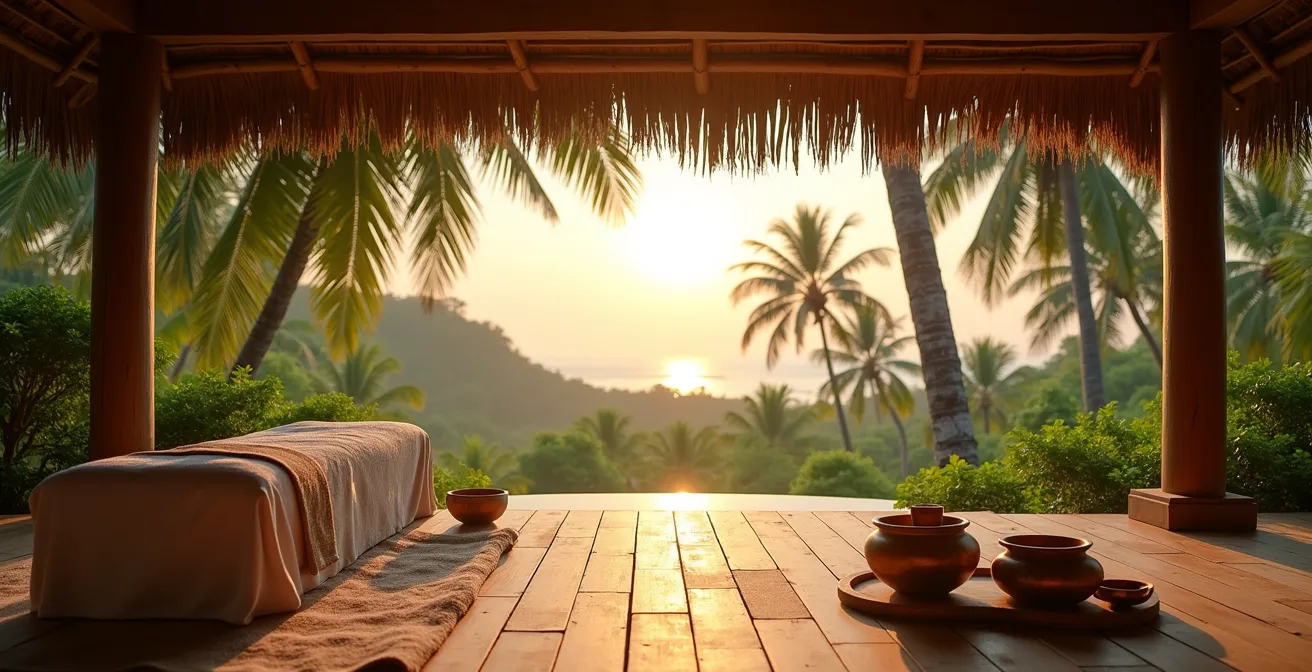
A true Panchakarma is not a wellness holiday; it is a profound biological and emotional reset that requires your full commitment.
- The strict rules (no coffee, silence) are designed to calm your nervous system and reboot your metabolic function.
- Emotional release during treatments is a normal and necessary part of clearing deeply held stress from the body’s tissues.
Recommendation: Approach your cure with an open mind, ready to embrace the process as a medical treatment for the soul, not just a relaxing escape.
For the burnt-out professional in England, the idea of a wellness retreat can be alluring. You picture serene beaches, gentle yoga, and a break from the relentless pace of life. Many look to Sri Lanka, a jewel of holistic healing, for an Ayurvedic Panchakarma. However, the popular image of a blissful detox spa often clashes with the reality of this ancient medical system. It’s frequently described with vague promises of “rejuvenation,” but few explain the rigorous, sometimes challenging, path to get there. This journey is less about passive relaxation and more about active participation in a deep, systemic reset.
But what if the true power of Panchakarma lies not in what is pleasant, but in what is purposeful? The seemingly harsh restrictions—the simple diet, the periods of silence, the absence of your morning flat white—are not arbitrary rules. They are precise clinical tools designed to dismantle years of accumulated physical and mental stress, known in Ayurveda as ama. Understanding the ‘why’ behind each step transforms the experience from a series of privations into a guided process of profound self-healing. This is not about escaping your life for two weeks; it’s about fundamentally recalibrating your body and mind so you can return to it with renewed vitality.
This guide, written from a practitioner’s perspective, will walk you through the authentic Panchakarma experience. We will explore the reasons behind the strict protocols, the nature of the treatments, and how to integrate the wisdom of Ayurveda back into your modern, Western life. By the end, you will be prepared not just for a trip, but for a true transformation.
Summary: Your Ayurvedic Journey in Sri Lanka
- Why no coffee or alcohol is allowed for 14 days?
- Emotional release: Why do people cry during deep tissue treatments?
- Kerala vs Sri Lanka: Which offers better value for Ayurveda?
- 7 days vs 21 days: How long is needed for real results?
- How to cook Ayurvedic meals in a western kitchen?
- Why silence rules are strictly enforced in traditional schools?
- The 2pm lunch rule: Why you will starve in Spain if you stick to UK hours?
- Benefits of a digital detox retreat for burnt-out professionals
Why no coffee or alcohol is allowed for 14 days?
The first challenge for many undertaking a Panchakarma is the immediate removal of stimulants like coffee and alcohol. This isn’t a moral judgment but a core part of the healing process. These substances are considered heating and taxing on the liver, which is one of the primary organs of detoxification. To effectively cleanse the body, we must first give its natural detoxification systems a complete rest. Think of it as allowing your body’s “board of directors”—your liver, kidneys, and digestive system—to finally have a quiet meeting without constant interruption. The goal is to pacify the system, not stimulate it.
During your preparation week, you will be guided to eliminate these vices to minimise the shock to your system. The withdrawal can be real; research from the National Institutes of Health shows that 13% of individuals experience clinically significant distress from caffeine withdrawal, with symptoms like headaches and fatigue typically starting 12 to 24 hours after cessation. Instead of coffee, the focus shifts to internal oleation. You may be encouraged to ingest medicated ghee (clarified butter) each morning. This lubricates the body’s channels (srotas) and begins to loosen deep-seated toxins (ama), preparing them for elimination.
This period of abstinence allows your body’s metabolic fire (Agni) to reset. Constant stimulation from caffeine and alcohol deranges Agni, leading to poor digestion and toxin accumulation. By removing them, you allow Agni to regain its natural rhythm, which is the foundation of all health in Ayurveda. The initial discomfort is a sign that the body is beginning its “biological unwinding”—a necessary first step toward true clarity and energy.
Emotional release: Why do people cry during deep tissue treatments?
A common yet often unspoken aspect of Panchakarma is the spontaneous release of emotions during treatments. You might be receiving a warm oil massage (Abhyanga) or a more intensive deep-tissue treatment and suddenly feel an overwhelming wave of sadness, anger, or even joy, often leading to tears. This is not a sign that something is wrong; it is a profound indication that the treatment is working on a level far deeper than just muscle tissue. Ayurveda recognizes that the body and mind are inseparable. Stress, trauma, and unresolved feelings are not just in your head; they are stored in your body’s tissues, particularly in the fatty tissues and a substance called Kapha dosha.
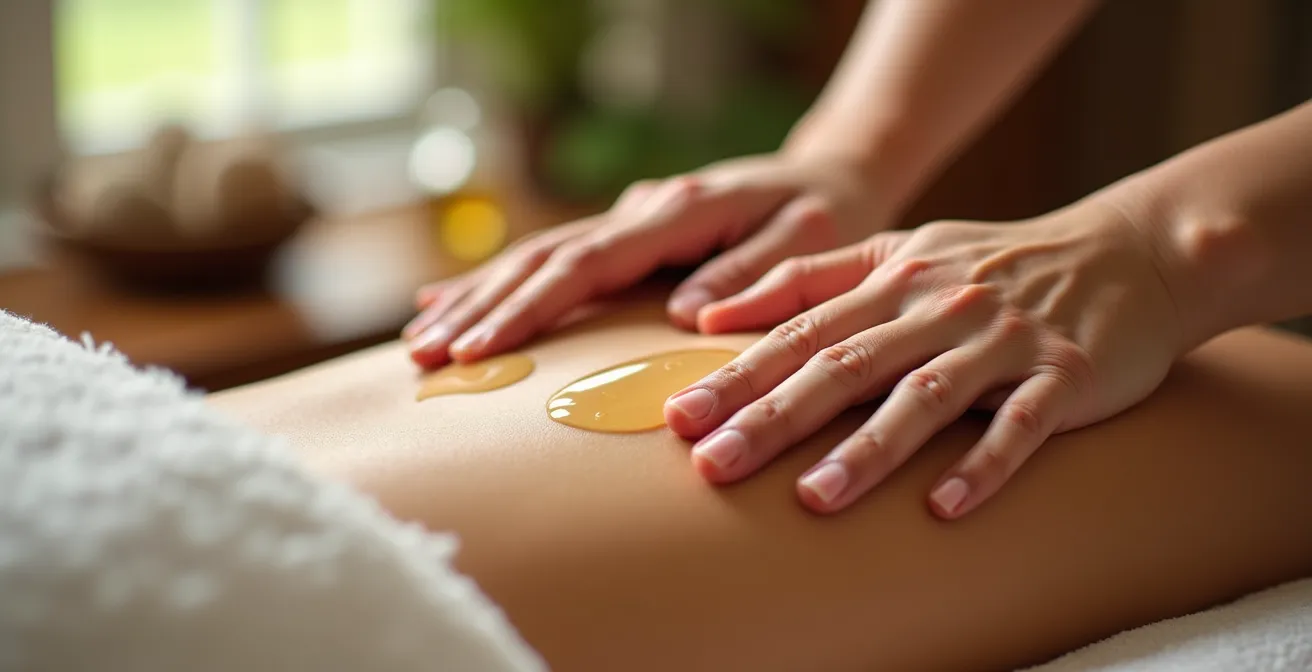
This phenomenon is a core part of the cleansing. As the practitioner’s hands work with warm, medicated oils to dislodge physical toxins (ama), they also release the stagnant emotional energy, or somatic memory, that is bound to them. You must be prepared to experience some physical and emotional discomfort during the process, as this is the unwinding of long-held patterns. As one of the leading institutions in the field explains:
Oftentimes this also releases repressed emotions that have been held in the kapha areas of the lungs and stomach along with the accumulated dosha.
– The Ayurvedic Institute, Introduction to Panchakarma Treatment
This emotional release is a healthy and vital part of your journey. It is the body’s way of unburdening itself from weights you may not have even known you were carrying. The safe, supportive environment of an Ayurvedic centre is designed to hold space for this process. Your practitioner understands this is not just a physiological event, but a spiritual and emotional one. Allowing these feelings to surface and pass without judgment is key to achieving the lightness and clarity that Panchakarma promises.
Kerala vs Sri Lanka: Which offers better value for Ayurveda?
For the health tourist from England, choosing the right destination is a critical first step. Both Kerala in India and Sri Lanka are world-renowned for Ayurveda, but they offer distinctly different experiences and “value” propositions. The decision hinges on your primary goal. Today, over 60% of global travelers cite wellness as a key motivation, but “wellness” can mean many things. Are you seeking intensive, orthodox medical treatment, or a holistic reset in a restorative environment?
Kerala is often seen as the cradle of traditional, orthodox Ayurveda. The approach here is typically more clinical, with many facilities operating like hospitals or medical centres. A full, traditional Panchakarma in Kerala is often a minimum of 21 days and adheres strictly to ancient protocols. This is ideal for those with specific, chronic health conditions seeking rigorous, medically supervised treatment. Sri Lanka, while also home to exceptional traditional practitioners, has adapted its offerings to better suit the Western constitution and mindset. Here, you’re more likely to find Panchakarma offered in a retreat or sanctuary setting, often by the beach, integrating the healing power of nature.
The “value” is therefore subjective and depends on your needs. The following comparison, based on insights from centres like those offering adapted Ayurveda in Sri Lanka, highlights the key differences:
| Aspect | Kerala | Sri Lanka |
|---|---|---|
| Minimum Duration | 21 days traditional | 7-14 days modified |
| Approach | Traditional orthodox | Modified for Western constitutions |
| Setting | Medical centers | Beach retreats |
| Treatment Focus | Intensive medical | Non-invasive wellness |
For many professionals from the UK, Sri Lanka offers a more approachable entry point. The modified programs and serene settings provide a powerful reset without the austerity of a purely clinical environment, making it an excellent choice for managing burnout and stress-related conditions.
7 days vs 21 days: How long is needed for real results?
A significant question for anyone with a demanding career is about time commitment. A traditional Panchakarma is a 21-day process, a duration that can seem impossible to carve out. This leads to a crucial question: can a shorter program of 7 or 14 days provide any real, lasting benefits? The answer, from both an Ayurvedic and modern scientific perspective, is a resounding yes. While a 21-day cure allows for the deepest level of cleansing, a shorter, well-structured program can initiate a powerful systemic reset and equip you with tools for lasting change.
A 7-day program focuses on the initial stages of cleansing: pacifying the system, strengthening the digestive fire (Agni), and starting the process of loosening and eliminating toxins (ama). It can be seen as a profound “reset button” for the body and mind. You will experience significant benefits in digestion, sleep, and mental clarity. It’s an excellent introduction to Ayurvedic principles and can be a catalyst for meaningful lifestyle adjustments back home. A 14-day program allows for a deeper detoxification, often including one of the main elimination therapies like Virechana (medicated purgation) in a gentle form.
Modern research is beginning to validate the benefits of these shorter interventions. A scientific study on a 5-day Panchakarma program found significant improvements in participants’ self-efficacy in using Ayurveda to promote positive health changes. They reported feeling more capable of making healthy choices long after the program ended. The goal is not just the temporary cleanse, but the empowerment to maintain balance in your daily life. A shorter retreat acts as the crucial first step, providing the knowledge and bodily experience of what true health feels like.
How to cook Ayurvedic meals in a western kitchen?
One of the most powerful and lasting aspects of a Panchakarma is experiencing the profound effect of a sattvic (pure and balanced) diet. But how do you translate this back to a busy life and a standard kitchen in England? The key is simplicity and understanding the principles. During the cure, your diet will likely be a mono-diet of Kitchari, the cornerstone of Ayurvedic cleansing cuisine. This simple, nourishing dish is the perfect blueprint for post-Panchakarma eating.
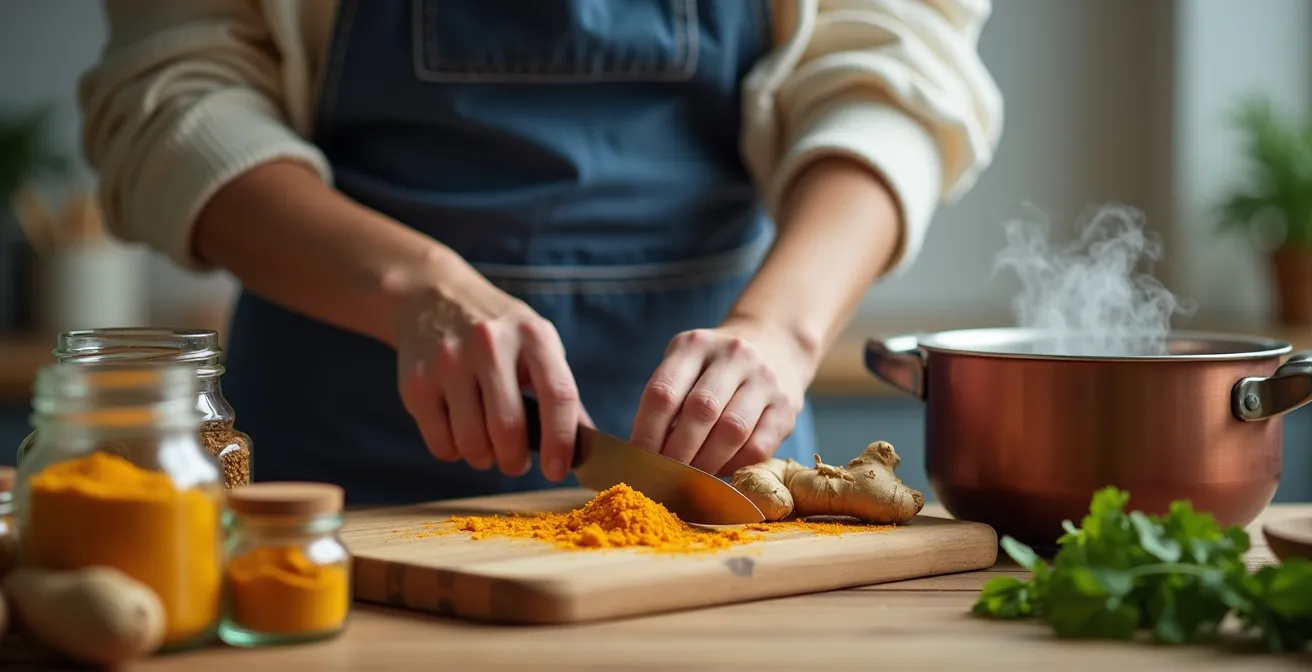
Kitchari is a delicious and complete protein meal made from split mung beans (dhal) and basmati rice, cooked with digestive spices like turmeric, cumin, ginger, and coriander. It is tri-doshic, meaning it balances all body types, and is incredibly easy for the body to digest. This gives your digestive system—your Agni—a much-needed rest, allowing it to burn through accumulated toxins. The beauty of Kitchari is its adaptability. You can cook it with seasonal vegetables and top it with fresh coriander, a squeeze of lime, or a little coconut to create a satisfying meal that is both healing and delicious.
Bringing Ayurvedic cooking home doesn’t require exotic ingredients. The essential spices are readily available in any UK supermarket. The main shift is in mindset: cooking becomes a form of meditation and self-care. Focus on fresh, whole foods and warm, cooked meals, which are easier on the digestive system than cold, raw foods. A simple rule is to make your lunch the main meal of the day, when your digestive fire is strongest. By adopting even just a few of these principles, like eating Kitchari for a few days as a ‘reset’ when you feel sluggish, you can maintain the benefits of your Panchakarma long after you’ve returned.
Why silence rules are strictly enforced in traditional schools?
Beyond dietary restrictions, one of the most impactful practices during a Panchakarma is the observance of silence (Mauna). This can range from designated silent mealtimes to full days of silence. For a visitor from a culture of constant communication, this can be daunting. However, like every other protocol, this is a precise therapeutic tool. The purpose of Panchakarma is to turn the senses inward (a concept known as Pratyahara in yoga). Constant talking, debate, and socialising expend a tremendous amount of vital energy (prana) outward.
By observing silence, you conserve this energy and redirect it toward healing. Your nervous system, which is perpetually processing external stimuli—conversations, notifications, background noise—is finally allowed to enter a state of deep rest. This is a form of energetic hygiene. You are cleansing your mind just as you are cleansing your body. The Ayurvedic Institute advises that during this time, you should avoid all stimulating experiences, including “late nights, loud music, television,” and even strenuous exercise. The goal is to create a cocoon of calm so the body can do its deepest work without distraction.
This period of quiet allows you to simply observe your own thoughts and feelings as they arise, without the immediate need to react or articulate them. It fosters a profound sense of self-awareness. You begin to notice the patterns of your mind and the subtle signals of your body. In the stillness, you can finally hear what your body has been trying to tell you. This practice is not about isolation; it’s about cultivating a deeper and more intimate connection with yourself, which is the ultimate source of healing.
The 2pm lunch rule: Why you will starve in Spain if you stick to UK hours?
This may seem like a strange detour, but observing cultural rhythms around meals provides a powerful, everyday analogy for a core Ayurvedic principle: aligning with natural cycles. In the UK, a 12 or 1 pm lunch is standard. If you were to visit Spain and try to eat at that time, you’d find most authentic restaurants closed, as their main meal happens around 2 or 3 pm. You would be out of sync with the local rhythm. In exactly the same way, modern life often puts us out of sync with our body’s own natural rhythm.
Ayurveda teaches that our digestive fire, or Agni, functions like the sun. It is strongest at midday, when the sun is at its highest point in the sky. This is the optimal time to eat your largest and most complex meal. Your body is primed to digest it efficiently and extract the maximum amount of nutrients. When you eat a large meal late at night, when your Agni is weak (like the setting sun), the food is not properly digested. This creates undigested residue, or ama—the root cause of most diseases in Ayurveda.
The “2pm lunch rule” in Spain is a cultural echo of this ancient wisdom. Their society naturally aligned its main meal with a time when digestive capacity is high. Panchakarma is a process of re-learning and re-establishing this connection. The strict meal timings you will follow are not random; they are designed to retrain your body to follow its innate solar clock. By doing so, you are not just detoxifying; you are fundamentally restoring the most important function for your health: your ability to transform food into life-giving energy.
Key Takeaways
- A true Panchakarma is a medical treatment for deep-seated stress, not just a relaxing spa holiday.
- The process involves physical and emotional detoxification, and it’s normal to feel discomfort as part of the healing.
- The goal is not just to cleanse but to reset your metabolic fire (Agni) and realign your body with its natural rhythms.
Benefits of a digital detox retreat for burnt-out professionals
For the modern professional, the greatest source of `ama` (toxins) is often not physical, but mental. The constant barrage of emails, notifications, and digital information creates a state of chronic overstimulation. A Panchakarma is, by its very nature, a profound digital detox. The enforced separation from your devices is not a punishment but a vital component of the “systemic reset.” It allows your nervous system to switch from the “fight-or-flight” sympathetic state to the “rest-and-digest” parasympathetic state, where true healing occurs.
The benefits are immediate and tangible. Without the constant distraction, your mind becomes quieter and your ability to focus returns. You begin to sleep more deeply, as your brain is no longer being flooded with blue light from screens before bed. This mental quietude is essential for the other Ayurvedic therapies to be effective. As one practitioner advises, during this time, “You have to be aware not to do any meditation exercises or anything that will stimulate the mind. ‘Let it be still’ is best word you can apply at this time.” The goal is not to replace one form of stimulation (work emails) with another (intensive meditation), but to allow for true, deep mental rest.
This period of “unplugging” provides the space to reconnect with yourself and your environment. You are encouraged to take gentle walks, observe nature, and simply be present. For someone suffering from burnout, this is not an indulgence; it is a necessity. It breaks the cycle of addictive, dopamine-driven behaviour that characterises our relationship with technology and reminds you what it feels like to be fully present in your own life. This is perhaps the most valuable souvenir you can bring back to your life in England.
Your Panchakarma Digital Detox Plan
- Inform Contacts: Before you leave, set an “out of office” message stating you will be unreachable and designate an emergency-only contact person. This manages expectations and prevents anxiety.
- Physical Separation: Upon arrival at the centre, give your phone and laptop to the staff for safekeeping or lock it in the room safe. Avoid the temptation of “just checking”.
- Replace the Habit: Bring a journal and pen. When you feel the urge to reach for your phone, write down your thoughts or observations instead. This channels the impulse productively.
- Engage the Senses: Actively engage with your physical surroundings. Notice the sounds of nature, the feel of the breeze, the taste of your food. This grounds you in the present moment.
- Plan for Re-entry: Before you turn your devices back on at the end of the retreat, decide on one or two concrete changes you will make, such as “no phone in the bedroom” or “checking emails only three times a day”.
Ultimately, approaching a Panchakarma in Sri Lanka is about embracing a new perspective. View the experience not as a series of rules to be endured, but as a compassionate, structured process designed to guide you back to your own innate state of health and balance. To begin this journey of profound self-healing, the first step is to choose a reputable centre and commit fully to the process.