In summary:
- The real challenge of a rural Tuscan retreat isn’t unpaved roads, but the lack of UK-style 24/7 infrastructure.
- Your priority should be understanding and respecting the local ecosystem—from its wildlife to its sensitive septic systems—not your vehicle’s horsepower.
- Practical preparation is far more critical than four-wheel drive: arrive with essentials, understand local driving rules like ZTLs, and manage your work-from-holiday expectations.
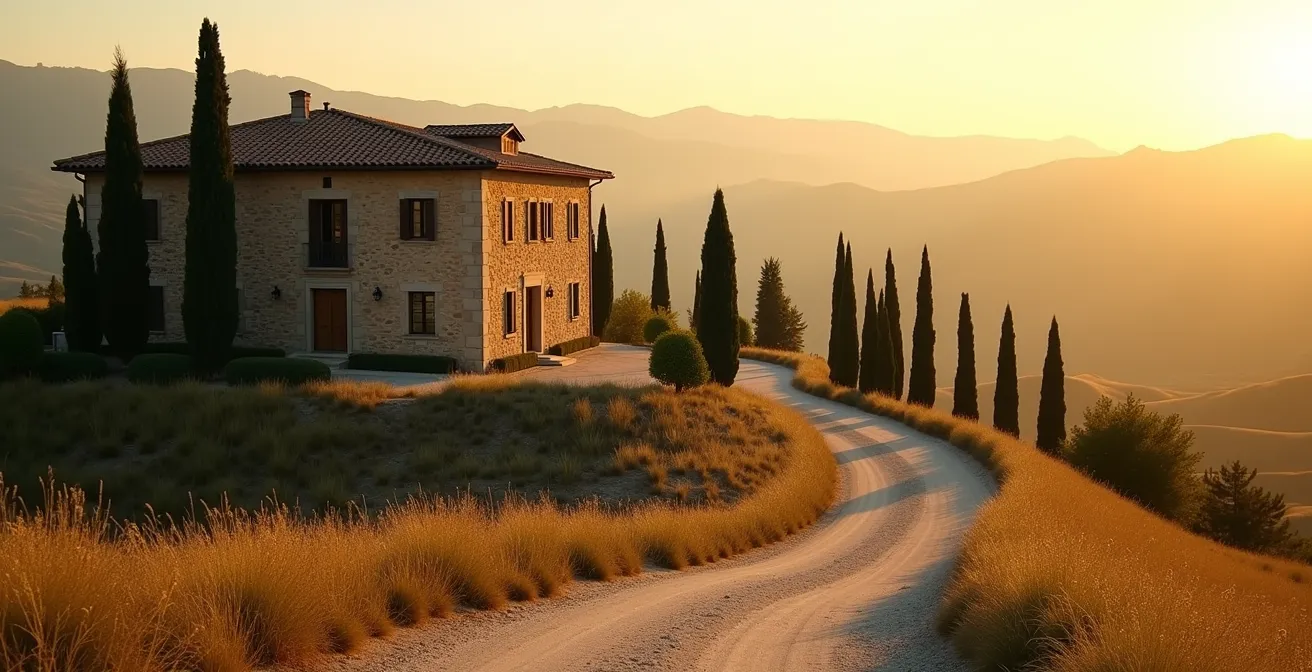
The image is set: a winding gravel track, flanked by cypress trees, leading to a stone farmhouse bathed in golden Tuscan light. For many UK drivers planning this dream escape, the first question that comes to mind is practical: “Will my rental car make it up that hill?” The instinctive reaction is to consider upgrading to a 4×4, assuming that horsepower is the answer to rural Italy’s challenges. It’s a logical thought, but it focuses on the wrong problem.
For years, I’ve advised drivers that the most common holiday-disrupting issues in the Italian countryside have very little to do with the car you’re driving. The real difficulties lie in the ‘infrastructure gap’ between the 24/7 convenience of life in England and the realities of a working agricultural landscape. The crucial skills aren’t about off-road driving, but about adapting to a different operational rhythm. Forget fixating on four-wheel drive; the key to a stress-free Tuscan holiday is understanding the ecosystem you’re about to enter.
This isn’t about simply surviving your holiday; it’s about being a responsible visitor who respects the fragile environment you’ve come to enjoy. The true test isn’t the steepness of the driveway, but whether you know what not to flush down the toilet, or why arriving empty-handed on a Sunday can derail your first 24 hours. This guide will walk you through the real-world challenges, from grocery logistics and wildlife encounters to the hard truths about rural internet and local laws.
To navigate these unique aspects of rural Italian life successfully, it’s essential to be prepared. The following sections break down the practical knowledge you’ll need, ensuring your focus remains on the beauty of Tuscany, not on preventable mishaps.
Table of Contents: A UK Driver’s Guide to the Realities of Rural Tuscany
- The mistake of arriving without groceries on a Sunday evening
- Scorpions and spiders: What is normal in a southern European farmhouse?
- Why you cannot flush bleach or wipes in a rural sanitation system?
- Satellite internet latency: Can you actually work from a farm?
- Harvest participation: Is it free labor or a cultural experience?
- The danger of picking mushrooms without a guide
- The Vignette trap: What do you need to drive a German rental into Austria?
- Drinking local: Why does Greek wine taste better on holiday than at home?
The mistake of arriving without groceries on a Sunday evening
The most common and entirely avoidable mistake British travellers make is assuming Italian Sunday trading hours mirror our own. You land, pick up the car, and arrive at your beautiful, isolated farmhouse at 6 pm on a Sunday, only to discover the fridge is bare and every local shop is tightly shut. In rural Italy, Sunday is still genuinely a day of rest, and most shops are closed for the entire day. This is a stark contrast to home, unlike the UK’s Sunday Trading Act flexibility which permits several hours of trading.
Furthermore, many small ‘alimentari’ (grocery shops) operate with a long lunch break, typically from 1 pm to 4 pm, even on weekdays. Forgetting this operational rhythm can leave you without essentials. The solution is simple: preparation. Your first stop after leaving the airport on a Saturday or weekday should be a larger supermarket to stock up on provisions for at least your first 24 hours. If arriving on a Sunday is unavoidable, you must pack a ‘first night survival kit’ from home.
Consider bringing these items to get you through to Monday morning:
- UHT milk for that crucial first cup of tea or coffee.
- Tea bags or instant coffee, as rural bars may close early.
- Snacks, pasta, and a jar of sauce for a simple first meal.
- A bottle of water.
This foresight isn’t about pessimism; it’s about respecting the local culture and ensuring your holiday begins with a relaxed meal on the terrace, not a frantic and fruitless search for an open shop. A little planning transforms a potential logistical headache into a seamless arrival.
Scorpions and spiders: What is normal in a southern European farmhouse?
Opening the shutters to find a small scorpion on the wall or a large spider in the bath can be alarming if you’re not expecting it. In the UK, our homes are largely sealed from the outside world. A rural Italian farmhouse, however, is an integrated part of the countryside. These creatures are not a sign of poor hygiene; on the contrary, they are indicators of a healthy, low-pesticide ecosystem. Understanding this is key to the ‘ecosystem mentality’ you need to adopt.
The most common scorpion you might encounter is the small, almost black Euscorpius italicus. They are timid, nocturnal, and their sting is comparable to a bee sting—unpleasant, but not dangerous unless you have a specific allergy. The best practice is to check your shoes before putting them on and shake out towels. Spiders, while sometimes large, are harmless hunters of other insects. Seeing them means they are doing their job of pest control for you, free of charge.

As the Agriturismo Fattoria La Prugnola notes, guests at their organic farm often come to view local wildlife as a positive sign. By choosing a rural retreat, you have opted for an authentic experience. Part of that authenticity is co-existing with the local fauna. Instead of reacting with fear, try to see it as a validation that you are truly away from it all, in a place where nature is still in charge.
Why you cannot flush bleach or wipes in a rural sanitation system?
This is perhaps the single most important, and most overlooked, aspect of a rural Italian stay. Unlike most homes in England, your Tuscan farmhouse is almost certainly not connected to a mains sewage system. It relies on a ‘fossa biologica’ or septic tank. This is a self-contained, underground ecosystem where bacteria break down waste. Pouring bleach, chemical cleaners, or flushing non-biodegradable items like wet wipes can kill these essential bacteria, blocking the system and causing a foul-smelling, expensive disaster.
The consequences are not trivial. I’ve seen many holidaymakers lose their entire security deposit to cover the cost of an emergency call-out. You could be liable for a ‘spurgo’ (emergency tank pumping) fee, with emergency pumping fees reaching €300-€500. This is a completely avoidable expense that can sour a trip. You must treat the plumbing with respect. Only human waste and toilet paper go down the toilet. Everything else—wet wipes (even ‘flushable’ ones), sanitary products, cotton buds—goes in the bin provided.
Even the water from the tap plays a role. Always ask your host if the tap water is ‘potabile’ (drinkable). Often it is, but in some very rural locations, it may be non-potable well water, suitable for washing but not for drinking. This is another part of the infrastructure gap you must be aware of.
Your Septic System Survival Plan
- Bring from the UK or buy eco-friendly cleaning products (brands like Ecover).
- Use only biodegradable wet wipes and dispose of them in the bin, never the toilet.
- Use enzyme-based drain cleaners for any blockages, never harsh chemicals like bleach.
- Ensure the toilet paper you buy is marked as safe for ‘fossa biologica’.
- Ask your host for a list of septic-safe products or rules on day one.
Remember, you are a temporary guardian of this delicate system. Your mindful actions ensure it remains functional for you and for the visitors who come after.
Satellite internet latency: Can you actually work from a farm?
The promise of working from a sun-drenched terrace in Tuscany is a powerful lure for the modern remote worker. However, the reality of rural Italian internet can be a significant source of frustration. Most isolated farmhouses rely on satellite internet, which is fundamentally different from the fibre or high-speed broadband common even in rural parts of the UK. The primary issue is not always speed, but high latency—the delay before a data transfer begins.
This latency makes real-time applications like Zoom or Teams video calls nearly impossible. Expect frequent freezes, dropouts, and frustrating delays. While you can probably manage emails and basic web browsing, do not plan to run your business-critical, high-bandwidth operations from a farmhouse. The mobile data signal from providers like TIM or Vodafone can sometimes be a better backup, but coverage is patchy and cannot be guaranteed. A wise strategy, as recommended by digital nomads, is to purchase a local data SIM card at the airport for tethering your laptop as a crucial backup plan.
This table illustrates the stark difference in what you can expect compared to a rural UK connection.
| Connection Type | Rural Tuscany | Rural UK (Highlands) | Work Suitability |
|---|---|---|---|
| Satellite Latency | ~600ms | ~50-100ms | Email only |
| Video Calls | Frequent drops | Stable | Not recommended |
| Mobile Data (4G) | TIM/Vodafone variable | EE/O2 coverage | Better backup option |
| Download Speed | 5-15 Mbps | 10-30 Mbps | Basic tasks only |
The sensible approach is to adjust your expectations. Plan your holiday to be a genuine escape. Inform your colleagues that you will have limited connectivity, schedule any essential calls for days you plan to be in a town with better service, and use the time to disconnect. The farmhouse is a place to recharge your spirit, not your laptop battery.
Harvest participation: Is it free labor or a cultural experience?
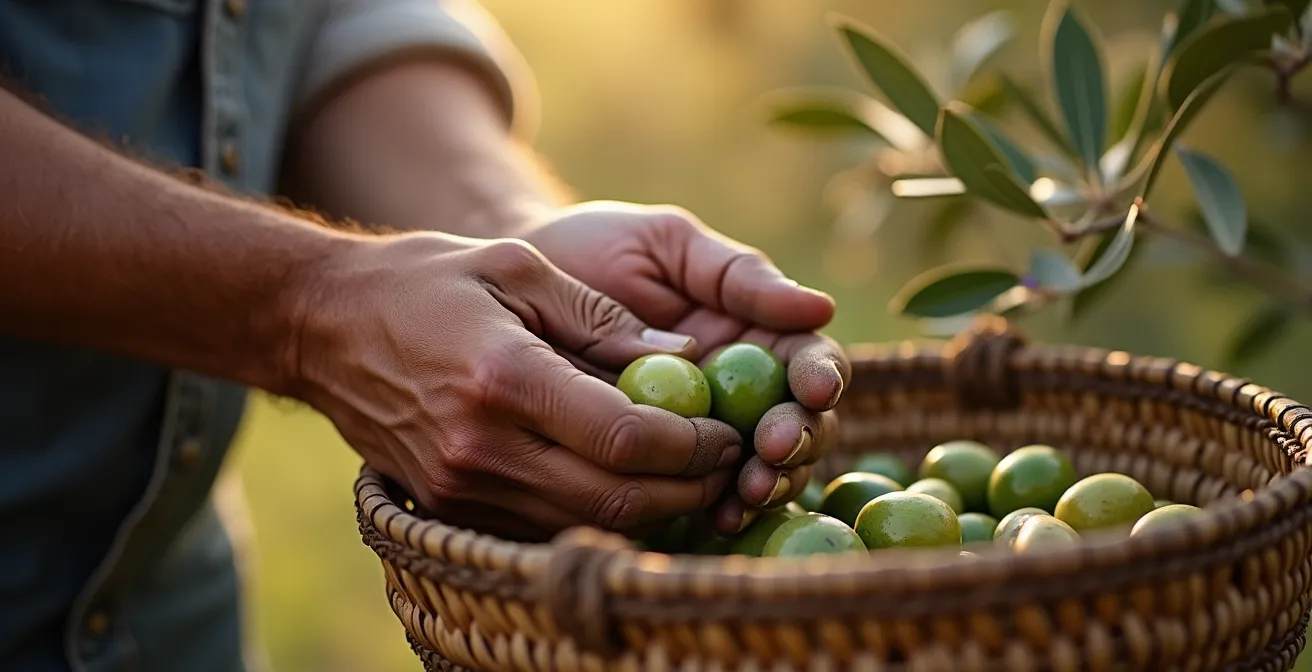
Many agriturismo properties offer guests the chance to participate in the olive or grape harvest. This can be a wonderfully authentic and memorable experience, connecting you directly to the land and its traditions. However, it’s vital to go in with your eyes open and clarify the terms of engagement. The line between a ‘cultural experience’ and ‘unpaid manual labour’ can sometimes be blurry, and it’s essential to know what you are signing up for, both for your safety and your enjoyment.
Before you agree to participate, have a clear, friendly conversation with your host. Is this an educational observation where you might pick a few olives for fun, or are you expected to put in a few hours of active work? If it’s the latter, is anything offered in exchange, such as a special meal, a tasting, or a discount? This isn’t about being cynical; it’s about mutual respect and clear communication. Most hosts are passionate about their produce and are delighted to share their world with you in a structured way.
There’s also a practical, insurance-related aspect to consider. Many standard UK travel insurance policies do not cover injuries sustained while performing ‘manual labour’. While agritourism is a huge part of the European economy, your insurer may see it differently. Check your policy wording. True agritourism is about education and cultural immersion, while European agritourism encompasses a wide range of activities. To ensure the experience remains positive, use this pre-participation checklist:
- Verify if your UK travel insurance covers ‘manual labour’ or ‘volunteer’ activities.
- Ask your host: ‘What are the expected working hours per day?’
- Clarify: ‘Is this an educational observation or active participation?’
- Confirm: ‘Are meals and accommodation included in exchange for help?’
- Check: ‘Does the farm have its own liability insurance for guests/volunteers?’
The danger of picking mushrooms without a guide
Autumn in Tuscany brings a bounty of wild mushrooms, and the idea of foraging for your own porcini is deeply romantic. However, this is an activity where a little knowledge is a very dangerous thing. The pastoral hills are home to many toxic varieties, some of which are deadly and can easily be mistaken for edible ones by an untrained eye. Unlike the relatively casual foraging culture in the UK, the Italian approach is far more regulated and serious for this very reason.
You should never, under any circumstances, pick and eat wild mushrooms without the supervision of a local expert. The risks are simply too high. As one legal expert on Italian agriculture points out, the culture is fundamentally different:
Unlike the relatively relaxed foraging culture in Britain, many Italian regions require a paid license (‘tesserino’) to forage legally
– Italian Agricultural Law Expert, ILF Italy Law Firms Agricultural Guidelines
This legal framework underscores the seriousness of the activity. It’s not just about finding food; it’s about proven expertise and safety. But this doesn’t mean you have to miss out on the experience. The safe and enjoyable way to engage with this local tradition is to tap into the local ecosystem of experts. There are many fantastic, safe ways to enjoy the mushroom season:
- Book a guided foraging tour with a licensed local expert who can teach you what to look for.
- Visit a local ‘Sagra del Fungo’ (mushroom festival) to taste dishes prepared by professionals.
- Join a foraging experience organised by your agriturismo host.
- Purchase mushrooms from a certified vendor at a local market, who can guarantee their safety.
By choosing one of these options, you get all the reward with none of the risk, turning a potentially hazardous activity into a culinary highlight of your trip.
Key Takeaways
- Think Ecosystem, Not Hotel: Your farmhouse has its own rules (septic tanks, shop hours, wildlife). Adapting to them is the key to a smooth trip.
- Preparation Beats Horsepower: A well-stocked car and a basic understanding of local customs are far more valuable than a 4×4 for tackling the real challenges of rural Italy.
- Manage Your Expectations: Don’t expect UK-level convenience. Embrace the slower pace, limited internet, and respect for tradition as part of the authentic experience you came for.
The Vignette trap: What do you need to drive a German rental into Austria?
While your trip may be focused on Tuscany, the title of this section highlights a crucial principle for any UK driver in Europe: every country, and even every city, has its own specific driving rules, and ignorance is no defence. The “Vignette trap”—driving into a country like Austria without the required motorway toll sticker—is a perfect example of an easy and expensive mistake. But the Italian equivalent, and one far more likely to catch you out, is the ZTL or ‘Zona a Traffico Limitato’.
These are traffic-limited zones in the historic centres of most Italian towns and cities, including many you might visit on a day trip from your farmhouse, like Florence or Siena. Entry is restricted to permit holders at certain times, and cameras enforce the rules ruthlessly. For tourists, ZTL zones are the single biggest source of fines, which can arrive in the post months after your holiday has ended. Your rental car’s GPS will not reliably warn you about them.
The key is situational awareness. Look for the circular white signs with a red border that mark the entrance to a ZTL. Park outside the historic centre and walk in. This simple habit will save you hundreds of euros. Post-Brexit, there are other documentary requirements to be aware of when driving in Europe, even if you are just moving between countries. You must have your UK driving licence, often an International Driving Permit (IDP), your V5C if it’s your own car, and proof of insurance.
| Requirement | UK to France | France to Italy | Within Italy |
|---|---|---|---|
| Vignette/Toll | Crit’Air sticker (cities) | Highway tolls | ZTL permits crucial |
| License | UK license + IDP | Same | Same |
| Vehicle ID | UK sticker (not GB) | Same | Same |
| Insurance | Green card may be needed | Valid throughout | Valid throughout |
Drinking local: Why does Greek wine taste better on holiday than at home?
The phenomenon of wine tasting better on holiday isn’t exclusive to Greece; it’s a feeling many UK travellers have in Tuscany, sipping a local Chianti on a terrace overlooking the vineyards. This “context effect” is powerful—the ambiance, the food, the relaxation all enhance the flavour. The natural next thought is to bring that magic home with you. But before you fill your suitcase with bottles, it’s wise to understand the practicalities of transporting wine back to the UK post-Brexit.
The good news is that you can bring a generous amount of wine back for personal use without paying tax or duty. Following the UK’s departure from the EU, the rules have been set, with the current allowance being 18 litres of still wine per person. That’s equivalent to 24 standard 75cl bottles, which is more than enough for most holidaymakers. The challenge isn’t the allowance, but the logistics of getting it home safely.
Wrapping bottles in clothes and hoping for the best in your checked luggage is a risky strategy. A single broken bottle can ruin your entire wardrobe. A more professional approach involves a few simple steps to ensure your precious cargo arrives intact:
- Purchase wine shipping boxes: Many Italian post offices (‘Poste Italiane’) or specialist wine shops (‘enoteca’) sell sturdy cardboard boxes with inserts designed for shipping bottles.
- Pack strategically: If using your suitcase, wrap each bottle in clothing and place them in the centre of the case, cushioned on all sides by more clothes.
- Consider ‘Vino Sfuso’: For great value, look for wineries selling ‘vino sfuso’ (unpackaged wine) directly from the tank into 5-litre containers. It’s an authentic and economical option.
- Declare if over the limit: If you exceed your 18-litre allowance, you must declare it at UK customs and pay the required duty.
By planning ahead, you can successfully transport your holiday memories home, allowing you to uncork a bottle of Tuscan sunshine on a grey winter’s day in Britain.
Ultimately, the key to a successful rural Italian road trip isn’t a bigger engine, but a better-prepared driver. By adopting an ecosystem mentality and respecting the local rhythm of life, you transform potential frustrations into part of an authentic and deeply rewarding travel experience. To put these principles into practice, start by creating a simple pre-travel checklist based on these insights.